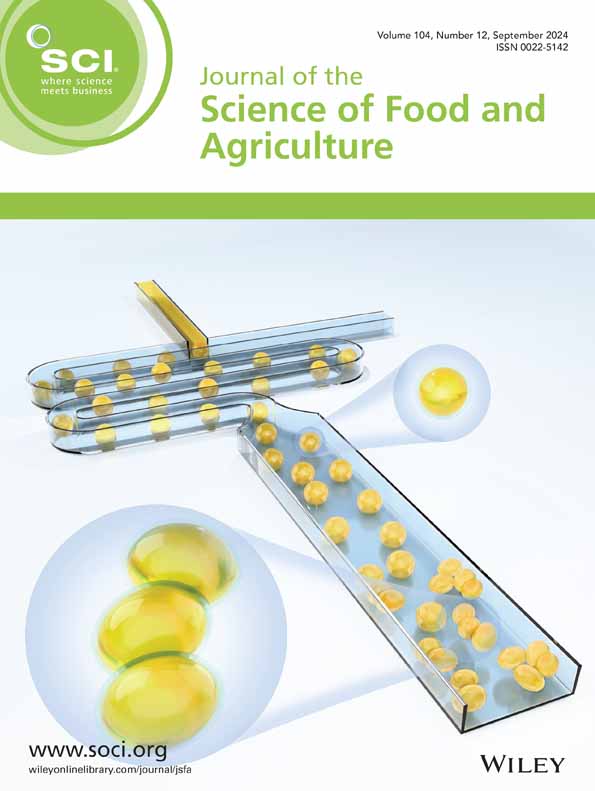
纳米囊化布里提油:秀丽隐杆线虫毒理学评估、模拟消化和增强生物潜能。

IF 4 2区 农林科学 Q1 AGRICULTURE, MULTIDISCIPLINARY
Journal of the Science of Food and Agriculture Pub Date : 2026-10-01 Epub Date: 2026-06-23 DOI:10.1002/jsfa.70817
Neyna Santos Morais, Thaís Souza Passos, Paula Fernanda da Silva, Riva de Paula Oliveira, Maria Luiza Gregório Alves, Pablo Felipe Ferreira Farias, Susana Margarida Gomes Moreira, David Henrique Xavier Barbosa, Matheus de Freitas Fernandes Pedrosa, Camila Fernandes de Assis, Francisco Canindé de Sousa Júnior, Cristiane Fernandes de Assis
{"title":"纳米囊化布里提油:秀丽隐杆线虫毒理学评估、模拟消化和增强生物潜能。","authors":"Neyna Santos Morais, Thaís Souza Passos, Paula Fernanda da Silva, Riva de Paula Oliveira, Maria Luiza Gregório Alves, Pablo Felipe Ferreira Farias, Susana Margarida Gomes Moreira, David Henrique Xavier Barbosa, Matheus de Freitas Fernandes Pedrosa, Camila Fernandes de Assis, Francisco Canindé de Sousa Júnior, Cristiane Fernandes de Assis","doi":"10.1002/jsfa.70817","DOIUrl":null,"url":null,"abstract":"<p><strong>Background: </strong>Buriti oil (Mauritia flexuosa) (BO) possesses high nutritional and functional value due to its carotenoids, phenolics, and unsaturated fatty acids, which exhibit antioxidant and antimicrobial properties. However, its lipophilic nature and susceptibility to oxidation limit its industrial application. Nanoencapsulation overcomes these obstacles by increasing oxidative stability and water dispersibility and by enhancing bioactivity. This study investigated the effects of BO nanoencapsulation in porcine gelatin (OPG) on toxicity (cell cultures and Caenorhabditis elegans), simulated digestion, as well as redox-modulating, antioxidant, and antifungal properties.</p><p><strong>Results: </strong>The OPG nanoformulation had a diameter of 69.72 nm, a high encapsulation efficiency (95.79%), and high water dispersibility (79.91%). No activity was observed against human cervical cancer cells (HeLa) or Chinese hamster ovary cells (CHO-K1) for either OPG or BO, but both exhibited activity against 3T3 cells (P < 0.05) at 500 μg mL⁻¹. In C. elegans assays, no toxicity on egg hatching or body size was observed at the evaluated concentrations (0.1, 0.2, and 1.0 mg mL<sup>-1</sup>). Linoleic acid was preferentially released in the intestinal phase (56.12%) during simulated digestion. Compared with BO (2.24 ± 0.003 mg ascorbic acid equivalent [AAE] g⁻¹), OPG exhibited a significantly higher total antioxidant capacity (23.40 ± 0.004 mg AAE g⁻¹), greater antifungal activity against Candida spp. (minimum inhibitory concentration (MIC) and minimum fungicidal concentration (MFC) = 5 mg mL⁻¹), and an enhanced redox-modulating dose-response in C. elegans.</p><p><strong>Conclusion: </strong>Buriti oil nanoparticles in porcine gelatin were safe in cellular and animal models in a dose-dependent manner while demonstrating antifungal efficacy against Candida spp. The nanoencapsulation technology protects the oil from gastric digestion, ensuring intestinal release and enhancing antioxidant capacity. These results demonstrate that nanoencapsulation enhanced the bioactive properties of BO. © 2026 Society of Chemical Industry.</p>","PeriodicalId":17725,"journal":{"name":"Journal of the Science of Food and Agriculture","volume":" ","pages":"7992-8003"},"PeriodicalIF":4.0000,"publicationDate":"2026-10-01","publicationTypes":"Journal Article","fieldsOfStudy":null,"isOpenAccess":false,"openAccessPdf":"","citationCount":"0","resultStr":"{\"title\":\"Nanoencapsulated buriti oil: toxicological assessment in Caenorhabditis elegans , simulated digestion and enhanced biological potential.\",\"authors\":\"Neyna Santos Morais, Thaís Souza Passos, Paula Fernanda da Silva, Riva de Paula Oliveira, Maria Luiza Gregório Alves, Pablo Felipe Ferreira Farias, Susana Margarida Gomes Moreira, David Henrique Xavier Barbosa, Matheus de Freitas Fernandes Pedrosa, Camila Fernandes de Assis, Francisco Canindé de Sousa Júnior, Cristiane Fernandes de Assis\",\"doi\":\"10.1002/jsfa.70817\",\"DOIUrl\":null,\"url\":null,\"abstract\":\"<p><strong>Background: </strong>Buriti oil (Mauritia flexuosa) (BO) possesses high nutritional and functional value due to its carotenoids, phenolics, and unsaturated fatty acids, which exhibit antioxidant and antimicrobial properties. However, its lipophilic nature and susceptibility to oxidation limit its industrial application. Nanoencapsulation overcomes these obstacles by increasing oxidative stability and water dispersibility and by enhancing bioactivity. This study investigated the effects of BO nanoencapsulation in porcine gelatin (OPG) on toxicity (cell cultures and Caenorhabditis elegans), simulated digestion, as well as redox-modulating, antioxidant, and antifungal properties.</p><p><strong>Results: </strong>The OPG nanoformulation had a diameter of 69.72 nm, a high encapsulation efficiency (95.79%), and high water dispersibility (79.91%). No activity was observed against human cervical cancer cells (HeLa) or Chinese hamster ovary cells (CHO-K1) for either OPG or BO, but both exhibited activity against 3T3 cells (P < 0.05) at 500 μg mL⁻¹. In C. elegans assays, no toxicity on egg hatching or body size was observed at the evaluated concentrations (0.1, 0.2, and 1.0 mg mL<sup>-1</sup>). Linoleic acid was preferentially released in the intestinal phase (56.12%) during simulated digestion. Compared with BO (2.24 ± 0.003 mg ascorbic acid equivalent [AAE] g⁻¹), OPG exhibited a significantly higher total antioxidant capacity (23.40 ± 0.004 mg AAE g⁻¹), greater antifungal activity against Candida spp. (minimum inhibitory concentration (MIC) and minimum fungicidal concentration (MFC) = 5 mg mL⁻¹), and an enhanced redox-modulating dose-response in C. elegans.</p><p><strong>Conclusion: </strong>Buriti oil nanoparticles in porcine gelatin were safe in cellular and animal models in a dose-dependent manner while demonstrating antifungal efficacy against Candida spp. The nanoencapsulation technology protects the oil from gastric digestion, ensuring intestinal release and enhancing antioxidant capacity. These results demonstrate that nanoencapsulation enhanced the bioactive properties of BO. © 2026 Society of Chemical Industry.</p>\",\"PeriodicalId\":17725,\"journal\":{\"name\":\"Journal of the Science of Food and Agriculture\",\"volume\":\" \",\"pages\":\"7992-8003\"},\"PeriodicalIF\":4.0000,\"publicationDate\":\"2026-10-01\",\"publicationTypes\":\"Journal Article\",\"fieldsOfStudy\":null,\"isOpenAccess\":false,\"openAccessPdf\":\"\",\"citationCount\":\"0\",\"resultStr\":null,\"platform\":\"Semanticscholar\",\"paperid\":null,\"PeriodicalName\":\"Journal of the Science of Food and Agriculture\",\"FirstCategoryId\":\"97\",\"ListUrlMain\":\"https://doi.org/10.1002/jsfa.70817\",\"RegionNum\":2,\"RegionCategory\":\"农林科学\",\"ArticlePicture\":[],\"TitleCN\":null,\"AbstractTextCN\":null,\"PMCID\":null,\"EPubDate\":\"2026/6/23 0:00:00\",\"PubModel\":\"Epub\",\"JCR\":\"Q1\",\"JCRName\":\"AGRICULTURE, MULTIDISCIPLINARY\",\"Score\":null,\"Total\":0}","platform":"Semanticscholar","paperid":null,"PeriodicalName":"Journal of the Science of Food and Agriculture","FirstCategoryId":"97","ListUrlMain":"https://doi.org/10.1002/jsfa.70817","RegionNum":2,"RegionCategory":"农林科学","ArticlePicture":[],"TitleCN":null,"AbstractTextCN":null,"PMCID":null,"EPubDate":"2026/6/23 0:00:00","PubModel":"Epub","JCR":"Q1","JCRName":"AGRICULTURE, MULTIDISCIPLINARY","Score":null,"Total":0}
引用次数: 0

摘要

背景:Buriti油(Mauritia flexuosa) (BO)由于其类胡萝卜素、酚类物质和不饱和脂肪酸具有抗氧化和抗菌特性,具有很高的营养和功能价值。但其亲脂性和易氧化性限制了其工业应用。纳米胶囊通过提高氧化稳定性和水的分散性以及提高生物活性来克服这些障碍。本研究考察了BO纳米胶囊在猪明胶(OPG)中的毒性(细胞培养和秀丽隐杆线虫)、模拟消化、氧化还原调节、抗氧化和抗真菌特性的影响。结果:制备的OPG纳米制剂直径为69.72 nm,包封率为95.79%,水分散性为79.91%。OPG和BO对人宫颈癌细胞(HeLa)和中国仓鼠卵巢细胞(CHO-K1)均无抑制作用,但对3T3细胞均有抑制作用(P -1)。在模拟消化过程中,亚油酸优先在肠相释放(56.12%)。与BO(2.24±0.003 mg抗坏血酸当量[AAE] g⁻¹)相比,OPG表现出更高的总抗氧化能力(23.40±0.004 mg AAE g⁻¹),对Candida spp更强的抗真菌活性(最小抑制浓度(MIC)和最小杀真菌浓度(MFC) = 5 mg mL⁻¹),并增强了秀丽隐线虫的氧化还原调节剂量反应。结论:猪明胶中的Buriti油纳米颗粒在细胞和动物模型中均是安全的,且呈剂量依赖性,同时具有抗假丝酵母菌的作用,其纳米胶囊化技术可防止胃消化,保证肠道释放,增强抗氧化能力。这些结果表明,纳米包封可以增强BO的生物活性。©2026化学工业协会。
本文章由计算机程序翻译,如有差异,请以英文原文为准。
Nanoencapsulated buriti oil: toxicological assessment in Caenorhabditis elegans , simulated digestion and enhanced biological potential.

Background: Buriti oil (Mauritia flexuosa) (BO) possesses high nutritional and functional value due to its carotenoids, phenolics, and unsaturated fatty acids, which exhibit antioxidant and antimicrobial properties. However, its lipophilic nature and susceptibility to oxidation limit its industrial application. Nanoencapsulation overcomes these obstacles by increasing oxidative stability and water dispersibility and by enhancing bioactivity. This study investigated the effects of BO nanoencapsulation in porcine gelatin (OPG) on toxicity (cell cultures and Caenorhabditis elegans), simulated digestion, as well as redox-modulating, antioxidant, and antifungal properties.

Results: The OPG nanoformulation had a diameter of 69.72 nm, a high encapsulation efficiency (95.79%), and high water dispersibility (79.91%). No activity was observed against human cervical cancer cells (HeLa) or Chinese hamster ovary cells (CHO-K1) for either OPG or BO, but both exhibited activity against 3T3 cells (P < 0.05) at 500 μg mL⁻¹. In C. elegans assays, no toxicity on egg hatching or body size was observed at the evaluated concentrations (0.1, 0.2, and 1.0 mg mL-1). Linoleic acid was preferentially released in the intestinal phase (56.12%) during simulated digestion. Compared with BO (2.24 ± 0.003 mg ascorbic acid equivalent [AAE] g⁻¹), OPG exhibited a significantly higher total antioxidant capacity (23.40 ± 0.004 mg AAE g⁻¹), greater antifungal activity against Candida spp. (minimum inhibitory concentration (MIC) and minimum fungicidal concentration (MFC) = 5 mg mL⁻¹), and an enhanced redox-modulating dose-response in C. elegans.

Conclusion: Buriti oil nanoparticles in porcine gelatin were safe in cellular and animal models in a dose-dependent manner while demonstrating antifungal efficacy against Candida spp. The nanoencapsulation technology protects the oil from gastric digestion, ensuring intestinal release and enhancing antioxidant capacity. These results demonstrate that nanoencapsulation enhanced the bioactive properties of BO. © 2026 Society of Chemical Industry.

求助全文
通过发布文献求助,成功后即可免费获取论文全文。 去求助
来源期刊
CiteScore
8.10
自引率
4.90%
发文量
634
审稿时长
3.1 months
期刊介绍: The Journal of the Science of Food and Agriculture publishes peer-reviewed original research, reviews, mini-reviews, perspectives and spotlights in these areas, with particular emphasis on interdisciplinary studies at the agriculture/ food interface. Published for SCI by John Wiley & Sons Ltd. SCI (Society of Chemical Industry) is a unique international forum where science meets business on independent, impartial ground. Anyone can join and current Members include consumers, business people, environmentalists, industrialists, farmers, and researchers. The Society offers a chance to share information between sectors as diverse as food and agriculture, pharmaceuticals, biotechnology, materials, chemicals, environmental science and safety. As well as organising educational events, SCI awards a number of prestigious honours and scholarships each year, publishes peer-reviewed journals, and provides Members with news from their sectors in the respected magazine, Chemistry & Industry . Originally established in London in 1881 and in New York in 1894, SCI is a registered charity with Members in over 70 countries.

×
引用
GB/T 7714-2015
复制
MLA
复制
APA
复制
导出至
BibTeX EndNote RefMan NoteFirst NoteExpress
×
提示
您的信息不完整,为了账户安全,请先补充。
现在去补充
×
提示
您因"违规操作"
具体请查看互助需知
我知道了
×
提示
确定
请完成安全验证×
copy
已复制链接
快去分享给好友吧!
我知道了
右上角分享
点击右上角分享
0
联系我们:info@booksci.cn Book学术提供免费学术资源搜索服务,方便国内外学者检索中英文文献。致力于提供最便捷和优质的服务体验。 Copyright © 2023 布克学术 All rights reserved.
京ICP备2023020795号-1
ghs 京公网安备 11010802042870号
Book学术文献互助
Book学术文献互助群
群 号:604180095
Book学术官方微信
小红书