Sol Morrissey, Stuart King, Ben Au-Yeung, Michael Hornberger
{"title":"警察保障计划对减少英国与痴呆症相关的失踪事件的影响。","authors":"Sol Morrissey, Stuart King, Ben Au-Yeung, Michael Hornberger","doi":"10.1093/geroni/igaf132","DOIUrl":null,"url":null,"abstract":"<p><strong>Background and objectives: </strong>People living with dementia are at increased risk of missing episodes, which can have serious safety consequences for the individual as well as increasing burden for families, emergency services, and care services. A UK police safeguarding scheme was developed in response to reduce the risk of missing incidents through proactive risk management and early intervention. This study evaluates whether the safeguarding scheme effectively reduces the risk of missing incidents for individuals taking part in the scheme.</p><p><strong>Research design and methods: </strong>We conducted a retrospective cohort study using a police database of 846 individuals living with dementia taking part in the safeguarding scheme. Descriptive statistics and proportion comparisons were used to evaluate changes in missing incident characteristics before and after joining the scheme, stratified by risk level and dementia subtype.</p><p><strong>Results: </strong>We found that there were fewer missing incidents and fewer individuals with a recorded missing episode after joining the safeguarding scheme. Individuals with first missing incidents occurring after joining the scheme were found significantly faster (2.73 hours) than those with a first incident occurring before joining the scheme (5.39 hours). Among those identified as high-risk-individuals with a previous missing incident-81.21% did not go missing again after participating in the scheme. Individuals with Alzheimer's disease were more likely to go missing after taking part in the safeguarding scheme than those with vascular dementia. While individuals with a history of missing incidents remained at higher risk, the majority did not go missing again after joining the scheme.</p><p><strong>Discussion and implications: </strong>Overall, the safeguarding scheme was effective in reducing the rate of missing incidents among people with dementia. These findings promote the proactive use of police safeguarding programs and suggest that widespread implementation could improve safety and independence for people living with dementia.</p>","PeriodicalId":13596,"journal":{"name":"Innovation in Aging","volume":"10 3","pages":"igaf132"},"PeriodicalIF":4.3000,"publicationDate":"2026-03-04","publicationTypes":"Journal Article","fieldsOfStudy":null,"isOpenAccess":false,"openAccessPdf":"https://www.ncbi.nlm.nih.gov/pmc/articles/PMC12962802/pdf/","citationCount":"0","resultStr":"{\"title\":\"Impact of a police safeguarding program on reducing dementia-related missing incidents in the United Kingdom.\",\"authors\":\"Sol Morrissey, Stuart King, Ben Au-Yeung, Michael Hornberger\",\"doi\":\"10.1093/geroni/igaf132\",\"DOIUrl\":null,\"url\":null,\"abstract\":\"<p><strong>Background and objectives: </strong>People living with dementia are at increased risk of missing episodes, which can have serious safety consequences for the individual as well as increasing burden for families, emergency services, and care services. A UK police safeguarding scheme was developed in response to reduce the risk of missing incidents through proactive risk management and early intervention. This study evaluates whether the safeguarding scheme effectively reduces the risk of missing incidents for individuals taking part in the scheme.</p><p><strong>Research design and methods: </strong>We conducted a retrospective cohort study using a police database of 846 individuals living with dementia taking part in the safeguarding scheme. Descriptive statistics and proportion comparisons were used to evaluate changes in missing incident characteristics before and after joining the scheme, stratified by risk level and dementia subtype.</p><p><strong>Results: </strong>We found that there were fewer missing incidents and fewer individuals with a recorded missing episode after joining the safeguarding scheme. Individuals with first missing incidents occurring after joining the scheme were found significantly faster (2.73 hours) than those with a first incident occurring before joining the scheme (5.39 hours). Among those identified as high-risk-individuals with a previous missing incident-81.21% did not go missing again after participating in the scheme. Individuals with Alzheimer's disease were more likely to go missing after taking part in the safeguarding scheme than those with vascular dementia. While individuals with a history of missing incidents remained at higher risk, the majority did not go missing again after joining the scheme.</p><p><strong>Discussion and implications: </strong>Overall, the safeguarding scheme was effective in reducing the rate of missing incidents among people with dementia. These findings promote the proactive use of police safeguarding programs and suggest that widespread implementation could improve safety and independence for people living with dementia.</p>\",\"PeriodicalId\":13596,\"journal\":{\"name\":\"Innovation in Aging\",\"volume\":\"10 3\",\"pages\":\"igaf132\"},\"PeriodicalIF\":4.3000,\"publicationDate\":\"2026-03-04\",\"publicationTypes\":\"Journal Article\",\"fieldsOfStudy\":null,\"isOpenAccess\":false,\"openAccessPdf\":\"https://www.ncbi.nlm.nih.gov/pmc/articles/PMC12962802/pdf/\",\"citationCount\":\"0\",\"resultStr\":null,\"platform\":\"Semanticscholar\",\"paperid\":null,\"PeriodicalName\":\"Innovation in Aging\",\"FirstCategoryId\":\"3\",\"ListUrlMain\":\"https://doi.org/10.1093/geroni/igaf132\",\"RegionNum\":3,\"RegionCategory\":\"医学\",\"ArticlePicture\":[],\"TitleCN\":null,\"AbstractTextCN\":null,\"PMCID\":null,\"EPubDate\":\"2026/1/1 0:00:00\",\"PubModel\":\"eCollection\",\"JCR\":\"Q1\",\"JCRName\":\"GERIATRICS & GERONTOLOGY\",\"Score\":null,\"Total\":0}","platform":"Semanticscholar","paperid":null,"PeriodicalName":"Innovation in Aging","FirstCategoryId":"3","ListUrlMain":"https://doi.org/10.1093/geroni/igaf132","RegionNum":3,"RegionCategory":"医学","ArticlePicture":[],"TitleCN":null,"AbstractTextCN":null,"PMCID":null,"EPubDate":"2026/1/1 0:00:00","PubModel":"eCollection","JCR":"Q1","JCRName":"GERIATRICS & GERONTOLOGY","Score":null,"Total":0}
Impact of a police safeguarding program on reducing dementia-related missing incidents in the United Kingdom.
Background and objectives: People living with dementia are at increased risk of missing episodes, which can have serious safety consequences for the individual as well as increasing burden for families, emergency services, and care services. A UK police safeguarding scheme was developed in response to reduce the risk of missing incidents through proactive risk management and early intervention. This study evaluates whether the safeguarding scheme effectively reduces the risk of missing incidents for individuals taking part in the scheme.
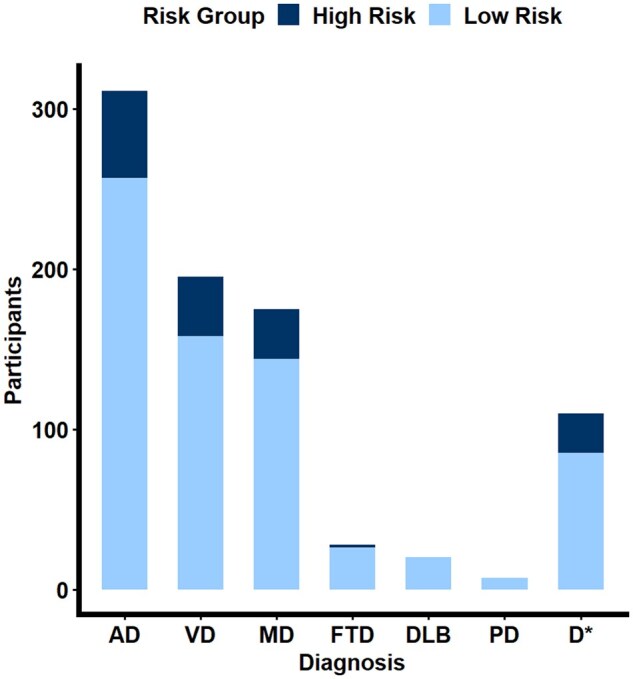
Research design and methods: We conducted a retrospective cohort study using a police database of 846 individuals living with dementia taking part in the safeguarding scheme. Descriptive statistics and proportion comparisons were used to evaluate changes in missing incident characteristics before and after joining the scheme, stratified by risk level and dementia subtype.
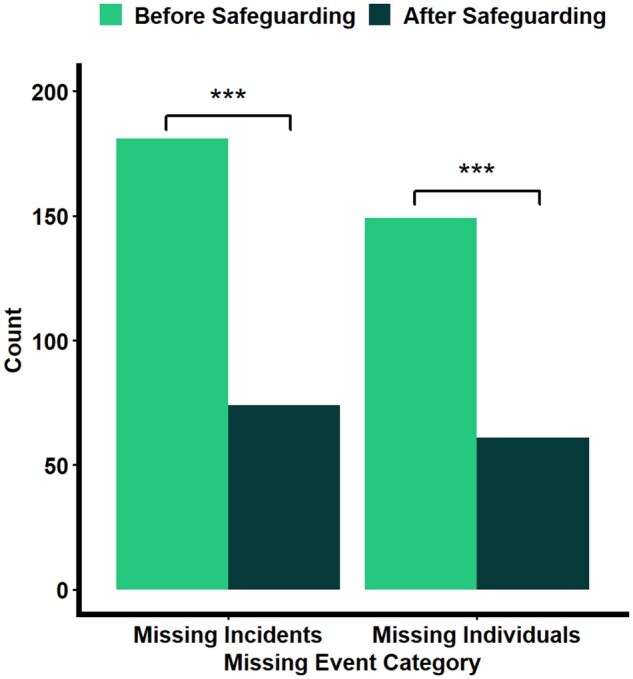
Results: We found that there were fewer missing incidents and fewer individuals with a recorded missing episode after joining the safeguarding scheme. Individuals with first missing incidents occurring after joining the scheme were found significantly faster (2.73 hours) than those with a first incident occurring before joining the scheme (5.39 hours). Among those identified as high-risk-individuals with a previous missing incident-81.21% did not go missing again after participating in the scheme. Individuals with Alzheimer's disease were more likely to go missing after taking part in the safeguarding scheme than those with vascular dementia. While individuals with a history of missing incidents remained at higher risk, the majority did not go missing again after joining the scheme.
Discussion and implications: Overall, the safeguarding scheme was effective in reducing the rate of missing incidents among people with dementia. These findings promote the proactive use of police safeguarding programs and suggest that widespread implementation could improve safety and independence for people living with dementia.
期刊介绍:
Innovation in Aging, an interdisciplinary Open Access journal of the Gerontological Society of America (GSA), is dedicated to publishing innovative, conceptually robust, and methodologically rigorous research focused on aging and the life course. The journal aims to present studies with the potential to significantly enhance the health, functionality, and overall well-being of older adults by translating scientific insights into practical applications. Research published in the journal spans a variety of settings, including community, clinical, and laboratory contexts, with a clear emphasis on issues that are directly pertinent to aging and the dynamics of life over time. The content of the journal mirrors the diverse research interests of GSA members and encompasses a range of study types. These include the validation of new conceptual or theoretical models, assessments of factors impacting the health and well-being of older adults, evaluations of interventions and policies, the implementation of groundbreaking research methodologies, interdisciplinary research that adapts concepts and methods from other fields to aging studies, and the use of modeling and simulations to understand factors and processes influencing aging outcomes. The journal welcomes contributions from scholars across various disciplines, such as technology, engineering, architecture, economics, business, law, political science, public policy, education, public health, social and psychological sciences, biomedical and health sciences, and the humanities and arts, reflecting a holistic approach to advancing knowledge in gerontology.


 求助内容:
求助内容: 应助结果提醒方式:

 京公网安备 11010802042870号


