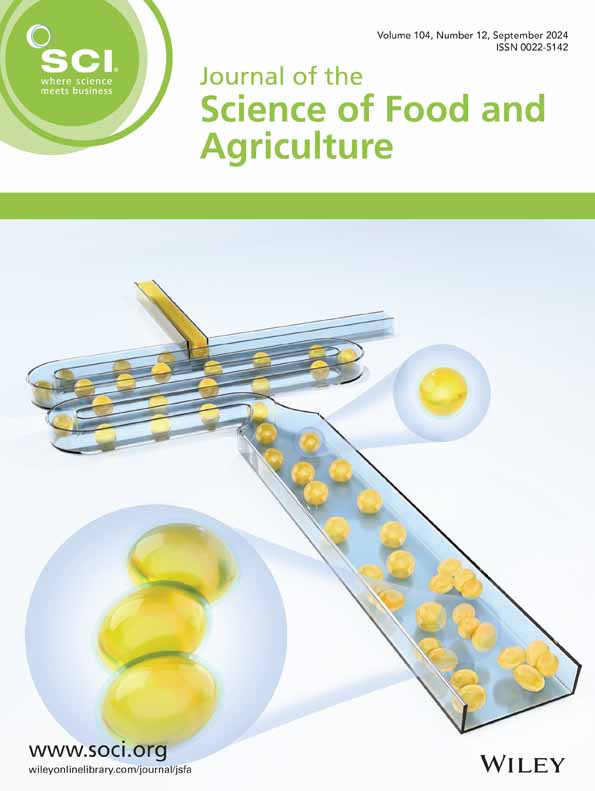
Impact of inulin molecular weight on physiochemical and techno-functional properties of Chlorella protein isolate and hydrolysed peptides' Maillard conjugates.
Background: With the rise of alternative proteins, microalgae are on the verge of commercialization to meet global demand for protein-rich foods. The functionality of alternative protein becomes crucial for protein-fortified product development. Modification via Maillard-type glycation can be employed to improve functional properties. Maillard reaction is a scalable, fast and simple method for enhancing functionality.
Results: The findings indicated that glycation had altered the surface morphology and increased particle size. With varying molecular weight of inulin higher solubility was observed, particularly for sample CHP 1:1L at pH 4.0, which demonstrated highest increase in solubility compared to the native protein, overall, solubility remained moderate. Moreover, high-molecular-weight inulin has positively affected emulsification stability for glycoconjugates of both Chlorella protein isolate and hydrolysates, H-CHP 1:1H demonstrated most stability at pH 5.0 with an emulsification stability index (ESI) of 2203 min (1.5 days). Notably, the antioxidant capacity of both CHP and H-CHP conjugates was high, with CHP 1:1M showing a Trolox equivalent of 0.33 mg mL-1 mg-1 (a 450% increase) and H-CHP 1:1L showing 0.61 mg mL-1 mg-1 (a 308% increase), respectively.
期刊介绍:
The Journal of the Science of Food and Agriculture publishes peer-reviewed original research, reviews, mini-reviews, perspectives and spotlights in these areas, with particular emphasis on interdisciplinary studies at the agriculture/ food interface.
Published for SCI by John Wiley & Sons Ltd.
SCI (Society of Chemical Industry) is a unique international forum where science meets business on independent, impartial ground. Anyone can join and current Members include consumers, business people, environmentalists, industrialists, farmers, and researchers. The Society offers a chance to share information between sectors as diverse as food and agriculture, pharmaceuticals, biotechnology, materials, chemicals, environmental science and safety. As well as organising educational events, SCI awards a number of prestigious honours and scholarships each year, publishes peer-reviewed journals, and provides Members with news from their sectors in the respected magazine, Chemistry & Industry .
Originally established in London in 1881 and in New York in 1894, SCI is a registered charity with Members in over 70 countries.

 求助内容:
 应助结果提醒方式:


 京公网安备 11010802042870号


