Background: Lipase-catalyzed esterification in organic and solvent-rich systems offers a sustainable route for producing high-value esters, but conversion is often limited by accumulation of water generated during esterification and the steric demands of bulky substrates.
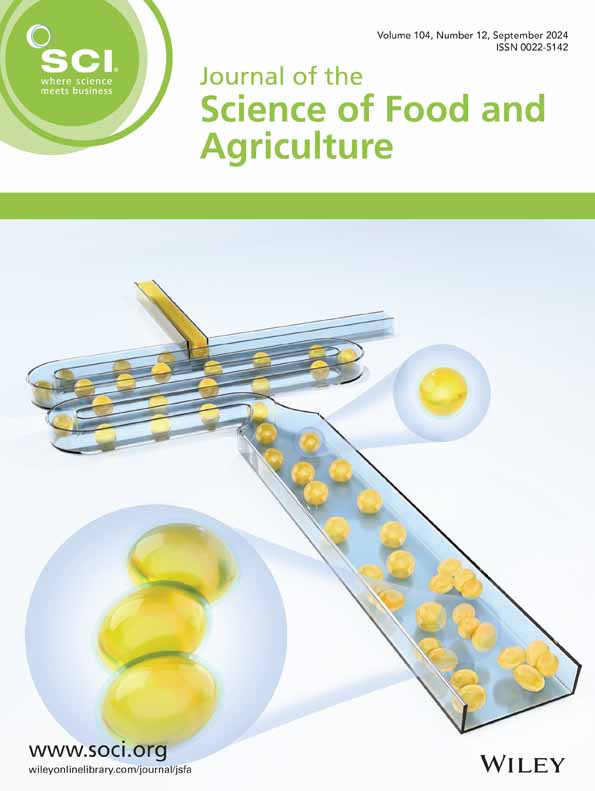
Results: Here, molecular dynamics (MD)-guided access-tunnel engineering was combined with a copper-soap high-throughput colorimetric assay to improve Candida antarctica lipase B (CALB)-catalyzed esterification. The previously reported thermostable variant M1 (L147S/T244P/S250P/T256D/N292D) was used as template to obtain an improvement of both activity and thermostability. M4 (L147S/T244P/S250P/T256D/N292D/L140W/L144F/I285F/V286L) was the best-performing variant and showed more than 4.5-fold higher volume-normalized apparent activity than wild-type (WT) in bulky-substrate esterifications, including phytosteryl oleate, glucose laurate, sucrose laurate, and α-tocopheryl succinate synthesis. Because succinic-anhydride acylation does not generate stoichiometric water, α-tocopheryl succinate synthesis was used only as a bulky-substrate-access probe. Structural and MD analyses indicated that substitutions near Trp140/Phe144 increased lid-region flexibility and remodeled the tunnel microenvironment, consistent with a putative relay-style water-transport model involving active-site Ser105 and tunnel-entrance Trp140. Immobilized M4@AOMR further achieved 98.6% conversion in preparative sucrose stearate synthesis.
期刊介绍:
The Journal of the Science of Food and Agriculture publishes peer-reviewed original research, reviews, mini-reviews, perspectives and spotlights in these areas, with particular emphasis on interdisciplinary studies at the agriculture/ food interface.
Published for SCI by John Wiley & Sons Ltd.
SCI (Society of Chemical Industry) is a unique international forum where science meets business on independent, impartial ground. Anyone can join and current Members include consumers, business people, environmentalists, industrialists, farmers, and researchers. The Society offers a chance to share information between sectors as diverse as food and agriculture, pharmaceuticals, biotechnology, materials, chemicals, environmental science and safety. As well as organising educational events, SCI awards a number of prestigious honours and scholarships each year, publishes peer-reviewed journals, and provides Members with news from their sectors in the respected magazine, Chemistry & Industry .
Originally established in London in 1881 and in New York in 1894, SCI is a registered charity with Members in over 70 countries.

 求助内容:
 应助结果提醒方式:


 京公网安备 11010802042870号


