Moghitha Parandhaman, Siao-Han Huang, Kathryn G. Dzurik, W. Seth Childers, Shigeru Amemiya
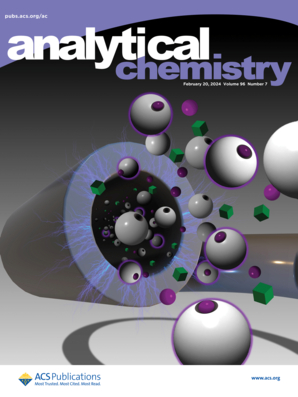
{"title":"Permeability-Based Measurement of Nanobody Binding to Nuclear Pore Complexes by Transient Scanning Electrochemical Microscopy","authors":"Moghitha Parandhaman, Siao-Han Huang, Kathryn G. Dzurik, W. Seth Childers, Shigeru Amemiya","doi":"10.1021/acs.analchem.6c04319","DOIUrl":null,"url":null,"abstract":"<p>Nucleocytoplasmic macromolecular transport through the\r\nnuclear\r\npore complex (NPC) is mediated selectively and efficiently by protein–protein\r\ninteractions, thereby regulating gene expression and the cell cycle.\r\nThe NPC transport barrier is formed by biomolecular condensates of\r\nnucleoporins (nups) rich in hydrophobic phenylalanine–glycine\r\n(FG) repeats. Herein, we develop the transient mode of scanning electrochemical\r\nmicroscopy (SECM) to measure NPC interactions with a nanobody protein\r\ntargeting the non-FG site of the crucial barrier-forming FG-rich nup,\r\nNup98. The small nanobody, which was recombinantly expressed and purified,\r\ndiffuses into the NPC and partially blocks the transport of an FG-binding\r\npolycationic peptide, protamine. The lowered permeability is measured\r\nmore sensitively by transient SECM than by the traditional steady-state\r\ncounterpart under our experimental conditions. A dissociation equilibrium\r\nconstant between the nanobody and Nup98 in the authentic NPC is determined\r\nfrom the dependence of polypeptide permeability on nanobody concentration.\r\nThe resulting dissociation constant of 7.7 nM is significantly higher\r\nthan that of 1.7 nM measured for isolated Nup98 with the nanobody\r\nattached to the optical sensor surface in biolayer interferometry.\r\nThe higher dissociation constant of nanobody–Nup98 interactions\r\nin the NPC is consistent with the enthalpically and entropically unfavorable\r\npartitioning of the nanobody into the condensate of hydrophobic and\r\ndisordered nups. The powerful SECM method will be applicable to investigate\r\na variety of NPC-binding proteins with the authentic NPC, thereby\r\nadvancing our understanding of protein–NPC interactions and\r\nfunctions.</p>","PeriodicalId":27,"journal":{"name":"Analytical Chemistry","volume":"98 41","pages":"29639–29647"},"PeriodicalIF":7.3000,"publicationDate":"2026-10-20","publicationTypes":"Journal Article","fieldsOfStudy":null,"isOpenAccess":false,"openAccessPdf":"","citationCount":"0","resultStr":null,"platform":"Semanticscholar","paperid":null,"PeriodicalName":"Analytical Chemistry","FirstCategoryId":"92","ListUrlMain":"https://pubs.acs.org/doi/10.1021/acs.analchem.6c04319","RegionNum":1,"RegionCategory":"化学","ArticlePicture":[],"TitleCN":null,"AbstractTextCN":null,"PMCID":null,"EPubDate":"2026/9/24 0:00:00","PubModel":"Epub","JCR":"Q1","JCRName":"CHEMISTRY, ANALYTICAL","Score":null,"Total":0}
引用次数: 0
Abstract
Nucleocytoplasmic macromolecular transport through the
nuclear
pore complex (NPC) is mediated selectively and efficiently by protein–protein
interactions, thereby regulating gene expression and the cell cycle.
The NPC transport barrier is formed by biomolecular condensates of
nucleoporins (nups) rich in hydrophobic phenylalanine–glycine
(FG) repeats. Herein, we develop the transient mode of scanning electrochemical
microscopy (SECM) to measure NPC interactions with a nanobody protein
targeting the non-FG site of the crucial barrier-forming FG-rich nup,
Nup98. The small nanobody, which was recombinantly expressed and purified,
diffuses into the NPC and partially blocks the transport of an FG-binding
polycationic peptide, protamine. The lowered permeability is measured
more sensitively by transient SECM than by the traditional steady-state
counterpart under our experimental conditions. A dissociation equilibrium
constant between the nanobody and Nup98 in the authentic NPC is determined
from the dependence of polypeptide permeability on nanobody concentration.
The resulting dissociation constant of 7.7 nM is significantly higher
than that of 1.7 nM measured for isolated Nup98 with the nanobody
attached to the optical sensor surface in biolayer interferometry.
The higher dissociation constant of nanobody–Nup98 interactions
in the NPC is consistent with the enthalpically and entropically unfavorable
partitioning of the nanobody into the condensate of hydrophobic and
disordered nups. The powerful SECM method will be applicable to investigate
a variety of NPC-binding proteins with the authentic NPC, thereby
advancing our understanding of protein–NPC interactions and
functions.
期刊介绍:
Analytical Chemistry, a peer-reviewed research journal, focuses on disseminating new and original knowledge across all branches of analytical chemistry. Fundamental articles may explore general principles of chemical measurement science and need not directly address existing or potential analytical methodology. They can be entirely theoretical or report experimental results. Contributions may cover various phases of analytical operations, including sampling, bioanalysis, electrochemistry, mass spectrometry, microscale and nanoscale systems, environmental analysis, separations, spectroscopy, chemical reactions and selectivity, instrumentation, imaging, surface analysis, and data processing. Papers discussing known analytical methods should present a significant, original application of the method, a notable improvement, or results on an important analyte.

 求助内容:
 应助结果提醒方式:


 京公网安备 11010802042870号


