Effects of polysaccharide charge characteristics and molecular architectures on the gel properties and in vitro digestibility of heat-induced sesame protein gels

IF 7.2 Q1 AGRICULTURE, MULTIDISCIPLINARY
Journal of Agriculture and Food Research Pub Date : 2026-07-01 Epub Date: 2026-06-21 DOI:10.1016/j.jafr.2026.103101
You-Ke Wang, Fei-Yang Wu, Yu-Chen Ji, Ren-Hang Diao, Hua-Min Liu, Yuan-Qing Luo
{"title":"Effects of polysaccharide charge characteristics and molecular architectures on the gel properties and in vitro digestibility of heat-induced sesame protein gels","authors":"You-Ke Wang,&nbsp;Fei-Yang Wu,&nbsp;Yu-Chen Ji,&nbsp;Ren-Hang Diao,&nbsp;Hua-Min Liu,&nbsp;Yuan-Qing Luo","doi":"10.1016/j.jafr.2026.103101","DOIUrl":null,"url":null,"abstract":"<div><div>This study investigated how polysaccharides with distinct charge characteristics and molecular architecture modulate the heat-induced gelation behavior and in vitro digestibility of sesame protein (SP). Six representative polysaccharides, including guar gum (GU), locust bean gum (LBG), high-acyl gellan gum (GG), gum arabic (GA), κ-carrageenan (KC), and xanthan gum (XG), were incorporated into SP, and the resulting composite heat-induced gels were evaluated for their gel properties, microstructure, and digestibility. Among the tested polysaccharides, linear anionic polysaccharides with rigid helical conformations, KC and GG, formed the densest and most continuous gel networks. These systems exhibited significantly enhanced viscoelasticity, increased water-holding capacity (WHC) by 34.8–36.8%, and reduced water mobility. These improvements were accompanied by increases in surface hydrophobicity (7.4–8.5%), β-sheet content (37.0–40.7%), and crystallinity index (182.1–201.8%). Such structural modifications restricted enzymatic access, reducing gastric and intestinal digestibility by up to 40.9% and 18.6%, respectively. In contrast, the branched anionic polysaccharide XG and the neutral flexible polysaccharides GU/LBG formed relatively weak, heterogeneous, and porous networks, resulting in only modest improvements in gel properties. Notably, GA, characterized by low negative charge density and high branching, acted antagonistically by hindering gel formation and reducing WHC by up to 37.8%, with negligible effects on digestibility. Collectively, these findings demonstrate that the charge characteristics and chain architecture of polysaccharides are critical determinants of SP gelation and digestion behavior. Tailoring these structural features offers a promising strategy for designing sesame protein-based gels with tunable texture and digestibility for applications in structured foods and controlled-release delivery systems.</div></div>","PeriodicalId":34393,"journal":{"name":"Journal of Agriculture and Food Research","volume":"29 ","pages":"Article 103101"},"PeriodicalIF":7.2000,"publicationDate":"2026-07-01","publicationTypes":"Journal Article","fieldsOfStudy":null,"isOpenAccess":false,"openAccessPdf":"","citationCount":"0","resultStr":null,"platform":"Semanticscholar","paperid":null,"PeriodicalName":"Journal of Agriculture and Food Research","FirstCategoryId":"1085","ListUrlMain":"https://www.sciencedirect.com/science/article/pii/S2666154326004710","RegionNum":0,"RegionCategory":null,"ArticlePicture":[],"TitleCN":null,"AbstractTextCN":null,"PMCID":null,"EPubDate":"2026/6/21 0:00:00","PubModel":"Epub","JCR":"Q1","JCRName":"AGRICULTURE, MULTIDISCIPLINARY","Score":null,"Total":0}
引用次数: 0

Abstract

This study investigated how polysaccharides with distinct charge characteristics and molecular architecture modulate the heat-induced gelation behavior and in vitro digestibility of sesame protein (SP). Six representative polysaccharides, including guar gum (GU), locust bean gum (LBG), high-acyl gellan gum (GG), gum arabic (GA), κ-carrageenan (KC), and xanthan gum (XG), were incorporated into SP, and the resulting composite heat-induced gels were evaluated for their gel properties, microstructure, and digestibility. Among the tested polysaccharides, linear anionic polysaccharides with rigid helical conformations, KC and GG, formed the densest and most continuous gel networks. These systems exhibited significantly enhanced viscoelasticity, increased water-holding capacity (WHC) by 34.8–36.8%, and reduced water mobility. These improvements were accompanied by increases in surface hydrophobicity (7.4–8.5%), β-sheet content (37.0–40.7%), and crystallinity index (182.1–201.8%). Such structural modifications restricted enzymatic access, reducing gastric and intestinal digestibility by up to 40.9% and 18.6%, respectively. In contrast, the branched anionic polysaccharide XG and the neutral flexible polysaccharides GU/LBG formed relatively weak, heterogeneous, and porous networks, resulting in only modest improvements in gel properties. Notably, GA, characterized by low negative charge density and high branching, acted antagonistically by hindering gel formation and reducing WHC by up to 37.8%, with negligible effects on digestibility. Collectively, these findings demonstrate that the charge characteristics and chain architecture of polysaccharides are critical determinants of SP gelation and digestion behavior. Tailoring these structural features offers a promising strategy for designing sesame protein-based gels with tunable texture and digestibility for applications in structured foods and controlled-release delivery systems.

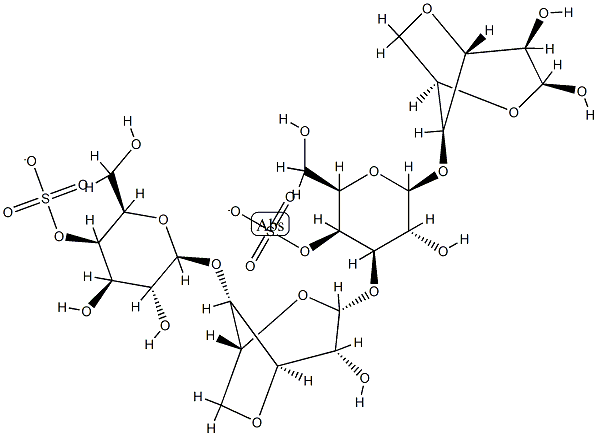
Abstract Image

多糖电荷特性和分子结构对热诱导芝麻蛋白凝胶性质和体外消化率的影响
本研究研究了不同电荷特征和分子结构的多糖如何调节芝麻蛋白(SP)的热凝胶行为和体外消化率。将瓜尔胶(GU)、刺槐豆胶(LBG)、高酰基结冷胶(GG)、阿拉伯胶(GA)、κ-卡拉胶(KC)和黄原胶(XG)等6种具有代表性的多糖加入SP中,并对其凝胶性能、微观结构和消化率进行了评价。在被测多糖中,具有刚性螺旋构象的线性阴离子多糖KC和GG形成了最密集和最连续的凝胶网络。这些体系表现出显著增强的粘弹性,提高了34.8-36.8%的持水能力(WHC),降低了水的流动性。这些改善伴随着表面疏水性(7.4-8.5%)、β-片含量(37.0-40.7%)和结晶度指数(182.1-201.8%)的增加。这种结构修饰限制了酶的进入,使胃和肠道的消化率分别降低了40.9%和18.6%。相比之下,支化阴离子多糖XG和中性柔性多糖GU/LBG形成相对较弱、不均匀和多孔的网络,凝胶性能仅略有改善。值得注意的是,以低负电荷密度和高分支为特征的赤霉素具有拮抗作用,可阻碍凝胶形成,减少WHC高达37.8%,对消化率的影响可以忽略不计。总的来说,这些发现表明多糖的电荷特征和链结构是SP凝胶化和消化行为的关键决定因素。定制这些结构特征为设计具有可调纹理和可消化性的芝麻蛋白凝胶提供了一种有前途的策略,可用于结构化食品和控释输送系统。
本文章由计算机程序翻译,如有差异,请以英文原文为准。
求助全文
约1分钟内获得全文 求助全文
来源期刊
CiteScore
5.40
自引率
2.60%
发文量
193
审稿时长
69 days
文献相关原料
原料信息
原料厂家
1
FTIR spectrometer
2
F-7100 fluorescence spectrophotometer
5
Total protein quantification kit (BCA method)
6
MesoMR 23-060H-I
7
Rigaku SmartLab SE
8
microplate reader
9
MARS60 rheometer
10
Gum arabic
9000-01-5
11
High-acyl gellan gum
71010-52-1
12
Locust bean gum
9000-40-2
13
22
Xanthan gum
11138-66-2
¥24.00-¥3668.42
14
22
κ-carrageenan
11114-20-8
¥26.00-¥10500.00
15
22
Guar gum
9000-30-0
¥23.00-¥10600.00
×
引用
GB/T 7714-2015
复制
MLA
复制
APA
复制
导出至
BibTeX EndNote RefMan NoteFirst NoteExpress
×
提示
您的信息不完整,为了账户安全,请先补充。
现在去补充
×
提示
您因"违规操作"
具体请查看互助需知
我知道了
×
提示
确定
请完成安全验证×
copy
已复制链接
快去分享给好友吧!
我知道了
右上角分享
点击右上角分享
0
联系我们:info@booksci.cn Book学术提供免费学术资源搜索服务,方便国内外学者检索中英文文献。致力于提供最便捷和优质的服务体验。 Copyright © 2023 布克学术 All rights reserved.
京ICP备2023020795号-1
ghs 京公网安备 11010802042870号
Book学术文献互助
Book学术文献互助群
群 号:604180095
Book学术官方微信
小红书