Neyna Santos Morais, Thaís Souza Passos, Paula Fernanda da Silva, Riva de Paula Oliveira, Maria Luiza Gregório Alves, Pablo Felipe Ferreira Farias, Susana Margarida Gomes Moreira, David Henrique Xavier Barbosa, Matheus de Freitas Fernandes Pedrosa, Camila Fernandes de Assis, Francisco Canindé de Sousa Júnior, Cristiane Fernandes de Assis
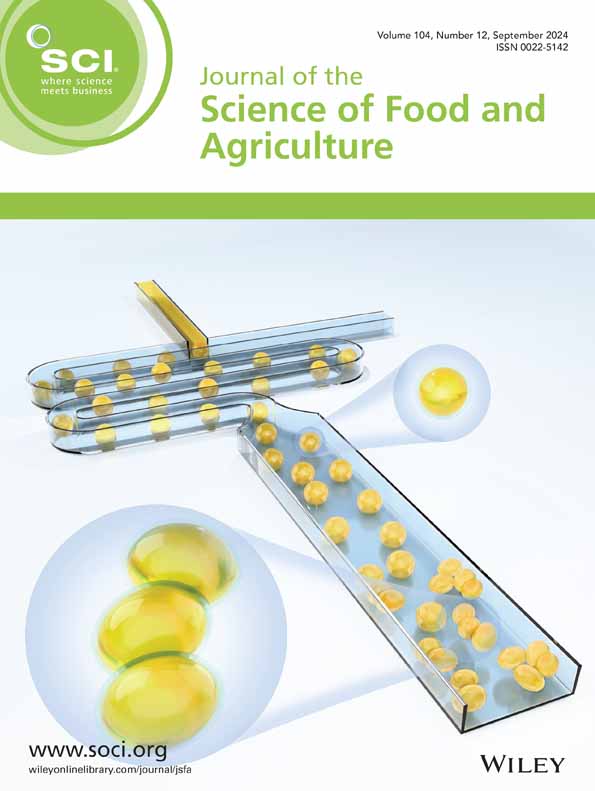
Background: Buriti oil (Mauritia flexuosa) (BO) possesses high nutritional and functional value due to its carotenoids, phenolics, and unsaturated fatty acids, which exhibit antioxidant and antimicrobial properties. However, its lipophilic nature and susceptibility to oxidation limit its industrial application. Nanoencapsulation overcomes these obstacles by increasing oxidative stability and water dispersibility and by enhancing bioactivity. This study investigated the effects of BO nanoencapsulation in porcine gelatin (OPG) on toxicity (cell cultures and Caenorhabditis elegans), simulated digestion, as well as redox-modulating, antioxidant, and antifungal properties.
Results: The OPG nanoformulation had a diameter of 69.72 nm, a high encapsulation efficiency (95.79%), and high water dispersibility (79.91%). No activity was observed against human cervical cancer cells (HeLa) or Chinese hamster ovary cells (CHO-K1) for either OPG or BO, but both exhibited activity against 3T3 cells (P < 0.05) at 500 μg mL⁻¹. In C. elegans assays, no toxicity on egg hatching or body size was observed at the evaluated concentrations (0.1, 0.2, and 1.0 mg mL-1). Linoleic acid was preferentially released in the intestinal phase (56.12%) during simulated digestion. Compared with BO (2.24 ± 0.003 mg ascorbic acid equivalent [AAE] g⁻¹), OPG exhibited a significantly higher total antioxidant capacity (23.40 ± 0.004 mg AAE g⁻¹), greater antifungal activity against Candida spp. (minimum inhibitory concentration (MIC) and minimum fungicidal concentration (MFC) = 5 mg mL⁻¹), and an enhanced redox-modulating dose-response in C. elegans.
期刊介绍:
The Journal of the Science of Food and Agriculture publishes peer-reviewed original research, reviews, mini-reviews, perspectives and spotlights in these areas, with particular emphasis on interdisciplinary studies at the agriculture/ food interface.
Published for SCI by John Wiley & Sons Ltd.
SCI (Society of Chemical Industry) is a unique international forum where science meets business on independent, impartial ground. Anyone can join and current Members include consumers, business people, environmentalists, industrialists, farmers, and researchers. The Society offers a chance to share information between sectors as diverse as food and agriculture, pharmaceuticals, biotechnology, materials, chemicals, environmental science and safety. As well as organising educational events, SCI awards a number of prestigious honours and scholarships each year, publishes peer-reviewed journals, and provides Members with news from their sectors in the respected magazine, Chemistry & Industry .
Originally established in London in 1881 and in New York in 1894, SCI is a registered charity with Members in over 70 countries.

 求助内容:
求助内容: 应助结果提醒方式:

 京公网安备 11010802042870号


