
Hollow nanoarchitectures: Materials engineering, nanochemistry, and biomedical applications
IF 42.9
1区 材料科学
Q1 MATERIALS SCIENCE, MULTIDISCIPLINARY
Progress in Materials Science
Pub Date : 2026-04-01
Epub Date: 2025-12-10
DOI:10.1016/j.pmatsci.2025.101634
引用次数: 0
Abstract
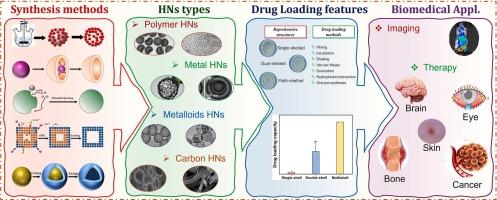
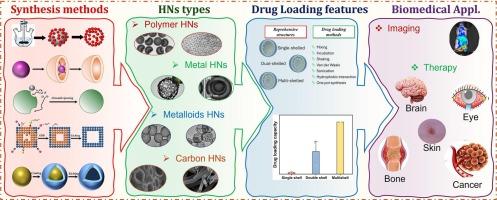
The realm of drug delivery has traditionally centered on the exploration of structural and compositional characteristics of solid nanomaterials. Recent investigations have illuminated the significance of voids within nanomaterials, underscoring their multidimensional characteristics. In particular, the hollow nanostructures or nanoarchitectures, characterized by their porous/nonporous shells and empty interiors, possess unique advantages for the confinement of therapeutic agents and biomolecules, facilitating targeted delivery through functionalization with active ligands. Despite considerable strides in research surrounding these advanced materials, the overarching organization of existing studies remains suboptimal. Unlike existing review literature, this balanced review article aims to establish a coherent and progressive framework for the development of advanced hollow nanostructures by addressing critical design and engineering strategies applicable in the field of nanomedicine and theranostics. A selection of seminal works has been integrated to provide foundational knowledge, while ensuring that the application sections reflect the latest developments in the field, the literature examined is restricted to high-quality publications from the preceding five years. Additionally, this review includes a commentary on patents and clinical implications. Our findings suggest that hollow nanostructures exhibit substantial potential for future biomedical applications, thereby warranting further investigation and development in this promising domain.
空心纳米结构:材料工程、纳米化学和生物医学应用
传统上,药物递送领域集中于探索固体纳米材料的结构和组成特征。最近的研究已经阐明了纳米材料中空洞的重要性,强调了它们的多维特性。特别是,空心纳米结构或纳米结构以其多孔/无孔外壳和中空内部为特征,在限制治疗剂和生物分子方面具有独特的优势,通过活性配体的功能化促进靶向递送。尽管围绕这些先进材料的研究取得了长足的进步,但现有研究的总体组织仍然不够理想。与现有的综述文献不同,这篇平衡的综述文章旨在通过解决适用于纳米医学和治疗学领域的关键设计和工程策略,为先进中空纳米结构的发展建立一个连贯和渐进的框架。已汇编了一些开创性的作品,以提供基础知识,同时确保应用部分反映该领域的最新发展,所审查的文献仅限于过去五年的高质量出版物。此外,本综述还包括对专利和临床意义的评论。我们的研究结果表明,空心纳米结构在未来的生物医学应用中具有巨大的潜力,因此值得在这一有前途的领域进行进一步的研究和开发。
本文章由计算机程序翻译,如有差异,请以英文原文为准。
求助全文
约1分钟内获得全文
求助全文
来源期刊
Progress in Materials Science
工程技术-材料科学:综合
CiteScore
59.60
自引率
0.80%
发文量
101
审稿时长
11.4 months
期刊介绍:
Progress in Materials Science is a journal that publishes authoritative and critical reviews of recent advances in the science of materials. The focus of the journal is on the fundamental aspects of materials science, particularly those concerning microstructure and nanostructure and their relationship to properties. Emphasis is also placed on the thermodynamics, kinetics, mechanisms, and modeling of processes within materials, as well as the understanding of material properties in engineering and other applications.
The journal welcomes reviews from authors who are active leaders in the field of materials science and have a strong scientific track record. Materials of interest include metallic, ceramic, polymeric, biological, medical, and composite materials in all forms.
Manuscripts submitted to Progress in Materials Science are generally longer than those found in other research journals. While the focus is on invited reviews, interested authors may submit a proposal for consideration. Non-invited manuscripts are required to be preceded by the submission of a proposal. Authors publishing in Progress in Materials Science have the option to publish their research via subscription or open access. Open access publication requires the author or research funder to meet a publication fee (APC).
Abstracting and indexing services for Progress in Materials Science include Current Contents, Science Citation Index Expanded, Materials Science Citation Index, Chemical Abstracts, Engineering Index, INSPEC, and Scopus.
 求助内容:
求助内容: 应助结果提醒方式:

 京公网安备 11010802042870号


