
Asynchronous co-culture enhances neuronal differentiation in CRISPR/Cas9-engineered NURR1 reporter induced neural stem cells
IF 3.4
4区 医学
Q2 CLINICAL NEUROLOGY
Journal of Neurorestoratology
Pub Date : 2026-02-01
Epub Date: 2025-09-24
DOI:10.1016/j.jnrt.2025.100252
引用次数: 0
Abstract
Background
Parkinson's disease (PD) is caused by the gradual degeneration of dopaminergic neurons in the midbrain, resulting in severe motor impairments. Stem cell-based neurorestorative therapies present considerable therapeutic promise; however, major challenges remain, such as variability in lineage specification, limited long-term graft survival, and the absence of effective real-time techniques to monitor differentiation processes. Overcoming these obstacles necessitates innovative strategies to address cellular heterogeneity and enhance the efficacy of neurorestorative interventions.
Methods
We engineered a NURR1-driven dopaminergic reporter in induced neural stem cells (iNSCs) through CRISPR/Cas9-mediated knock-in of ZsGreen. The differentiation capacity of reporter iNSCs was validated via in vitro spontaneous differentiation. Transcriptomic profiling was performed to compare fluorescence-sorted differentiation-committed (ZsGreen+) and non-committed (ZsGreen–) subpopulations with biological triplicates. To enhance neuronal differentiation efficiency, we developed a stage-specific asynchronous co-culture system that combined early-stage (day 5) and mid-stage (day 8) differentiating iNSC populations. Optimized iNSC-derived dopaminergic precursors were transplanted into striatum of sixteen male SCID-Beige mice (6–8 weeks old), which were randomly assigned to two groups: one receiving co-cultured cells (n = 8) and the other receiving non-co-cultured cells (n = 8). Graft survival and differentiation were subsequently assessed.
Results
The reporter system allowed real-time tracking of dopaminergic differentiation from iNSCs without affecting their differentiation potential. Transcriptome analysis showed specific activation of neurorestorative pathways in ZsGreen+ cells, including processes such as neurogenesis, neuronal maturation, axonal guidance, and cell projection organization. Asynchronous co-culture markedly enhanced the neuronal yield from iNSC-derived dopaminergic precursors compared with standard approaches. Transplantation in vivo confirmed stable engraftment and differentiation into TH-positive cells within the host striatal tissue.
Conclusion
The NURR1-ZsGreen reporter system provides a functional platform to resolve lineage specification heterogeneity and optimize differentiation protocols. The identified neurorestorative pathways, together with the asynchronous co-culture strategy, collectively address critical barriers in cell replacement-based neurorestorative therapy.
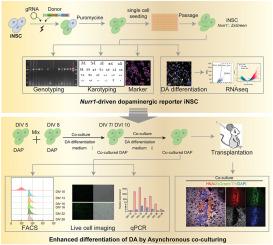
异步共培养增强CRISPR/ cas9工程NURR1报告基因诱导的神经干细胞的神经元分化
帕金森病(PD)是由中脑多巴胺能神经元的逐渐退化引起的,导致严重的运动障碍。基于干细胞的神经修复疗法具有相当大的治疗前景;然而,主要的挑战仍然存在,如谱系规格的可变性,有限的长期移植物存活,以及缺乏有效的实时技术来监测分化过程。克服这些障碍需要创新的策略来解决细胞异质性和提高神经修复干预的功效。方法通过CRISPR/ cas9介导的ZsGreen敲入,在诱导神经干细胞(iNSCs)中构建nurr1驱动的多巴胺能报告基因。通过体外自发分化验证了报告细胞的分化能力。进行转录组学分析,比较荧光分类的分化承诺(ZsGreen+)和非承诺(ZsGreen -)亚群与生物三倍体。为了提高神经元分化效率,我们开发了一个阶段特异性的异步共培养系统,将早期(第5天)和中期(第8天)分化的iNSC群体结合起来。将优化后的insc来源的多巴胺能前体移植到16只雄性SCID-Beige小鼠(6-8周龄)的纹状体中,随机分为两组:一组接受共培养细胞(n = 8),另一组接受非共培养细胞(n = 8)。随后评估移植物存活和分化。结果该报告系统在不影响其分化潜能的情况下,可以实时跟踪iNSCs的多巴胺能分化情况。转录组分析显示,ZsGreen+细胞的神经修复通路特异性激活,包括神经发生、神经元成熟、轴突引导和细胞投射组织等过程。与标准方法相比,异步共培养显著提高了insc来源的多巴胺能前体的神经元产量。体内移植证实在宿主纹状体组织内稳定植入并分化为th阳性细胞。结论NURR1-ZsGreen报告系统为解决谱系规格异质性和优化分化方案提供了功能平台。已确定的神经修复途径,以及异步共培养策略,共同解决了基于细胞替代的神经修复治疗的关键障碍。
本文章由计算机程序翻译,如有差异,请以英文原文为准。
求助全文
约1分钟内获得全文
求助全文
来源期刊

Journal of Neurorestoratology
CLINICAL NEUROLOGY-
CiteScore
2.10
自引率
18.20%
发文量
22
审稿时长
12 weeks
文献相关原料
公司名称
产品信息
陶术
SAG1
 求助内容:
求助内容: 应助结果提醒方式:

 京公网安备 11010802042870号


