
氨基酸介导的铜催化类芬顿体系的双重氧化:配体结构和ph依赖性物种形成的影响

IF 12.2 1区 环境科学与生态学 Q1 ENGINEERING, ENVIRONMENTAL
Erwin Jongwoo Park,Soosan Park,Hye Kyung Nam,Junghun Lee,Jiyoon Cho,Hyunsoo Yoon,Min Sik Kim,Changha Lee
{"title":"氨基酸介导的铜催化类芬顿体系的双重氧化:配体结构和ph依赖性物种形成的影响","authors":"Erwin Jongwoo Park,Soosan Park,Hye Kyung Nam,Junghun Lee,Jiyoon Cho,Hyunsoo Yoon,Min Sik Kim,Changha Lee","doi":"10.1021/acs.est.6c10258","DOIUrl":null,"url":null,"abstract":"The Cu(II)/H2O2 system has attracted increasing interest as a Cu-catalyzed advanced oxidation process and serves as a useful biomimetic model for investigating Cu-mediated biomolecule redox interactions. In this system, reactive oxidants can operate in a dual-oxidation mode, where the oxidant flux partitions between coordinated ligands and coexisting bulk-phase substrates. In this study, we systematically investigated this behavior over a wide pH range (3–12), using 17 structurally diverse amino acids (AAs) as model ligands and benzoic acid (BA), which exhibits negligible Cu(II) complexation, as a model bulk-phase substrate. Speciation-based kinetic analysis identified the bis-chelated complex, [Cu(AA)2], as a key catalytic species associated with effective dual oxidation, namely, balanced oxidant allocation between ligand-centered AA oxidation and bulk-phase BA oxidation, at pH 7–10. Using quantitative structure–activity/efficiency relationships, we demonstrate that the partitioning of oxidant flux is governed by two ligand-associated properties: (i) Cu(II)-binding strength, which promotes ligand-centered oxidation, and (ii) oxidative stability (proxied by the highest occupied molecular orbital (HOMO)–lowest unoccupied molecular orbital (LUMO) gap), which favors the oxidant flux to the bulk phase. At higher pH, the possible formation of mixed hydroxo species, [Cu(AA)2(OH)]−, was associated with a shift toward ligand-centered oxidation and attenuated bulk-phase BA oxidation. Integrated machine-learning models combining ligand descriptors with pH-dependent speciation indicators further supported these trends and predicted AA and BA oxidation kinetics across pH 7–11. These results provide a predictive framework for understanding how ligand structure and pH-dependent speciation jointly control oxidant allocation in the Cu(II)/H2O2 system.","PeriodicalId":36,"journal":{"name":"环境科学与技术","volume":"108 1","pages":""},"PeriodicalIF":12.2000,"publicationDate":"2026-10-20","publicationTypes":"Journal Article","fieldsOfStudy":null,"isOpenAccess":false,"openAccessPdf":"","citationCount":"0","resultStr":"{\"title\":\"Dual Oxidation in the Amino Acid-Mediated Copper-Catalyzed Fenton-like System: Effects of Ligand Structure and pH-Dependent Speciation\",\"authors\":\"Erwin Jongwoo Park,Soosan Park,Hye Kyung Nam,Junghun Lee,Jiyoon Cho,Hyunsoo Yoon,Min Sik Kim,Changha Lee\",\"doi\":\"10.1021/acs.est.6c10258\",\"DOIUrl\":null,\"url\":null,\"abstract\":\"The Cu(II)/H2O2 system has attracted increasing interest as a Cu-catalyzed advanced oxidation process and serves as a useful biomimetic model for investigating Cu-mediated biomolecule redox interactions. In this system, reactive oxidants can operate in a dual-oxidation mode, where the oxidant flux partitions between coordinated ligands and coexisting bulk-phase substrates. In this study, we systematically investigated this behavior over a wide pH range (3–12), using 17 structurally diverse amino acids (AAs) as model ligands and benzoic acid (BA), which exhibits negligible Cu(II) complexation, as a model bulk-phase substrate. Speciation-based kinetic analysis identified the bis-chelated complex, [Cu(AA)2], as a key catalytic species associated with effective dual oxidation, namely, balanced oxidant allocation between ligand-centered AA oxidation and bulk-phase BA oxidation, at pH 7–10. Using quantitative structure–activity/efficiency relationships, we demonstrate that the partitioning of oxidant flux is governed by two ligand-associated properties: (i) Cu(II)-binding strength, which promotes ligand-centered oxidation, and (ii) oxidative stability (proxied by the highest occupied molecular orbital (HOMO)–lowest unoccupied molecular orbital (LUMO) gap), which favors the oxidant flux to the bulk phase. At higher pH, the possible formation of mixed hydroxo species, [Cu(AA)2(OH)]−, was associated with a shift toward ligand-centered oxidation and attenuated bulk-phase BA oxidation. Integrated machine-learning models combining ligand descriptors with pH-dependent speciation indicators further supported these trends and predicted AA and BA oxidation kinetics across pH 7–11. These results provide a predictive framework for understanding how ligand structure and pH-dependent speciation jointly control oxidant allocation in the Cu(II)/H2O2 system.\",\"PeriodicalId\":36,\"journal\":{\"name\":\"环境科学与技术\",\"volume\":\"108 1\",\"pages\":\"\"},\"PeriodicalIF\":12.2000,\"publicationDate\":\"2026-10-20\",\"publicationTypes\":\"Journal Article\",\"fieldsOfStudy\":null,\"isOpenAccess\":false,\"openAccessPdf\":\"\",\"citationCount\":\"0\",\"resultStr\":null,\"platform\":\"Semanticscholar\",\"paperid\":null,\"PeriodicalName\":\"环境科学与技术\",\"FirstCategoryId\":\"1\",\"ListUrlMain\":\"https://doi.org/10.1021/acs.est.6c10258\",\"RegionNum\":1,\"RegionCategory\":\"环境科学与生态学\",\"ArticlePicture\":[],\"TitleCN\":null,\"AbstractTextCN\":null,\"PMCID\":null,\"EPubDate\":\"\",\"PubModel\":\"\",\"JCR\":\"Q1\",\"JCRName\":\"ENGINEERING, ENVIRONMENTAL\",\"Score\":null,\"Total\":0}","platform":"Semanticscholar","paperid":null,"PeriodicalName":"环境科学与技术","FirstCategoryId":"1","ListUrlMain":"https://doi.org/10.1021/acs.est.6c10258","RegionNum":1,"RegionCategory":"环境科学与生态学","ArticlePicture":[],"TitleCN":null,"AbstractTextCN":null,"PMCID":null,"EPubDate":"","PubModel":"","JCR":"Q1","JCRName":"ENGINEERING, ENVIRONMENTAL","Score":null,"Total":0}
引用次数: 0

摘要

Cu(II)/H2O2系统作为Cu催化的高级氧化过程引起了越来越多的关注,并作为研究Cu介导的生物分子氧化还原相互作用的有用仿生模型。在该系统中,活性氧化剂可以在双氧化模式下工作,其中氧化剂通量在配体和共存的体相底物之间分配。在这项研究中,我们系统地研究了在宽pH范围(3-12)下的这种行为,使用17种结构不同的氨基酸(AAs)作为模型配体,苯甲酸(BA)作为模型体相底物,其铜(II)络合作用可以忽略不计。基于物种的动力学分析发现,双螯合络合物[Cu(AA)2]是有效双重氧化的关键催化物质,即在pH 7-10下,配体中心AA氧化和体积相BA氧化之间的氧化剂分配平衡。利用定量的结构-活性/效率关系,我们证明了氧化剂通量的分配是由两个配体相关的性质决定的:(i) Cu(II)结合强度,这促进了配体中心的氧化;(II)氧化稳定性(由最高占据分子轨道(HOMO) -最低未占据分子轨道(LUMO)间隙表示),这有利于氧化剂通量到体相。在较高的pH下,可能形成的混合羟基[Cu(AA)2(OH)]−与向配体中心氧化和衰减体相BA氧化的转变有关。结合配体描述符和pH依赖性物种形成指标的集成机器学习模型进一步支持了这些趋势,并预测了pH 7-11范围内AA和BA的氧化动力学。这些结果为理解配体结构和ph依赖的物种形成如何共同控制Cu(II)/H2O2系统中的氧化剂分配提供了预测框架。
本文章由计算机程序翻译,如有差异,请以英文原文为准。

Dual Oxidation in the Amino Acid-Mediated Copper-Catalyzed Fenton-like System: Effects of Ligand Structure and pH-Dependent Speciation

Dual Oxidation in the Amino Acid-Mediated Copper-Catalyzed Fenton-like System: Effects of Ligand Structure and pH-Dependent Speciation
The Cu(II)/H2O2 system has attracted increasing interest as a Cu-catalyzed advanced oxidation process and serves as a useful biomimetic model for investigating Cu-mediated biomolecule redox interactions. In this system, reactive oxidants can operate in a dual-oxidation mode, where the oxidant flux partitions between coordinated ligands and coexisting bulk-phase substrates. In this study, we systematically investigated this behavior over a wide pH range (3–12), using 17 structurally diverse amino acids (AAs) as model ligands and benzoic acid (BA), which exhibits negligible Cu(II) complexation, as a model bulk-phase substrate. Speciation-based kinetic analysis identified the bis-chelated complex, [Cu(AA)2], as a key catalytic species associated with effective dual oxidation, namely, balanced oxidant allocation between ligand-centered AA oxidation and bulk-phase BA oxidation, at pH 7–10. Using quantitative structure–activity/efficiency relationships, we demonstrate that the partitioning of oxidant flux is governed by two ligand-associated properties: (i) Cu(II)-binding strength, which promotes ligand-centered oxidation, and (ii) oxidative stability (proxied by the highest occupied molecular orbital (HOMO)–lowest unoccupied molecular orbital (LUMO) gap), which favors the oxidant flux to the bulk phase. At higher pH, the possible formation of mixed hydroxo species, [Cu(AA)2(OH)]−, was associated with a shift toward ligand-centered oxidation and attenuated bulk-phase BA oxidation. Integrated machine-learning models combining ligand descriptors with pH-dependent speciation indicators further supported these trends and predicted AA and BA oxidation kinetics across pH 7–11. These results provide a predictive framework for understanding how ligand structure and pH-dependent speciation jointly control oxidant allocation in the Cu(II)/H2O2 system.
求助全文
通过发布文献求助,成功后即可免费获取论文全文。 去求助
来源期刊
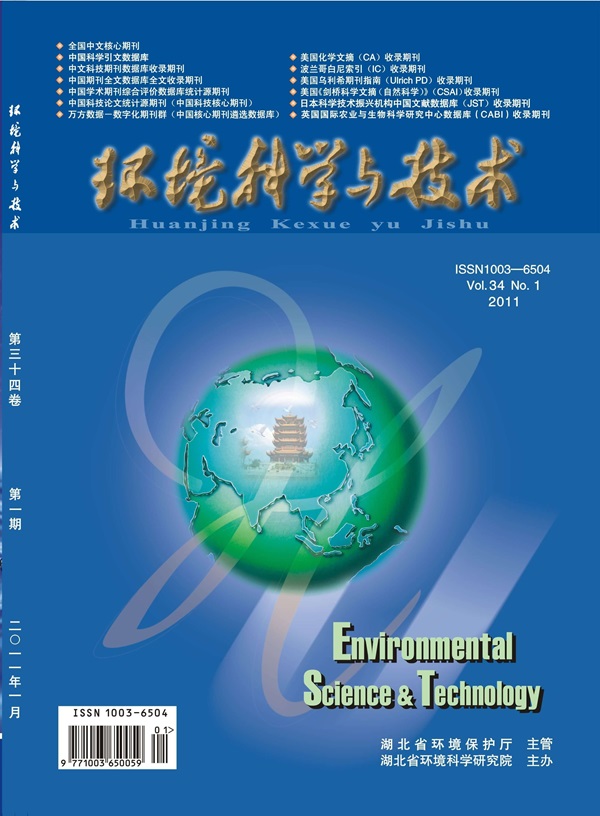
环境科学与技术
环境科学与技术 环境科学-工程:环境
CiteScore
17.50
自引率
9.60%
发文量
12359
审稿时长
2.8 months
期刊介绍: Environmental Science & Technology (ES&T) is a co-sponsored academic and technical magazine by the Hubei Provincial Environmental Protection Bureau and the Hubei Provincial Academy of Environmental Sciences. Environmental Science & Technology (ES&T) holds the status of Chinese core journals, scientific papers source journals of China, Chinese Science Citation Database source journals, and Chinese Academic Journal Comprehensive Evaluation Database source journals. This publication focuses on the academic field of environmental protection, featuring articles related to environmental protection and technical advancements.

×
引用
GB/T 7714-2015
复制
MLA
复制
APA
复制
导出至
BibTeX EndNote RefMan NoteFirst NoteExpress
×
提示
您的信息不完整,为了账户安全,请先补充。
现在去补充
×
提示
您因"违规操作"
具体请查看互助需知
我知道了
×
提示
确定
请完成安全验证×
copy
已复制链接
快去分享给好友吧!
我知道了
右上角分享
点击右上角分享
0
联系我们:info@booksci.cn Book学术提供免费学术资源搜索服务,方便国内外学者检索中英文文献。致力于提供最便捷和优质的服务体验。 Copyright © 2023 布克学术 All rights reserved.
京ICP备2023020795号-1
ghs 京公网安备 11010802042870号
Book学术文献互助
Book学术文献互助群
群 号:604180095
Book学术官方微信
小红书


