
放大细胞骨架:高速原子力显微镜拍摄的纳米缺陷引发的微管灾难

IF 17.3 1区 材料科学 Q1 CHEMISTRY, MULTIDISCIPLINARY
ACS Nano Pub Date : 2026-10-21 DOI:10.1021/acsnano.6c07269
Xin Zhang,Keesiang Lim,Tomohiro Shima,Elma Sakinatus Sajidah,Masaharu Hazawa,Masahide Kikkawa,Toshio Ando,Richard W. Wong
{"title":"放大细胞骨架:高速原子力显微镜拍摄的纳米缺陷引发的微管灾难","authors":"Xin Zhang,Keesiang Lim,Tomohiro Shima,Elma Sakinatus Sajidah,Masaharu Hazawa,Masahide Kikkawa,Toshio Ando,Richard W. Wong","doi":"10.1021/acsnano.6c07269","DOIUrl":null,"url":null,"abstract":"Microtubule catastrophe is widely attributed to an end-driven loss of the GTP cap, implying that structural failure is confined to filament termini. Here, we show that this view is incomplete. Using high-speed atomic force microscopy (HS-AFM), we directly visualize nanoscale structural failure in paclitaxel-treated microtubules in real time. We identify spontaneous lattice nanodefects that emerge within the filament shaft and act as internal initiation sites for disassembly. These defects arise from localized protofilament decoupling and lattice strain accumulation, which disrupt the cooperative interactions within the microtubule wall. Once a critical threshold is reached, these sites nucleate disassembly that propagates as distinct collapse trajectories, including bidirectional spreading from intralattice defects and inward convergence from opposing ends, in addition to classical end-initiated depolymerization. Rather than uniformly stabilizing the lattice, paclitaxel maintains microtubules in a metastable state in which internal stress heterogeneity persists and enables defect-driven failure. Our results establish lattice decoupling as a primary structural trigger of microtubule catastrophe and redefine it as a defect-mediated, spatially encoded transition. These findings provide a nanoscale mechanistic framework for understanding heterogeneous responses to microtubule-targeting chemotherapeutics, suggesting that drug resistance may arise from modulation of lattice integrity and defect propagation rather than drug binding alone.","PeriodicalId":21,"journal":{"name":"ACS Nano","volume":"60 1","pages":""},"PeriodicalIF":17.3000,"publicationDate":"2026-10-21","publicationTypes":"Journal Article","fieldsOfStudy":null,"isOpenAccess":false,"openAccessPdf":"","citationCount":"0","resultStr":"{\"title\":\"Zooming into the Cytoskeleton: Nanodefect-Initiated Microtubule Catastrophe Filmed by High-Speed Atomic Force Microscopy\",\"authors\":\"Xin Zhang,Keesiang Lim,Tomohiro Shima,Elma Sakinatus Sajidah,Masaharu Hazawa,Masahide Kikkawa,Toshio Ando,Richard W. Wong\",\"doi\":\"10.1021/acsnano.6c07269\",\"DOIUrl\":null,\"url\":null,\"abstract\":\"Microtubule catastrophe is widely attributed to an end-driven loss of the GTP cap, implying that structural failure is confined to filament termini. Here, we show that this view is incomplete. Using high-speed atomic force microscopy (HS-AFM), we directly visualize nanoscale structural failure in paclitaxel-treated microtubules in real time. We identify spontaneous lattice nanodefects that emerge within the filament shaft and act as internal initiation sites for disassembly. These defects arise from localized protofilament decoupling and lattice strain accumulation, which disrupt the cooperative interactions within the microtubule wall. Once a critical threshold is reached, these sites nucleate disassembly that propagates as distinct collapse trajectories, including bidirectional spreading from intralattice defects and inward convergence from opposing ends, in addition to classical end-initiated depolymerization. Rather than uniformly stabilizing the lattice, paclitaxel maintains microtubules in a metastable state in which internal stress heterogeneity persists and enables defect-driven failure. Our results establish lattice decoupling as a primary structural trigger of microtubule catastrophe and redefine it as a defect-mediated, spatially encoded transition. These findings provide a nanoscale mechanistic framework for understanding heterogeneous responses to microtubule-targeting chemotherapeutics, suggesting that drug resistance may arise from modulation of lattice integrity and defect propagation rather than drug binding alone.\",\"PeriodicalId\":21,\"journal\":{\"name\":\"ACS Nano\",\"volume\":\"60 1\",\"pages\":\"\"},\"PeriodicalIF\":17.3000,\"publicationDate\":\"2026-10-21\",\"publicationTypes\":\"Journal Article\",\"fieldsOfStudy\":null,\"isOpenAccess\":false,\"openAccessPdf\":\"\",\"citationCount\":\"0\",\"resultStr\":null,\"platform\":\"Semanticscholar\",\"paperid\":null,\"PeriodicalName\":\"ACS Nano\",\"FirstCategoryId\":\"88\",\"ListUrlMain\":\"https://doi.org/10.1021/acsnano.6c07269\",\"RegionNum\":1,\"RegionCategory\":\"材料科学\",\"ArticlePicture\":[],\"TitleCN\":null,\"AbstractTextCN\":null,\"PMCID\":null,\"EPubDate\":\"\",\"PubModel\":\"\",\"JCR\":\"Q1\",\"JCRName\":\"CHEMISTRY, MULTIDISCIPLINARY\",\"Score\":null,\"Total\":0}","platform":"Semanticscholar","paperid":null,"PeriodicalName":"ACS Nano","FirstCategoryId":"88","ListUrlMain":"https://doi.org/10.1021/acsnano.6c07269","RegionNum":1,"RegionCategory":"材料科学","ArticlePicture":[],"TitleCN":null,"AbstractTextCN":null,"PMCID":null,"EPubDate":"","PubModel":"","JCR":"Q1","JCRName":"CHEMISTRY, MULTIDISCIPLINARY","Score":null,"Total":0}
引用次数: 0

摘要

微管突变被广泛归因于末端驱动的GTP帽损失,这意味着结构破坏仅限于细丝末端。在这里,我们证明这种观点是不完整的。利用高速原子力显微镜(HS-AFM),我们可以直接实时观察紫杉醇处理微管的纳米级结构失效。我们发现自发晶格纳米缺陷出现在灯丝轴和作为内部起始点的拆卸。这些缺陷是由局部原丝解耦和晶格应变积累引起的,破坏了微管壁内的协同相互作用。一旦达到临界阈值,除了经典的端启动解聚外,这些位点的核分解以不同的崩溃轨迹传播,包括从晶格内缺陷的双向扩散和从相反端向内收敛。紫杉醇不是均匀稳定晶格,而是将微管维持在亚稳态,在这种状态下,内应力不均匀性持续存在,从而导致缺陷驱动的失效。我们的研究结果确定晶格解耦是微管突变的主要结构触发因素,并将其重新定义为缺陷介导的空间编码过渡。这些发现为理解微管靶向化疗药物的异质性反应提供了纳米尺度的机制框架,表明耐药性可能来自晶格完整性和缺陷传播的调节,而不仅仅是药物结合。
本文章由计算机程序翻译,如有差异,请以英文原文为准。

Zooming into the Cytoskeleton: Nanodefect-Initiated Microtubule Catastrophe Filmed by High-Speed Atomic Force Microscopy

Zooming into the Cytoskeleton: Nanodefect-Initiated Microtubule Catastrophe Filmed by High-Speed Atomic Force Microscopy
Microtubule catastrophe is widely attributed to an end-driven loss of the GTP cap, implying that structural failure is confined to filament termini. Here, we show that this view is incomplete. Using high-speed atomic force microscopy (HS-AFM), we directly visualize nanoscale structural failure in paclitaxel-treated microtubules in real time. We identify spontaneous lattice nanodefects that emerge within the filament shaft and act as internal initiation sites for disassembly. These defects arise from localized protofilament decoupling and lattice strain accumulation, which disrupt the cooperative interactions within the microtubule wall. Once a critical threshold is reached, these sites nucleate disassembly that propagates as distinct collapse trajectories, including bidirectional spreading from intralattice defects and inward convergence from opposing ends, in addition to classical end-initiated depolymerization. Rather than uniformly stabilizing the lattice, paclitaxel maintains microtubules in a metastable state in which internal stress heterogeneity persists and enables defect-driven failure. Our results establish lattice decoupling as a primary structural trigger of microtubule catastrophe and redefine it as a defect-mediated, spatially encoded transition. These findings provide a nanoscale mechanistic framework for understanding heterogeneous responses to microtubule-targeting chemotherapeutics, suggesting that drug resistance may arise from modulation of lattice integrity and defect propagation rather than drug binding alone.
求助全文
通过发布文献求助,成功后即可免费获取论文全文。 去求助
来源期刊
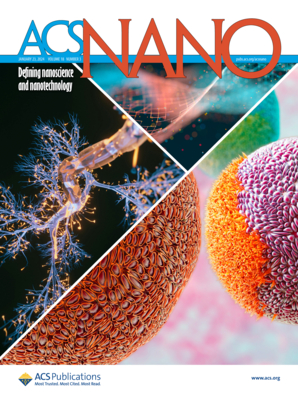
ACS Nano
ACS Nano 工程技术-材料科学:综合
CiteScore
26.00
自引率
4.10%
发文量
1627
审稿时长
1.7 months
期刊介绍: ACS Nano, published monthly, serves as an international forum for comprehensive articles on nanoscience and nanotechnology research at the intersections of chemistry, biology, materials science, physics, and engineering. The journal fosters communication among scientists in these communities, facilitating collaboration, new research opportunities, and advancements through discoveries. ACS Nano covers synthesis, assembly, characterization, theory, and simulation of nanostructures, nanobiotechnology, nanofabrication, methods and tools for nanoscience and nanotechnology, and self- and directed-assembly. Alongside original research articles, it offers thorough reviews, perspectives on cutting-edge research, and discussions envisioning the future of nanoscience and nanotechnology.

×
引用
GB/T 7714-2015
复制
MLA
复制
APA
复制
导出至
BibTeX EndNote RefMan NoteFirst NoteExpress
×
提示
您的信息不完整,为了账户安全,请先补充。
现在去补充
×
提示
您因"违规操作"
具体请查看互助需知
我知道了
×
提示
确定
请完成安全验证×
copy
已复制链接
快去分享给好友吧!
我知道了
右上角分享
点击右上角分享
0
联系我们:info@booksci.cn Book学术提供免费学术资源搜索服务,方便国内外学者检索中英文文献。致力于提供最便捷和优质的服务体验。 Copyright © 2023 布克学术 All rights reserved.
京ICP备2023020795号-1
ghs 京公网安备 11010802042870号
Book学术文献互助
Book学术文献互助群
群 号:604180095
Book学术官方微信
小红书


