{"title":"古基因组学揭示了史前跨欧亚交流时期甘肃人群的进化史和社会实践。","authors":"Wen-Jun Wang, Han Shi, Qiao-Mei Fu","doi":"10.16288/j.yczz.26-216","DOIUrl":null,"url":null,"abstract":"<p><p>Beginning approximately 4,000 years ago, southwest-Asian-originating domesticated crops and livestock began appearing in Gansu, a key crossroads in northwestern China, yet the population dynamics underlying these historically transformative events and the associated social practices in the region have not been fully explored. Despite the adoption of western domesticates, genome sequences of 149 individuals from the large Mogou cemetery and ten other sites in Gansu, dating between 4,700 and 3,000 years ago, revealed migrations within East Asian regions but no detectable evidence of genetic influence from western Eurasia, suggesting that early agricultural dispersals may have followed a model distinct from that documented in Europe and Central Asia. The Mogou cemetery represents a continuous community that interacted with surrounding regions but does not exhibit clear matrilocal or patrilocal patterns. We found no strong evidence that co-buried individuals represented biological relatives. Non-local ancestry appears to be linked to lower status burial practices. This study for the first time uncovers the histories of population migration, admixture and dispersal in Gansu from the late Neolithic to Bronze Age, and precisely reconstructs the social structure of the large Mogou cemetery in Gansu. It provides critical genetic evidence for understanding ancient human migration and dispersal as well as early social organization patterns in China.</p>","PeriodicalId":35536,"journal":{"name":"遗传","volume":"48 10","pages":"954-960"},"PeriodicalIF":0.0000,"publicationDate":"2026-10-01","publicationTypes":"Journal Article","fieldsOfStudy":null,"isOpenAccess":false,"openAccessPdf":"","citationCount":"0","resultStr":"{\"title\":\"Ancient genomics reveal the evolutionary history and social practice of Gansu populations during prehistory <i>trans</i>-Eurasian exchange.\",\"authors\":\"Wen-Jun Wang, Han Shi, Qiao-Mei Fu\",\"doi\":\"10.16288/j.yczz.26-216\",\"DOIUrl\":null,\"url\":null,\"abstract\":\"<p><p>Beginning approximately 4,000 years ago, southwest-Asian-originating domesticated crops and livestock began appearing in Gansu, a key crossroads in northwestern China, yet the population dynamics underlying these historically transformative events and the associated social practices in the region have not been fully explored. Despite the adoption of western domesticates, genome sequences of 149 individuals from the large Mogou cemetery and ten other sites in Gansu, dating between 4,700 and 3,000 years ago, revealed migrations within East Asian regions but no detectable evidence of genetic influence from western Eurasia, suggesting that early agricultural dispersals may have followed a model distinct from that documented in Europe and Central Asia. The Mogou cemetery represents a continuous community that interacted with surrounding regions but does not exhibit clear matrilocal or patrilocal patterns. We found no strong evidence that co-buried individuals represented biological relatives. Non-local ancestry appears to be linked to lower status burial practices. This study for the first time uncovers the histories of population migration, admixture and dispersal in Gansu from the late Neolithic to Bronze Age, and precisely reconstructs the social structure of the large Mogou cemetery in Gansu. It provides critical genetic evidence for understanding ancient human migration and dispersal as well as early social organization patterns in China.</p>\",\"PeriodicalId\":35536,\"journal\":{\"name\":\"遗传\",\"volume\":\"48 10\",\"pages\":\"954-960\"},\"PeriodicalIF\":0.0000,\"publicationDate\":\"2026-10-01\",\"publicationTypes\":\"Journal Article\",\"fieldsOfStudy\":null,\"isOpenAccess\":false,\"openAccessPdf\":\"\",\"citationCount\":\"0\",\"resultStr\":null,\"platform\":\"Semanticscholar\",\"paperid\":null,\"PeriodicalName\":\"遗传\",\"FirstCategoryId\":\"1091\",\"ListUrlMain\":\"https://doi.org/10.16288/j.yczz.26-216\",\"RegionNum\":0,\"RegionCategory\":null,\"ArticlePicture\":[],\"TitleCN\":null,\"AbstractTextCN\":null,\"PMCID\":null,\"EPubDate\":\"\",\"PubModel\":\"\",\"JCR\":\"Q3\",\"JCRName\":\"Medicine\",\"Score\":null,\"Total\":0}","platform":"Semanticscholar","paperid":null,"PeriodicalName":"遗传","FirstCategoryId":"1091","ListUrlMain":"https://doi.org/10.16288/j.yczz.26-216","RegionNum":0,"RegionCategory":null,"ArticlePicture":[],"TitleCN":null,"AbstractTextCN":null,"PMCID":null,"EPubDate":"","PubModel":"","JCR":"Q3","JCRName":"Medicine","Score":null,"Total":0}
Ancient genomics reveal the evolutionary history and social practice of Gansu populations during prehistory trans-Eurasian exchange.
Beginning approximately 4,000 years ago, southwest-Asian-originating domesticated crops and livestock began appearing in Gansu, a key crossroads in northwestern China, yet the population dynamics underlying these historically transformative events and the associated social practices in the region have not been fully explored. Despite the adoption of western domesticates, genome sequences of 149 individuals from the large Mogou cemetery and ten other sites in Gansu, dating between 4,700 and 3,000 years ago, revealed migrations within East Asian regions but no detectable evidence of genetic influence from western Eurasia, suggesting that early agricultural dispersals may have followed a model distinct from that documented in Europe and Central Asia. The Mogou cemetery represents a continuous community that interacted with surrounding regions but does not exhibit clear matrilocal or patrilocal patterns. We found no strong evidence that co-buried individuals represented biological relatives. Non-local ancestry appears to be linked to lower status burial practices. This study for the first time uncovers the histories of population migration, admixture and dispersal in Gansu from the late Neolithic to Bronze Age, and precisely reconstructs the social structure of the large Mogou cemetery in Gansu. It provides critical genetic evidence for understanding ancient human migration and dispersal as well as early social organization patterns in China.
期刊介绍:
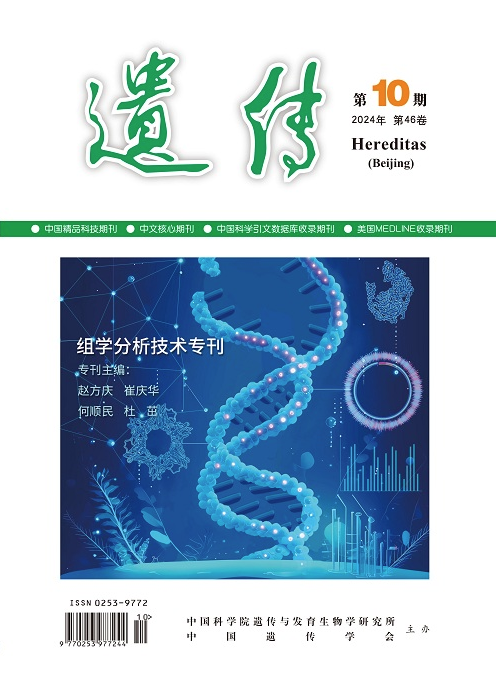
Hereditas is a national academic journal sponsored by the Institute of Genetics and Developmental Biology of the Chinese Academy of Sciences and the Chinese Society of Genetics and published by Science Press. It is a Chinese core journal and a Chinese high-quality scientific journal. The journal mainly publishes innovative research papers in the fields of genetics, genomics, cell biology, developmental biology, biological evolution, genetic engineering and biotechnology; new technologies and new methods; monographs and reviews on hot issues in the discipline; academic debates and discussions; experience in genetics teaching; introductions to famous geneticists at home and abroad; genetic counseling; information on academic conferences at home and abroad, etc. Main columns: review, frontier focus, research report, technology and method, resources and platform, experimental operation guide, genetic resources, genetics teaching, scientific news, etc.

 求助内容:
 应助结果提醒方式:


 京公网安备 11010802042870号


