
解决催化剂设计中的数据困境:一种生成增强的co2 -to-芳烃流形保存机器学习方法

IF 3.9 3区 工程技术 Q2 ENGINEERING, CHEMICAL
Zhao Wang,Jingsong Guan,Minmin Zhou,Jun Hu,Qiwen Guo,Miaoying Wang,Qingchun Yang
{"title":"解决催化剂设计中的数据困境:一种生成增强的co2 -to-芳烃流形保存机器学习方法","authors":"Zhao Wang,Jingsong Guan,Minmin Zhou,Jun Hu,Qiwen Guo,Miaoying Wang,Qingchun Yang","doi":"10.1021/acs.iecr.6c03879","DOIUrl":null,"url":null,"abstract":"Abstract Direct CO2 hydrogenation to aromatics (CTA) offers a sustainable alternative to petroleum-based aromatic production, yet its catalyst design is severely hindered by data scarcity, feature heterogeneity, and conflicting multiobjective requirements. Therefore, this study proposes a generative enhancement and manifold preservation-driven interpretable machine learning (GEMP-ML) framework. It integrates heuristic hybrid encoding, hierarchical missing value management, generative data augmentation, and active-learning-based sample screening to construct an information-enriched catalyst training set. To enable semantically faithful numerical representation of high-cardinality categorical features, a best-first sampling strategy is designed to identify the optimal hybrid encoding scheme from 89 candidate combinations specifically for these categorical variables. Combined with hierarchical semantic missing-value management and high-fidelity imputation algorithms, the data integrity of the CTA dataset is restored while preserving the semantic integrity of categorical features. GMM-based generative augmentation combined with diversity-aware active learning improved the utilization of synthetic data, and the CatBoost surrogate model achieved an average test set R2 of 0.973 across the three targets. Complementary interpretability analysis further identifies key descriptors governing catalyst performance, guiding the Pareto optimization of catalyst formulations and operating parameters. The recommended Zn–Al/HZSM-5 catalyst is predicted to achieve approximately 36.5% CO2 conversion, 78.6% C5+ selectivity, and 0.35% CO selectivity. The model is further validated against two independent experimental datasets covering 100 h time-on-stream, with prediction errors of <8%, supporting its ability to reproduce the observed performance trends under the evaluated conditions. This generalizable framework provides a systematic, data-driven paradigm for accelerating the design of high-performance catalysts in data-sparse catalytic systems.","PeriodicalId":39,"journal":{"name":"Industrial & Engineering Chemistry Research","volume":"36 1","pages":""},"PeriodicalIF":3.9000,"publicationDate":"2026-10-17","publicationTypes":"Journal Article","fieldsOfStudy":null,"isOpenAccess":false,"openAccessPdf":"","citationCount":"0","resultStr":"{\"title\":\"Resolving the Data\\nDilemma in Catalyst Design: A Generative-Enhanced\\nManifold-Preserving Machine Learning Method for CO2-to-Aromatics\",\"authors\":\"Zhao Wang,Jingsong Guan,Minmin Zhou,Jun Hu,Qiwen Guo,Miaoying Wang,Qingchun Yang\",\"doi\":\"10.1021/acs.iecr.6c03879\",\"DOIUrl\":null,\"url\":null,\"abstract\":\"Abstract Direct CO2 hydrogenation to aromatics (CTA) offers a sustainable alternative to petroleum-based aromatic production, yet its catalyst design is severely hindered by data scarcity, feature heterogeneity, and conflicting multiobjective requirements. Therefore, this study proposes a generative enhancement and manifold preservation-driven interpretable machine learning (GEMP-ML) framework. It integrates heuristic hybrid encoding, hierarchical missing value management, generative data augmentation, and active-learning-based sample screening to construct an information-enriched catalyst training set. To enable semantically faithful numerical representation of high-cardinality categorical features, a best-first sampling strategy is designed to identify the optimal hybrid encoding scheme from 89 candidate combinations specifically for these categorical variables. Combined with hierarchical semantic missing-value management and high-fidelity imputation algorithms, the data integrity of the CTA dataset is restored while preserving the semantic integrity of categorical features. GMM-based generative augmentation combined with diversity-aware active learning improved the utilization of synthetic data, and the CatBoost surrogate model achieved an average test set R2 of 0.973 across the three targets. Complementary interpretability analysis further identifies key descriptors governing catalyst performance, guiding the Pareto optimization of catalyst formulations and operating parameters. The recommended Zn–Al/HZSM-5 catalyst is predicted to achieve approximately 36.5% CO2 conversion, 78.6% C5+ selectivity, and 0.35% CO selectivity. The model is further validated against two independent experimental datasets covering 100 h time-on-stream, with prediction errors of <8%, supporting its ability to reproduce the observed performance trends under the evaluated conditions. This generalizable framework provides a systematic, data-driven paradigm for accelerating the design of high-performance catalysts in data-sparse catalytic systems.\",\"PeriodicalId\":39,\"journal\":{\"name\":\"Industrial & Engineering Chemistry Research\",\"volume\":\"36 1\",\"pages\":\"\"},\"PeriodicalIF\":3.9000,\"publicationDate\":\"2026-10-17\",\"publicationTypes\":\"Journal Article\",\"fieldsOfStudy\":null,\"isOpenAccess\":false,\"openAccessPdf\":\"\",\"citationCount\":\"0\",\"resultStr\":null,\"platform\":\"Semanticscholar\",\"paperid\":null,\"PeriodicalName\":\"Industrial & Engineering Chemistry Research\",\"FirstCategoryId\":\"5\",\"ListUrlMain\":\"https://doi.org/10.1021/acs.iecr.6c03879\",\"RegionNum\":3,\"RegionCategory\":\"工程技术\",\"ArticlePicture\":[],\"TitleCN\":null,\"AbstractTextCN\":null,\"PMCID\":null,\"EPubDate\":\"\",\"PubModel\":\"\",\"JCR\":\"Q2\",\"JCRName\":\"ENGINEERING, CHEMICAL\",\"Score\":null,\"Total\":0}","platform":"Semanticscholar","paperid":null,"PeriodicalName":"Industrial & Engineering Chemistry Research","FirstCategoryId":"5","ListUrlMain":"https://doi.org/10.1021/acs.iecr.6c03879","RegionNum":3,"RegionCategory":"工程技术","ArticlePicture":[],"TitleCN":null,"AbstractTextCN":null,"PMCID":null,"EPubDate":"","PubModel":"","JCR":"Q2","JCRName":"ENGINEERING, CHEMICAL","Score":null,"Total":0}
引用次数: 0

摘要

摘要:二氧化碳直接加氢制芳烃(CTA)为石油基芳烃生产提供了一种可持续的替代方案,但其催化剂设计受到数据稀缺性、特征异质性和多目标要求冲突的严重阻碍。因此,本研究提出了一个生成增强和流形保存驱动的可解释机器学习(GEMP-ML)框架。它集成了启发式混合编码、分层缺失值管理、生成数据增强和基于主动学习的样本筛选,以构建一个信息丰富的催化剂训练集。为了实现高基数分类特征在语义上的忠实数值表示,设计了最佳优先抽样策略,从89个候选组合中确定最优混合编码方案,专门针对这些分类变量。结合分层语义缺失值管理和高保真算法,在保持分类特征语义完整性的前提下,恢复了CTA数据集的数据完整性。基于gmm的生成增强结合多样性感知主动学习提高了合成数据的利用率,CatBoost代理模型在三个目标上的平均检验集R2为0.973。互补可解释性分析进一步确定控制催化剂性能的关键描述符,指导催化剂配方和操作参数的帕累托优化。推荐的Zn-Al /HZSM-5催化剂的CO2转化率约为36.5%,C5+选择性为78.6%,CO选择性为0.35%。在两个独立的实验数据集上进一步验证了该模型,覆盖100 h的流上时间,预测误差为&;lt;8%,支持其在评估条件下重现观察到的性能趋势的能力。这个可推广的框架为加速数据稀疏催化系统中高性能催化剂的设计提供了一个系统的、数据驱动的范例。
本文章由计算机程序翻译,如有差异,请以英文原文为准。
Resolving the Data Dilemma in Catalyst Design: A Generative-Enhanced Manifold-Preserving Machine Learning Method for CO2-to-Aromatics
Abstract Direct CO2 hydrogenation to aromatics (CTA) offers a sustainable alternative to petroleum-based aromatic production, yet its catalyst design is severely hindered by data scarcity, feature heterogeneity, and conflicting multiobjective requirements. Therefore, this study proposes a generative enhancement and manifold preservation-driven interpretable machine learning (GEMP-ML) framework. It integrates heuristic hybrid encoding, hierarchical missing value management, generative data augmentation, and active-learning-based sample screening to construct an information-enriched catalyst training set. To enable semantically faithful numerical representation of high-cardinality categorical features, a best-first sampling strategy is designed to identify the optimal hybrid encoding scheme from 89 candidate combinations specifically for these categorical variables. Combined with hierarchical semantic missing-value management and high-fidelity imputation algorithms, the data integrity of the CTA dataset is restored while preserving the semantic integrity of categorical features. GMM-based generative augmentation combined with diversity-aware active learning improved the utilization of synthetic data, and the CatBoost surrogate model achieved an average test set R2 of 0.973 across the three targets. Complementary interpretability analysis further identifies key descriptors governing catalyst performance, guiding the Pareto optimization of catalyst formulations and operating parameters. The recommended Zn–Al/HZSM-5 catalyst is predicted to achieve approximately 36.5% CO2 conversion, 78.6% C5+ selectivity, and 0.35% CO selectivity. The model is further validated against two independent experimental datasets covering 100 h time-on-stream, with prediction errors of <8%, supporting its ability to reproduce the observed performance trends under the evaluated conditions. This generalizable framework provides a systematic, data-driven paradigm for accelerating the design of high-performance catalysts in data-sparse catalytic systems.
求助全文
通过发布文献求助,成功后即可免费获取论文全文。 去求助
来源期刊
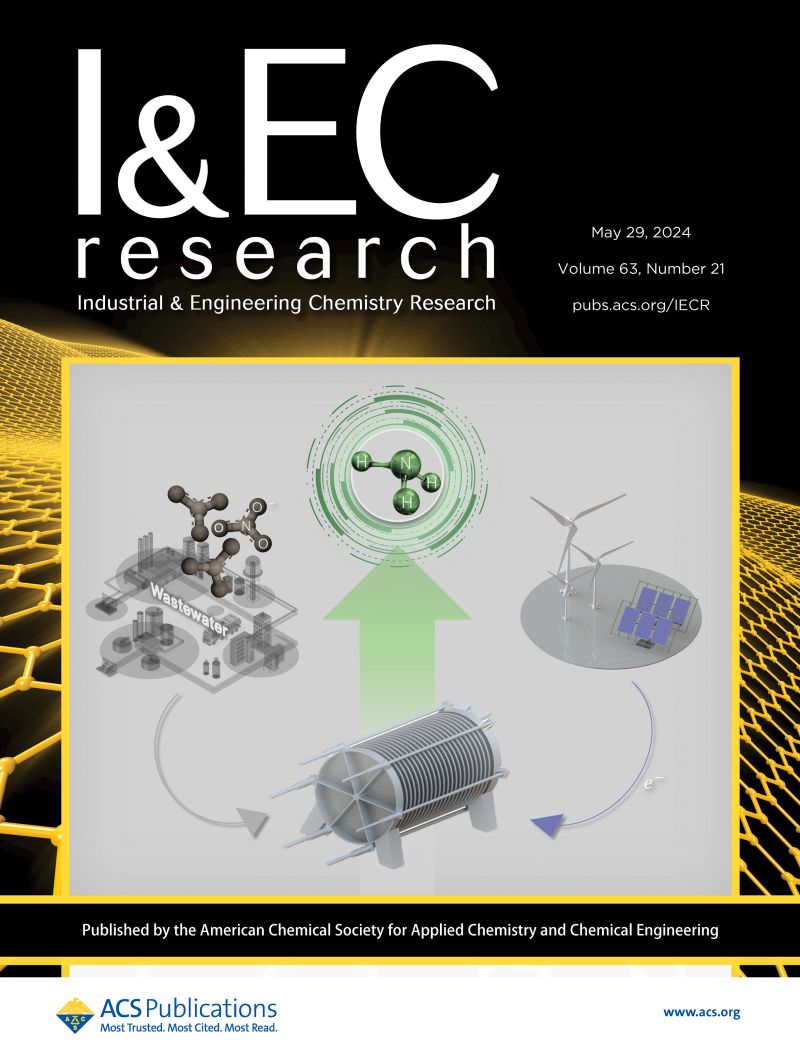
Industrial & Engineering Chemistry Research
Industrial & Engineering Chemistry Research 工程技术-工程:化工
CiteScore
7.40
自引率
7.10%
发文量
1467
审稿时长
2.8 months
期刊介绍: ndustrial & Engineering Chemistry, with variations in title and format, has been published since 1909 by the American Chemical Society. Industrial & Engineering Chemistry Research is a weekly publication that reports industrial and academic research in the broad fields of applied chemistry and chemical engineering with special focus on fundamentals, processes, and products.

×
引用
GB/T 7714-2015
复制
MLA
复制
APA
复制
导出至
BibTeX EndNote RefMan NoteFirst NoteExpress
×
提示
您的信息不完整,为了账户安全,请先补充。
现在去补充
×
提示
您因"违规操作"
具体请查看互助需知
我知道了
×
提示
确定
请完成安全验证×
copy
已复制链接
快去分享给好友吧!
我知道了
右上角分享
点击右上角分享
0
联系我们:info@booksci.cn Book学术提供免费学术资源搜索服务,方便国内外学者检索中英文文献。致力于提供最便捷和优质的服务体验。 Copyright © 2023 布克学术 All rights reserved.
京ICP备2023020795号-1
ghs 京公网安备 11010802042870号
Book学术文献互助
Book学术文献互助群
群 号:604180095
Book学术官方微信
小红书


