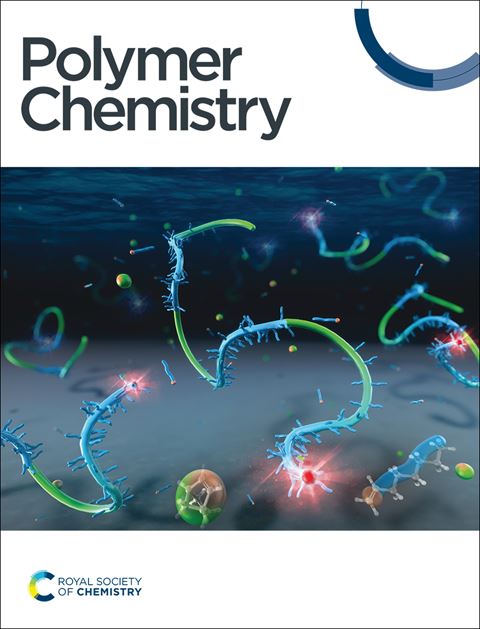
Benjamin R. Nelson,Kristi S Anseth,Christopher N. Bowman
{"title":"1,2-二硫代烷在光动力线性和网状聚合物中的应用现状和未来发展方向","authors":"Benjamin R. Nelson,Kristi S Anseth,Christopher N. Bowman","doi":"10.1039/d6py00798h","DOIUrl":null,"url":null,"abstract":"1,2-Dithiolanes occupy a unique position as monomers that facilitate multiple materials solutions at the intersection of biochemistry, photochemistry, and (bio)materials science. Unlike many cyclic monomers where the versatility of substituents underlies their utility, dithiolanes are defined by the intrinsic variability in the reactive pathways of the ring itself, including its capacity to homopolymerize through numerous pathways or copolymerize with various other categories of monomers. The ring strain in five-membered cyclic disulfides renders it inherently polymerizable, dynamic, and photoreactive. Depending on conditions, dithiolanes are capable of polymerization via radical-mediated, ionic, photoinduced, thermal, and other mechanisms, all of which directly result in dynamic polydisulfides. This perspective describes the history and development of dithiolane polymerizations and highlights current and potential applications of the resulting materials, especially in the development and implementation of covalent adaptable networks.","PeriodicalId":100,"journal":{"name":"Polymer Chemistry","volume":"10 1","pages":""},"PeriodicalIF":3.9000,"publicationDate":"2026-10-15","publicationTypes":"Journal Article","fieldsOfStudy":null,"isOpenAccess":false,"openAccessPdf":"","citationCount":"0","resultStr":"{\"title\":\"1,2-Dithiolanes in photodynamic linear and network polymers: current applications and future directions\",\"authors\":\"Benjamin R. Nelson,Kristi S Anseth,Christopher N. Bowman\",\"doi\":\"10.1039/d6py00798h\",\"DOIUrl\":null,\"url\":null,\"abstract\":\"1,2-Dithiolanes occupy a unique position as monomers that facilitate multiple materials solutions at the intersection of biochemistry, photochemistry, and (bio)materials science. Unlike many cyclic monomers where the versatility of substituents underlies their utility, dithiolanes are defined by the intrinsic variability in the reactive pathways of the ring itself, including its capacity to homopolymerize through numerous pathways or copolymerize with various other categories of monomers. The ring strain in five-membered cyclic disulfides renders it inherently polymerizable, dynamic, and photoreactive. Depending on conditions, dithiolanes are capable of polymerization via radical-mediated, ionic, photoinduced, thermal, and other mechanisms, all of which directly result in dynamic polydisulfides. This perspective describes the history and development of dithiolane polymerizations and highlights current and potential applications of the resulting materials, especially in the development and implementation of covalent adaptable networks.\",\"PeriodicalId\":100,\"journal\":{\"name\":\"Polymer Chemistry\",\"volume\":\"10 1\",\"pages\":\"\"},\"PeriodicalIF\":3.9000,\"publicationDate\":\"2026-10-15\",\"publicationTypes\":\"Journal Article\",\"fieldsOfStudy\":null,\"isOpenAccess\":false,\"openAccessPdf\":\"\",\"citationCount\":\"0\",\"resultStr\":null,\"platform\":\"Semanticscholar\",\"paperid\":null,\"PeriodicalName\":\"Polymer Chemistry\",\"FirstCategoryId\":\"92\",\"ListUrlMain\":\"https://doi.org/10.1039/d6py00798h\",\"RegionNum\":2,\"RegionCategory\":\"化学\",\"ArticlePicture\":[],\"TitleCN\":null,\"AbstractTextCN\":null,\"PMCID\":null,\"EPubDate\":\"\",\"PubModel\":\"\",\"JCR\":\"Q2\",\"JCRName\":\"POLYMER SCIENCE\",\"Score\":null,\"Total\":0}","platform":"Semanticscholar","paperid":null,"PeriodicalName":"Polymer Chemistry","FirstCategoryId":"92","ListUrlMain":"https://doi.org/10.1039/d6py00798h","RegionNum":2,"RegionCategory":"化学","ArticlePicture":[],"TitleCN":null,"AbstractTextCN":null,"PMCID":null,"EPubDate":"","PubModel":"","JCR":"Q2","JCRName":"POLYMER SCIENCE","Score":null,"Total":0}
1,2-Dithiolanes in photodynamic linear and network polymers: current applications and future directions
1,2-Dithiolanes occupy a unique position as monomers that facilitate multiple materials solutions at the intersection of biochemistry, photochemistry, and (bio)materials science. Unlike many cyclic monomers where the versatility of substituents underlies their utility, dithiolanes are defined by the intrinsic variability in the reactive pathways of the ring itself, including its capacity to homopolymerize through numerous pathways or copolymerize with various other categories of monomers. The ring strain in five-membered cyclic disulfides renders it inherently polymerizable, dynamic, and photoreactive. Depending on conditions, dithiolanes are capable of polymerization via radical-mediated, ionic, photoinduced, thermal, and other mechanisms, all of which directly result in dynamic polydisulfides. This perspective describes the history and development of dithiolane polymerizations and highlights current and potential applications of the resulting materials, especially in the development and implementation of covalent adaptable networks.
期刊介绍:
Polymer Chemistry welcomes submissions in all areas of polymer science that have a strong focus on macromolecular chemistry. Manuscripts may cover a broad range of fields, yet no direct application focus is required.