Yongsoon Park, Moung-hun Choung, Ji-seck Oh, Haeng-sub Roh, Chankyu Kang
{"title":"在半导体故障分析期间,工人暴露于颗粒物质和挥发性有机化合物:使用现场测量和计算流体动力学评估局部排气通风","authors":"Yongsoon Park, Moung-hun Choung, Ji-seck Oh, Haeng-sub Roh, Chankyu Kang","doi":"10.1007/s11869-026-02123-0","DOIUrl":null,"url":null,"abstract":"<div><p>Manual wafer cutting during semiconductor failure analysis generates particulate matter (PM), volatile organic compounds (TVOCs), and process odors that may contribute to worker inhalation exposure. This study evaluated PM and TVOC exposure conditions during wafer cutting and examined how a hybrid containment workbench (HCW) modified airflow patterns that may influence contaminant movement toward the worker breathing zone. PM and TVOC measurements were used to characterize exposure conditions during wafer-cutting operations, while airflow measurements, steady-state CFD analysis, qualitative smoke visualization, and worker questionnaires were used to evaluate changes associated with HCW implementation. Airflow characteristics were analyzed using computational fluid dynamics (CFD), quantitatively compared with measured air velocities, and qualitatively evaluated using smoke visualization. Worker questionnaires assessed perceived odor and dust exposure before and after HCW installation. TVOC concentrations observed during patterned-wafer cutting (0.12–0.15 mg/m³) were higher than those observed during bare-wafer cutting (0.02–0.03 mg/m³). CFD-predicted air velocities showed relative errors of 5.3–18.2% compared with the experimentally measured velocities. The HCW produced airflow directed toward the rear exhaust system, and reduced recirculation was observed near the breathing zone. Smoke visualization showed a similar airflow pattern. These findings indicate airflow conditions that may reduce the potential for contaminant movement toward the operator. Before HCW installation, 84.2% of workers (16/19) reported process odor perception, while worker-rated odor and dust control scores improved following HCW implementation. The results indicate that local airflow should be considered together with contaminant concentrations when evaluating worker exposure and local exhaust ventilation in semiconductor failure-analysis laboratories.</p></div>","PeriodicalId":49109,"journal":{"name":"Air Quality Atmosphere and Health","volume":"19 10","pages":""},"PeriodicalIF":3.1000,"publicationDate":"2026-10-09","publicationTypes":"Journal Article","fieldsOfStudy":null,"isOpenAccess":false,"openAccessPdf":"","citationCount":"0","resultStr":"{\"title\":\"Worker exposure to particulate matter and volatile organic compounds during semiconductor failure analysis: assessment of local exhaust ventilation using field measurements and computational fluid dynamics\",\"authors\":\"Yongsoon Park, Moung-hun Choung, Ji-seck Oh, Haeng-sub Roh, Chankyu Kang\",\"doi\":\"10.1007/s11869-026-02123-0\",\"DOIUrl\":null,\"url\":null,\"abstract\":\"<div><p>Manual wafer cutting during semiconductor failure analysis generates particulate matter (PM), volatile organic compounds (TVOCs), and process odors that may contribute to worker inhalation exposure. This study evaluated PM and TVOC exposure conditions during wafer cutting and examined how a hybrid containment workbench (HCW) modified airflow patterns that may influence contaminant movement toward the worker breathing zone. PM and TVOC measurements were used to characterize exposure conditions during wafer-cutting operations, while airflow measurements, steady-state CFD analysis, qualitative smoke visualization, and worker questionnaires were used to evaluate changes associated with HCW implementation. Airflow characteristics were analyzed using computational fluid dynamics (CFD), quantitatively compared with measured air velocities, and qualitatively evaluated using smoke visualization. Worker questionnaires assessed perceived odor and dust exposure before and after HCW installation. TVOC concentrations observed during patterned-wafer cutting (0.12–0.15 mg/m³) were higher than those observed during bare-wafer cutting (0.02–0.03 mg/m³). CFD-predicted air velocities showed relative errors of 5.3–18.2% compared with the experimentally measured velocities. The HCW produced airflow directed toward the rear exhaust system, and reduced recirculation was observed near the breathing zone. Smoke visualization showed a similar airflow pattern. These findings indicate airflow conditions that may reduce the potential for contaminant movement toward the operator. Before HCW installation, 84.2% of workers (16/19) reported process odor perception, while worker-rated odor and dust control scores improved following HCW implementation. The results indicate that local airflow should be considered together with contaminant concentrations when evaluating worker exposure and local exhaust ventilation in semiconductor failure-analysis laboratories.</p></div>\",\"PeriodicalId\":49109,\"journal\":{\"name\":\"Air Quality Atmosphere and Health\",\"volume\":\"19 10\",\"pages\":\"\"},\"PeriodicalIF\":3.1000,\"publicationDate\":\"2026-10-09\",\"publicationTypes\":\"Journal Article\",\"fieldsOfStudy\":null,\"isOpenAccess\":false,\"openAccessPdf\":\"\",\"citationCount\":\"0\",\"resultStr\":null,\"platform\":\"Semanticscholar\",\"paperid\":null,\"PeriodicalName\":\"Air Quality Atmosphere and Health\",\"FirstCategoryId\":\"93\",\"ListUrlMain\":\"https://link.springer.com/article/10.1007/s11869-026-02123-0\",\"RegionNum\":4,\"RegionCategory\":\"环境科学与生态学\",\"ArticlePicture\":[],\"TitleCN\":null,\"AbstractTextCN\":null,\"PMCID\":null,\"EPubDate\":\"\",\"PubModel\":\"\",\"JCR\":\"Q3\",\"JCRName\":\"ENVIRONMENTAL SCIENCES\",\"Score\":null,\"Total\":0}","platform":"Semanticscholar","paperid":null,"PeriodicalName":"Air Quality Atmosphere and Health","FirstCategoryId":"93","ListUrlMain":"https://link.springer.com/article/10.1007/s11869-026-02123-0","RegionNum":4,"RegionCategory":"环境科学与生态学","ArticlePicture":[],"TitleCN":null,"AbstractTextCN":null,"PMCID":null,"EPubDate":"","PubModel":"","JCR":"Q3","JCRName":"ENVIRONMENTAL SCIENCES","Score":null,"Total":0}
Worker exposure to particulate matter and volatile organic compounds during semiconductor failure analysis: assessment of local exhaust ventilation using field measurements and computational fluid dynamics
Manual wafer cutting during semiconductor failure analysis generates particulate matter (PM), volatile organic compounds (TVOCs), and process odors that may contribute to worker inhalation exposure. This study evaluated PM and TVOC exposure conditions during wafer cutting and examined how a hybrid containment workbench (HCW) modified airflow patterns that may influence contaminant movement toward the worker breathing zone. PM and TVOC measurements were used to characterize exposure conditions during wafer-cutting operations, while airflow measurements, steady-state CFD analysis, qualitative smoke visualization, and worker questionnaires were used to evaluate changes associated with HCW implementation. Airflow characteristics were analyzed using computational fluid dynamics (CFD), quantitatively compared with measured air velocities, and qualitatively evaluated using smoke visualization. Worker questionnaires assessed perceived odor and dust exposure before and after HCW installation. TVOC concentrations observed during patterned-wafer cutting (0.12–0.15 mg/m³) were higher than those observed during bare-wafer cutting (0.02–0.03 mg/m³). CFD-predicted air velocities showed relative errors of 5.3–18.2% compared with the experimentally measured velocities. The HCW produced airflow directed toward the rear exhaust system, and reduced recirculation was observed near the breathing zone. Smoke visualization showed a similar airflow pattern. These findings indicate airflow conditions that may reduce the potential for contaminant movement toward the operator. Before HCW installation, 84.2% of workers (16/19) reported process odor perception, while worker-rated odor and dust control scores improved following HCW implementation. The results indicate that local airflow should be considered together with contaminant concentrations when evaluating worker exposure and local exhaust ventilation in semiconductor failure-analysis laboratories.
期刊介绍:
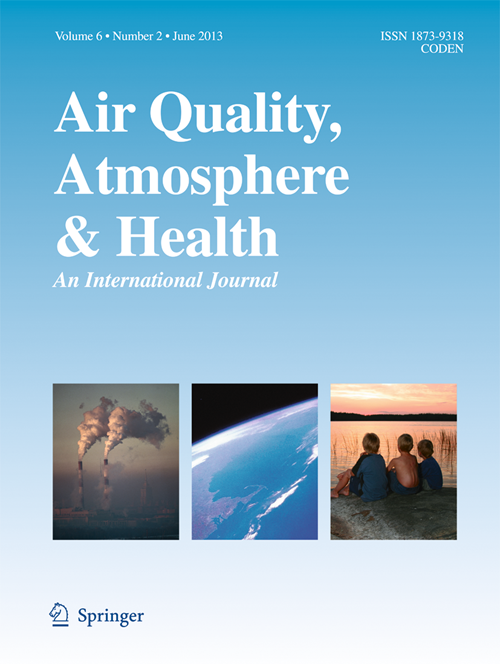
Air Quality, Atmosphere, and Health is a multidisciplinary journal which, by its very name, illustrates the broad range of work it publishes and which focuses on atmospheric consequences of human activities and their implications for human and ecological health.
It offers research papers, critical literature reviews and commentaries, as well as special issues devoted to topical subjects or themes.
International in scope, the journal presents papers that inform and stimulate a global readership, as the topic addressed are global in their import. Consequently, we do not encourage submission of papers involving local data that relate to local problems. Unless they demonstrate wide applicability, these are better submitted to national or regional journals.
Air Quality, Atmosphere & Health addresses such topics as acid precipitation; airborne particulate matter; air quality monitoring and management; exposure assessment; risk assessment; indoor air quality; atmospheric chemistry; atmospheric modeling and prediction; air pollution climatology; climate change and air quality; air pollution measurement; atmospheric impact assessment; forest-fire emissions; atmospheric science; greenhouse gases; health and ecological effects; clean air technology; regional and global change and satellite measurements.
This journal benefits a diverse audience of researchers, public health officials and policy makers addressing problems that call for solutions based in evidence from atmospheric and exposure assessment scientists, epidemiologists, and risk assessors. Publication in the journal affords the opportunity to reach beyond defined disciplinary niches to this broader readership.

 求助内容:
 应助结果提醒方式:


 京公网安备 11010802042870号


