
荷叶启发表面氟化氧化铟纳米乳突体用于呼气中抗湿硫化氢检测

IF 10.9 1区 化学 Q1 CHEMISTRY, ANALYTICAL
Wen Niu,Kaijin Kang,Jiongyue Hao,Chun Huang,Xuefeng Chen,Hangyu Liu,Mati Horprathum,Gang Meng,Xiangshui Miao,Wei Hu,Kazuki Nagashima,Yong He,Yongcai Guo
{"title":"荷叶启发表面氟化氧化铟纳米乳突体用于呼气中抗湿硫化氢检测","authors":"Wen Niu,Kaijin Kang,Jiongyue Hao,Chun Huang,Xuefeng Chen,Hangyu Liu,Mati Horprathum,Gang Meng,Xiangshui Miao,Wei Hu,Kazuki Nagashima,Yong He,Yongcai Guo","doi":"10.1021/acssensors.6c02537","DOIUrl":null,"url":null,"abstract":"Abstract Non-invasive breath testing has emerged as a promising technique for real-time disease monitoring and early intervention. In the oral cavity, hydrogen sulfide (H2S) is predominantly generated through the metabolic degradation of sulfur-containing amino acids by Gram-negative anaerobic and Gram-positive bacterial communities. Precise quantification of exhaled H2S concentrations enables effective diagnosis of oral diseases, providing critical insights for clinical treatment strategies. However, the complex gas composition and high humidity of exhaled breath pose significant challenges for trace H2S detection due to interference effects. Herein, we report the fabrication of a surface-fluorinated indium oxide (In2O3) nanomastoid sensitive material via SF6 reactive ion etching. This engineered material mimics the multiscale hierarchical architecture of lotus leaves, integrating micron-sized mastoid protrusions with nanoscale fluorinated domains. The synergistic effect of the unique nanostructure and surface fluorination endows the sensor with excellent humidity-resistant H2S response kinetics. The sensor exhibits a stable response over the humidity range from 0 to 75% relative humidity (RH), with response values to 5 ppm H2S of 4.01 at 0% RH and 3.98 at 75% RH. Furthermore, under 100% RH in the presence of 4% CO2 as a typical interferent, the sensor maintains reliable detection of H2S at the ppb level, with a sensitivity of 1.35 and a theoretical detection limit of 37 ppb under such conditions. Experimental validation includes trace-level H2S detection in the exhaled breath of different volunteers and self-monitoring of post-toothbrushing H2S dynamics. The developed sensor system achieves tens of ppb level resolution, capable of detecting subtle H2S concentration changes while triggering an alarm upon detection of abnormal concentrations. To elucidate the underlying sensing mechanism and moisture-resistant origin, we conducted density functional theory calculations combined with in situ Fourier transform infrared spectroscopy experiments, which aim to analyze the surface chemical states and gas–material interaction behaviors of the fluorinated In2O3 nanomastoid structures under air or H2S gas, as well as under dry or humid environments. This work provides a robust material and sensor platform for trace H2S detection in high-humidity complex gas matrices, highlighting its significant clinical potential for non-invasive oral disease screening and personalized healthcare management.","PeriodicalId":24,"journal":{"name":"ACS Sensors","volume":"12 1","pages":""},"PeriodicalIF":10.9000,"publicationDate":"2026-09-26","publicationTypes":"Journal Article","fieldsOfStudy":null,"isOpenAccess":false,"openAccessPdf":"","citationCount":"0","resultStr":"{\"title\":\"Lotus-Leaf-Inspired Surface-Fluorinated Indium Oxide Nanomastoid for Humidity-Resistant Hydrogen Sulfide Detection in Exhaled Breath\",\"authors\":\"Wen Niu,Kaijin Kang,Jiongyue Hao,Chun Huang,Xuefeng Chen,Hangyu Liu,Mati Horprathum,Gang Meng,Xiangshui Miao,Wei Hu,Kazuki Nagashima,Yong He,Yongcai Guo\",\"doi\":\"10.1021/acssensors.6c02537\",\"DOIUrl\":null,\"url\":null,\"abstract\":\"Abstract Non-invasive breath testing has emerged as a promising technique for real-time disease monitoring and early intervention. In the oral cavity, hydrogen sulfide (H2S) is predominantly generated through the metabolic degradation of sulfur-containing amino acids by Gram-negative anaerobic and Gram-positive bacterial communities. Precise quantification of exhaled H2S concentrations enables effective diagnosis of oral diseases, providing critical insights for clinical treatment strategies. However, the complex gas composition and high humidity of exhaled breath pose significant challenges for trace H2S detection due to interference effects. Herein, we report the fabrication of a surface-fluorinated indium oxide (In2O3) nanomastoid sensitive material via SF6 reactive ion etching. This engineered material mimics the multiscale hierarchical architecture of lotus leaves, integrating micron-sized mastoid protrusions with nanoscale fluorinated domains. The synergistic effect of the unique nanostructure and surface fluorination endows the sensor with excellent humidity-resistant H2S response kinetics. The sensor exhibits a stable response over the humidity range from 0 to 75% relative humidity (RH), with response values to 5 ppm H2S of 4.01 at 0% RH and 3.98 at 75% RH. Furthermore, under 100% RH in the presence of 4% CO2 as a typical interferent, the sensor maintains reliable detection of H2S at the ppb level, with a sensitivity of 1.35 and a theoretical detection limit of 37 ppb under such conditions. Experimental validation includes trace-level H2S detection in the exhaled breath of different volunteers and self-monitoring of post-toothbrushing H2S dynamics. The developed sensor system achieves tens of ppb level resolution, capable of detecting subtle H2S concentration changes while triggering an alarm upon detection of abnormal concentrations. To elucidate the underlying sensing mechanism and moisture-resistant origin, we conducted density functional theory calculations combined with in situ Fourier transform infrared spectroscopy experiments, which aim to analyze the surface chemical states and gas–material interaction behaviors of the fluorinated In2O3 nanomastoid structures under air or H2S gas, as well as under dry or humid environments. This work provides a robust material and sensor platform for trace H2S detection in high-humidity complex gas matrices, highlighting its significant clinical potential for non-invasive oral disease screening and personalized healthcare management.\",\"PeriodicalId\":24,\"journal\":{\"name\":\"ACS Sensors\",\"volume\":\"12 1\",\"pages\":\"\"},\"PeriodicalIF\":10.9000,\"publicationDate\":\"2026-09-26\",\"publicationTypes\":\"Journal Article\",\"fieldsOfStudy\":null,\"isOpenAccess\":false,\"openAccessPdf\":\"\",\"citationCount\":\"0\",\"resultStr\":null,\"platform\":\"Semanticscholar\",\"paperid\":null,\"PeriodicalName\":\"ACS Sensors\",\"FirstCategoryId\":\"92\",\"ListUrlMain\":\"https://doi.org/10.1021/acssensors.6c02537\",\"RegionNum\":1,\"RegionCategory\":\"化学\",\"ArticlePicture\":[],\"TitleCN\":null,\"AbstractTextCN\":null,\"PMCID\":null,\"EPubDate\":\"\",\"PubModel\":\"\",\"JCR\":\"Q1\",\"JCRName\":\"CHEMISTRY, ANALYTICAL\",\"Score\":null,\"Total\":0}","platform":"Semanticscholar","paperid":null,"PeriodicalName":"ACS Sensors","FirstCategoryId":"92","ListUrlMain":"https://doi.org/10.1021/acssensors.6c02537","RegionNum":1,"RegionCategory":"化学","ArticlePicture":[],"TitleCN":null,"AbstractTextCN":null,"PMCID":null,"EPubDate":"","PubModel":"","JCR":"Q1","JCRName":"CHEMISTRY, ANALYTICAL","Score":null,"Total":0}
引用次数: 0

摘要

无创呼吸检测已成为一种有前途的实时疾病监测和早期干预技术。在口腔中,硫化氢(H2S)主要通过革兰氏阴性厌氧菌群和革兰氏阳性菌群对含硫氨基酸的代谢降解产生。呼气中H2S浓度的精确定量能够有效诊断口腔疾病,为临床治疗策略提供关键见解。然而,复杂的气体成分和高湿度的呼出气体由于干扰效应给痕量H2S检测带来了重大挑战。在此,我们报告了通过SF6反应离子刻蚀制备表面氟化氧化铟(In2O3)纳米乳突敏感材料。这种工程材料模仿了荷叶的多尺度分层结构,将微米级乳突与纳米级氟化结构域集成在一起。独特的纳米结构和表面氟化的协同作用使传感器具有优异的抗湿H2S响应动力学。在0 ~ 75%相对湿度(RH)范围内,传感器的响应稳定,在0% RH和75% RH下,对5 ppm H2S的响应值分别为4.01和3.98。此外,在100% RH, 4% CO2作为典型干扰存在的情况下,传感器在ppb水平上保持可靠的H2S检测,灵敏度为1.35,在这种条件下的理论检测限为37 ppb。实验验证包括检测不同志愿者呼出气体中的痕量H2S,以及对刷牙后H2S动态的自我监测。所开发的传感器系统分辨率达到数十ppb级,能够检测细微的H2S浓度变化,并在检测到异常浓度时触发报警。为了阐明其潜在的传感机制和耐湿来源,我们进行了密度泛函理论计算并结合原位傅立叶变换红外光谱实验,旨在分析氟化In2O3纳米乳状体结构在空气或H2S气体以及干燥或潮湿环境下的表面化学状态和气-物质相互作用行为。这项工作为高湿复杂气体基质中痕量H2S检测提供了一个强大的材料和传感器平台,突出了其在非侵入性口腔疾病筛查和个性化医疗管理方面的重要临床潜力。
本文章由计算机程序翻译,如有差异,请以英文原文为准。
Lotus-Leaf-Inspired Surface-Fluorinated Indium Oxide Nanomastoid for Humidity-Resistant Hydrogen Sulfide Detection in Exhaled Breath
Abstract Non-invasive breath testing has emerged as a promising technique for real-time disease monitoring and early intervention. In the oral cavity, hydrogen sulfide (H2S) is predominantly generated through the metabolic degradation of sulfur-containing amino acids by Gram-negative anaerobic and Gram-positive bacterial communities. Precise quantification of exhaled H2S concentrations enables effective diagnosis of oral diseases, providing critical insights for clinical treatment strategies. However, the complex gas composition and high humidity of exhaled breath pose significant challenges for trace H2S detection due to interference effects. Herein, we report the fabrication of a surface-fluorinated indium oxide (In2O3) nanomastoid sensitive material via SF6 reactive ion etching. This engineered material mimics the multiscale hierarchical architecture of lotus leaves, integrating micron-sized mastoid protrusions with nanoscale fluorinated domains. The synergistic effect of the unique nanostructure and surface fluorination endows the sensor with excellent humidity-resistant H2S response kinetics. The sensor exhibits a stable response over the humidity range from 0 to 75% relative humidity (RH), with response values to 5 ppm H2S of 4.01 at 0% RH and 3.98 at 75% RH. Furthermore, under 100% RH in the presence of 4% CO2 as a typical interferent, the sensor maintains reliable detection of H2S at the ppb level, with a sensitivity of 1.35 and a theoretical detection limit of 37 ppb under such conditions. Experimental validation includes trace-level H2S detection in the exhaled breath of different volunteers and self-monitoring of post-toothbrushing H2S dynamics. The developed sensor system achieves tens of ppb level resolution, capable of detecting subtle H2S concentration changes while triggering an alarm upon detection of abnormal concentrations. To elucidate the underlying sensing mechanism and moisture-resistant origin, we conducted density functional theory calculations combined with in situ Fourier transform infrared spectroscopy experiments, which aim to analyze the surface chemical states and gas–material interaction behaviors of the fluorinated In2O3 nanomastoid structures under air or H2S gas, as well as under dry or humid environments. This work provides a robust material and sensor platform for trace H2S detection in high-humidity complex gas matrices, highlighting its significant clinical potential for non-invasive oral disease screening and personalized healthcare management.
求助全文
通过发布文献求助,成功后即可免费获取论文全文。 去求助
来源期刊
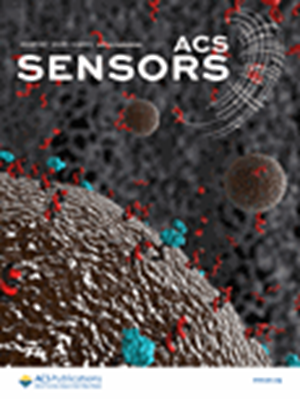
ACS Sensors
ACS Sensors Chemical Engineering-Bioengineering
CiteScore
14.50
自引率
3.40%
发文量
372
期刊介绍: ACS Sensors is a peer-reviewed research journal that focuses on the dissemination of new and original knowledge in the field of sensor science, particularly those that selectively sense chemical or biological species or processes. The journal covers a broad range of topics, including but not limited to biosensors, chemical sensors, gas sensors, intracellular sensors, single molecule sensors, cell chips, and microfluidic devices. It aims to publish articles that address conceptual advances in sensing technology applicable to various types of analytes or application papers that report on the use of existing sensing concepts in new ways or for new analytes.

×
引用
GB/T 7714-2015
复制
MLA
复制
APA
复制
导出至
BibTeX EndNote RefMan NoteFirst NoteExpress
×
提示
您的信息不完整,为了账户安全,请先补充。
现在去补充
×
提示
您因"违规操作"
具体请查看互助需知
我知道了
×
提示
确定
请完成安全验证×
copy
已复制链接
快去分享给好友吧!
我知道了
右上角分享
点击右上角分享
0
联系我们:info@booksci.cn Book学术提供免费学术资源搜索服务,方便国内外学者检索中英文文献。致力于提供最便捷和优质的服务体验。 Copyright © 2023 布克学术 All rights reserved.
京ICP备2023020795号-1
ghs 京公网安备 11010802042870号
Book学术文献互助
Book学术文献互助群
群 号:604180095
Book学术官方微信
小红书


