{"title":"动态风险资产的不同风险偏好内幕交易","authors":"Kai Xiao, Yong-hui Zhou","doi":"10.1007/s10255-024-1039-1","DOIUrl":null,"url":null,"abstract":"<div><p>For an insider trading model of a risky asset whose value is driven by an arithmetic Brownian motion, we establish a closed form of linear Bayesian equilibrium with a risk-neutral insider and a closed form of linear Bayesian equilibrium with a risk-averse insider respectively. It shows that (i) as time goes by, in the former equilibrium, residual information decreases but price pressure keeps constant, while in the latter, both residual information and price pressure decrease; (ii) as the insider becomes less and less risk-averse, the risk-averse equilibrium converges to the risk-neutral one; and (iii) when the volatility of the asset value goes to zero, the risk-averse equilibrium converges to the risk-averse one with a static risky asset in [Cho, K. Continuous auctions and insider trading. <i>Finance and Stochastics</i>, 7: 47–71 (2003)].</p></div>","PeriodicalId":6951,"journal":{"name":"Acta Mathematicae Applicatae Sinica, English Series","volume":"42 4","pages":"1184 - 1199"},"PeriodicalIF":0.9000,"publicationDate":"2026-09-25","publicationTypes":"Journal Article","fieldsOfStudy":null,"isOpenAccess":false,"openAccessPdf":"","citationCount":"0","resultStr":"{\"title\":\"Insider Trading with Different Risk Preference on a Dynamic Risky Asset\",\"authors\":\"Kai Xiao, Yong-hui Zhou\",\"doi\":\"10.1007/s10255-024-1039-1\",\"DOIUrl\":null,\"url\":null,\"abstract\":\"<div><p>For an insider trading model of a risky asset whose value is driven by an arithmetic Brownian motion, we establish a closed form of linear Bayesian equilibrium with a risk-neutral insider and a closed form of linear Bayesian equilibrium with a risk-averse insider respectively. It shows that (i) as time goes by, in the former equilibrium, residual information decreases but price pressure keeps constant, while in the latter, both residual information and price pressure decrease; (ii) as the insider becomes less and less risk-averse, the risk-averse equilibrium converges to the risk-neutral one; and (iii) when the volatility of the asset value goes to zero, the risk-averse equilibrium converges to the risk-averse one with a static risky asset in [Cho, K. Continuous auctions and insider trading. <i>Finance and Stochastics</i>, 7: 47–71 (2003)].</p></div>\",\"PeriodicalId\":6951,\"journal\":{\"name\":\"Acta Mathematicae Applicatae Sinica, English Series\",\"volume\":\"42 4\",\"pages\":\"1184 - 1199\"},\"PeriodicalIF\":0.9000,\"publicationDate\":\"2026-09-25\",\"publicationTypes\":\"Journal Article\",\"fieldsOfStudy\":null,\"isOpenAccess\":false,\"openAccessPdf\":\"\",\"citationCount\":\"0\",\"resultStr\":null,\"platform\":\"Semanticscholar\",\"paperid\":null,\"PeriodicalName\":\"Acta Mathematicae Applicatae Sinica, English Series\",\"FirstCategoryId\":\"100\",\"ListUrlMain\":\"https://link.springer.com/article/10.1007/s10255-024-1039-1\",\"RegionNum\":4,\"RegionCategory\":\"数学\",\"ArticlePicture\":[],\"TitleCN\":null,\"AbstractTextCN\":null,\"PMCID\":null,\"EPubDate\":\"\",\"PubModel\":\"\",\"JCR\":\"Q3\",\"JCRName\":\"MATHEMATICS, APPLIED\",\"Score\":null,\"Total\":0}","platform":"Semanticscholar","paperid":null,"PeriodicalName":"Acta Mathematicae Applicatae Sinica, English Series","FirstCategoryId":"100","ListUrlMain":"https://link.springer.com/article/10.1007/s10255-024-1039-1","RegionNum":4,"RegionCategory":"数学","ArticlePicture":[],"TitleCN":null,"AbstractTextCN":null,"PMCID":null,"EPubDate":"","PubModel":"","JCR":"Q3","JCRName":"MATHEMATICS, APPLIED","Score":null,"Total":0}
Insider Trading with Different Risk Preference on a Dynamic Risky Asset
For an insider trading model of a risky asset whose value is driven by an arithmetic Brownian motion, we establish a closed form of linear Bayesian equilibrium with a risk-neutral insider and a closed form of linear Bayesian equilibrium with a risk-averse insider respectively. It shows that (i) as time goes by, in the former equilibrium, residual information decreases but price pressure keeps constant, while in the latter, both residual information and price pressure decrease; (ii) as the insider becomes less and less risk-averse, the risk-averse equilibrium converges to the risk-neutral one; and (iii) when the volatility of the asset value goes to zero, the risk-averse equilibrium converges to the risk-averse one with a static risky asset in [Cho, K. Continuous auctions and insider trading. Finance and Stochastics, 7: 47–71 (2003)].
期刊介绍:
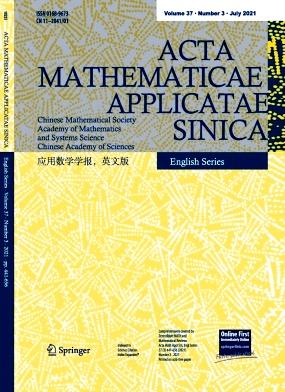
Acta Mathematicae Applicatae Sinica (English Series) is a quarterly journal established by the Chinese Mathematical Society. The journal publishes high quality research papers from all branches of applied mathematics, and particularly welcomes those from partial differential equations, computational mathematics, applied probability, mathematical finance, statistics, dynamical systems, optimization and management science.

 求助内容:
 应助结果提醒方式:


 京公网安备 11010802042870号


