
暖化、酸化和通风对育雏室中牡蛎碳酸盐化学的影响是动态的

IF 12.5 1区 环境科学与生态学 Q1 BIODIVERSITY CONSERVATION
Matthew Gray, Lore Van Acker, David Carmele‐Rescant, Jon Havenhand, Alexandra Kinnby, Pierre De Wit
{"title":"暖化、酸化和通风对育雏室中牡蛎碳酸盐化学的影响是动态的","authors":"Matthew Gray, Lore Van Acker, David Carmele‐Rescant, Jon Havenhand, Alexandra Kinnby, Pierre De Wit","doi":"10.1111/gcb.71007","DOIUrl":null,"url":null,"abstract":"Brooding organisms can modify the chemical environment experienced by developing offspring, potentially altering their exposure to climate change. In marine systems, however, the carbonate chemistry of brood chambers, and the mechanisms governing it, remain poorly resolved. Here, we combine high‐resolution pH and CO <jats:sub>2</jats:sub> measurements of the empty brood chamber (i.e., mantle cavity above gills) in the European flat oyster ( <jats:italic>Ostrea edulis</jats:italic> ) while also tracking valve gape to quantify how warming, ocean acidification, and ventilation interact to shape the internal environment experienced by larvae during incubation. Brood chamber pH was consistently lower than that of the surrounding seawater and responded to external conditions in a state‐dependent manner governed by ventilation and respiration. When oysters were actively ventilating, brood chamber chemistry tracked ambient seawater with a persistent offset, whereas valve closure led to rapid CO <jats:sub>2</jats:sub> accumulation and pronounced declines in pH. These dynamics generated highly variable and behaviorally mediated exposure regimes, in which metabolic processes distorted ambient chemical signals over short timescales. Paired pH and CO <jats:sub>2</jats:sub> measurements provided preliminary constraints on aragonite saturation state (Ωar), revealing that brood chambers can remain undersaturated (Ωar &lt; 1) for prolonged periods even in ventilating oysters and while overlying seawater remains favorable. Together, these results demonstrate that brood chambers function as dynamic microenvironments in which larval exposure to ocean acidification is governed not only by external conditions, but also by behavior. Because warming enhances metabolic CO <jats:sub>2</jats:sub> production and intensifies acidification within the chamber, future climate change is likely to amplify both the magnitude and variability of larval exposure. These findings help explain the apparent resilience of brooding species to ocean acidification, while also highlighting potential limits as environmental conditions move beyond historical bounds.","PeriodicalId":175,"journal":{"name":"Global Change Biology","volume":"49 1","pages":""},"PeriodicalIF":12.5000,"publicationDate":"2026-08-18","publicationTypes":"Journal Article","fieldsOfStudy":null,"isOpenAccess":false,"openAccessPdf":"","citationCount":"0","resultStr":"{\"title\":\"Brood Chamber Carbonate Chemistry in the oyster Ostrea edulis Is Dynamically Shaped by Warming, Acidification, and Ventilation\",\"authors\":\"Matthew Gray, Lore Van Acker, David Carmele‐Rescant, Jon Havenhand, Alexandra Kinnby, Pierre De Wit\",\"doi\":\"10.1111/gcb.71007\",\"DOIUrl\":null,\"url\":null,\"abstract\":\"Brooding organisms can modify the chemical environment experienced by developing offspring, potentially altering their exposure to climate change. In marine systems, however, the carbonate chemistry of brood chambers, and the mechanisms governing it, remain poorly resolved. Here, we combine high‐resolution pH and CO <jats:sub>2</jats:sub> measurements of the empty brood chamber (i.e., mantle cavity above gills) in the European flat oyster ( <jats:italic>Ostrea edulis</jats:italic> ) while also tracking valve gape to quantify how warming, ocean acidification, and ventilation interact to shape the internal environment experienced by larvae during incubation. Brood chamber pH was consistently lower than that of the surrounding seawater and responded to external conditions in a state‐dependent manner governed by ventilation and respiration. When oysters were actively ventilating, brood chamber chemistry tracked ambient seawater with a persistent offset, whereas valve closure led to rapid CO <jats:sub>2</jats:sub> accumulation and pronounced declines in pH. These dynamics generated highly variable and behaviorally mediated exposure regimes, in which metabolic processes distorted ambient chemical signals over short timescales. Paired pH and CO <jats:sub>2</jats:sub> measurements provided preliminary constraints on aragonite saturation state (Ωar), revealing that brood chambers can remain undersaturated (Ωar &lt; 1) for prolonged periods even in ventilating oysters and while overlying seawater remains favorable. Together, these results demonstrate that brood chambers function as dynamic microenvironments in which larval exposure to ocean acidification is governed not only by external conditions, but also by behavior. Because warming enhances metabolic CO <jats:sub>2</jats:sub> production and intensifies acidification within the chamber, future climate change is likely to amplify both the magnitude and variability of larval exposure. These findings help explain the apparent resilience of brooding species to ocean acidification, while also highlighting potential limits as environmental conditions move beyond historical bounds.\",\"PeriodicalId\":175,\"journal\":{\"name\":\"Global Change Biology\",\"volume\":\"49 1\",\"pages\":\"\"},\"PeriodicalIF\":12.5000,\"publicationDate\":\"2026-08-18\",\"publicationTypes\":\"Journal Article\",\"fieldsOfStudy\":null,\"isOpenAccess\":false,\"openAccessPdf\":\"\",\"citationCount\":\"0\",\"resultStr\":null,\"platform\":\"Semanticscholar\",\"paperid\":null,\"PeriodicalName\":\"Global Change Biology\",\"FirstCategoryId\":\"93\",\"ListUrlMain\":\"https://doi.org/10.1111/gcb.71007\",\"RegionNum\":1,\"RegionCategory\":\"环境科学与生态学\",\"ArticlePicture\":[],\"TitleCN\":null,\"AbstractTextCN\":null,\"PMCID\":null,\"EPubDate\":\"\",\"PubModel\":\"\",\"JCR\":\"Q1\",\"JCRName\":\"BIODIVERSITY CONSERVATION\",\"Score\":null,\"Total\":0}","platform":"Semanticscholar","paperid":null,"PeriodicalName":"Global Change Biology","FirstCategoryId":"93","ListUrlMain":"https://doi.org/10.1111/gcb.71007","RegionNum":1,"RegionCategory":"环境科学与生态学","ArticlePicture":[],"TitleCN":null,"AbstractTextCN":null,"PMCID":null,"EPubDate":"","PubModel":"","JCR":"Q1","JCRName":"BIODIVERSITY CONSERVATION","Score":null,"Total":0}
引用次数: 0

摘要

育雏生物可以通过后代的发育改变所经历的化学环境,潜在地改变它们对气候变化的暴露。然而,在海洋系统中,育雏室的碳酸盐化学以及控制它的机制仍然没有得到很好的解决。在这里,我们结合了对欧洲平牡蛎(Ostrea edulis)中空育雏室(即鳃上方的地幔腔)的高分辨率pH和CO 2测量,同时还跟踪了阀门间隙,以量化变暖、海洋酸化和通风如何相互作用,从而塑造了幼虫在孵化期间所经历的内部环境。育雏室pH值始终低于周围海水,并以通气和呼吸控制的状态依赖方式响应外部条件。当牡蛎处于主动通风状态时,育巢室的化学反应会以持续偏移的方式跟踪环境海水,而阀门关闭会导致二氧化碳的快速积累和ph值的显著下降。这些动态产生了高度可变的行为介导的暴露机制,其中代谢过程在短时间内扭曲了环境化学信号。配对的pH和CO 2测量提供了文石饱和状态的初步约束(Ωar),揭示了育雏室可以长时间保持不饱和状态(Ωar < 1),即使在通风的牡蛎中,而上覆海水仍然有利。总之,这些结果表明,育雏室是一个动态的微环境,在这个微环境中,幼虫对海洋酸化的暴露不仅受外部条件的控制,而且受行为的控制。由于变暖增加了代谢co2的产生并加剧了舱内的酸化,未来的气候变化可能会扩大幼虫暴露的幅度和变异性。这些发现有助于解释产卵物种对海洋酸化的明显恢复力,同时也强调了环境条件超越历史界限的潜在限制。
本文章由计算机程序翻译,如有差异,请以英文原文为准。
Brood Chamber Carbonate Chemistry in the oyster Ostrea edulis Is Dynamically Shaped by Warming, Acidification, and Ventilation
Brooding organisms can modify the chemical environment experienced by developing offspring, potentially altering their exposure to climate change. In marine systems, however, the carbonate chemistry of brood chambers, and the mechanisms governing it, remain poorly resolved. Here, we combine high‐resolution pH and CO 2 measurements of the empty brood chamber (i.e., mantle cavity above gills) in the European flat oyster ( Ostrea edulis ) while also tracking valve gape to quantify how warming, ocean acidification, and ventilation interact to shape the internal environment experienced by larvae during incubation. Brood chamber pH was consistently lower than that of the surrounding seawater and responded to external conditions in a state‐dependent manner governed by ventilation and respiration. When oysters were actively ventilating, brood chamber chemistry tracked ambient seawater with a persistent offset, whereas valve closure led to rapid CO 2 accumulation and pronounced declines in pH. These dynamics generated highly variable and behaviorally mediated exposure regimes, in which metabolic processes distorted ambient chemical signals over short timescales. Paired pH and CO 2 measurements provided preliminary constraints on aragonite saturation state (Ωar), revealing that brood chambers can remain undersaturated (Ωar < 1) for prolonged periods even in ventilating oysters and while overlying seawater remains favorable. Together, these results demonstrate that brood chambers function as dynamic microenvironments in which larval exposure to ocean acidification is governed not only by external conditions, but also by behavior. Because warming enhances metabolic CO 2 production and intensifies acidification within the chamber, future climate change is likely to amplify both the magnitude and variability of larval exposure. These findings help explain the apparent resilience of brooding species to ocean acidification, while also highlighting potential limits as environmental conditions move beyond historical bounds.
求助全文
通过发布文献求助,成功后即可免费获取论文全文。 去求助
来源期刊
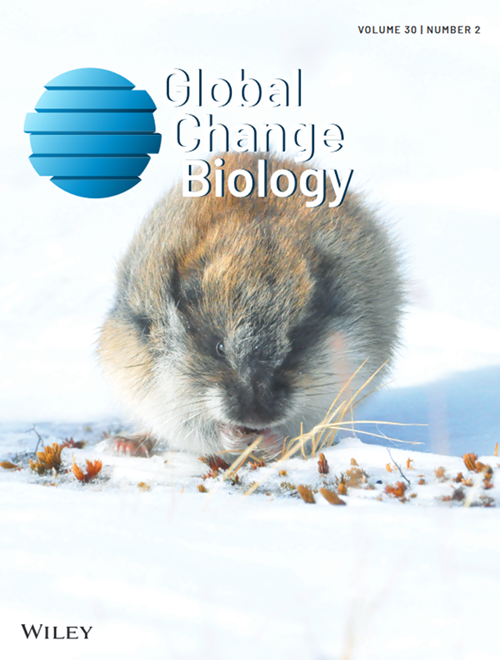
Global Change Biology
Global Change Biology 环境科学-环境科学
CiteScore
21.50
自引率
5.20%
发文量
497
审稿时长
3.3 months
期刊介绍: Global Change Biology is an environmental change journal committed to shaping the future and addressing the world's most pressing challenges, including sustainability, climate change, environmental protection, food and water safety, and global health. Dedicated to fostering a profound understanding of the impacts of global change on biological systems and offering innovative solutions, the journal publishes a diverse range of content, including primary research articles, technical advances, research reviews, reports, opinions, perspectives, commentaries, and letters. Starting with the 2024 volume, Global Change Biology will transition to an online-only format, enhancing accessibility and contributing to the evolution of scholarly communication.

×
引用
GB/T 7714-2015
复制
MLA
复制
APA
复制
导出至
BibTeX EndNote RefMan NoteFirst NoteExpress
×
提示
您的信息不完整,为了账户安全,请先补充。
现在去补充
×
提示
您因"违规操作"
具体请查看互助需知
我知道了
×
提示
确定
请完成安全验证×
copy
已复制链接
快去分享给好友吧!
我知道了
右上角分享
点击右上角分享
0
联系我们:info@booksci.cn Book学术提供免费学术资源搜索服务,方便国内外学者检索中英文文献。致力于提供最便捷和优质的服务体验。 Copyright © 2023 布克学术 All rights reserved.
京ICP备2023020795号-1
ghs 京公网安备 11010802042870号
Book学术文献互助
Book学术文献互助群
群 号:604180095
Book学术官方微信
小红书


