Néstor Nicolás-Ruiz, María Luisa Suárez, María Rosario Vidal-Abarca
{"title":"将影响自然对干旱河流中人们的贡献的变化驱动因素从社会认知中分离出来","authors":"Néstor Nicolás-Ruiz, María Luisa Suárez, María Rosario Vidal-Abarca","doi":"10.1016/j.jaridenv.2026.105707","DOIUrl":null,"url":null,"abstract":"<div><div>Dry rivers provide both benefits and detriments to people (NCP). However, the drivers of change governing this provision, particularly indirect drivers, and their effects remain poorly understood. Consequently, interactions between direct and indirect drivers are also unclear. Recent studies suggest that they could be reciprocal. This study provides a comprehensive analysis of the drivers of change that affect the NCP of dry rivers, examining the components that make up the system as well as the interactions between them. Three dry rivers in south-eastern Spain were selected. A total of 37 interviews were conducted with representatives of the ten main social groups in the study area. Interviews were analysed qualitatively to identify drivers, their interactions, and their relationships with NCP. Interviewees cited both direct drivers (e.g., urban development, soil pollution) and indirect drivers (e.g., social capital, rural exodus). Drivers exhibited many-to-many relationships with NCP, exerting both enhancing and reducing effects. Driver perceptions varied according to interviewees’ values and interests. Nevertheless, three patters emerged: drivers with predominantly negative effects on NCP (e.g., cultural capital decoupling, precipitation change), drivers with predominantly positive effects (e.g., protected area changes, taxes and subsidies), and drivers with both positive and negative effects (e.g., values and beliefs, environmental policy). Interactions between direct and indirect drivers are multidirectional and many-to-many, with reinforcing or inhibiting effects generating feedback loops. These findings call for rethinking how conceptual frameworks represent relationships between drivers and NCP and for adopting methods better suited to analysing complex systems, including focus group interviews and systems mapping.</div></div>","PeriodicalId":51080,"journal":{"name":"Journal of Arid Environments","volume":"237 ","pages":"Article 105707"},"PeriodicalIF":2.5000,"publicationDate":"2026-08-01","publicationTypes":"Journal Article","fieldsOfStudy":null,"isOpenAccess":false,"openAccessPdf":"","citationCount":"0","resultStr":"{\"title\":\"Disentangling the drivers of change affecting nature's contributions to people in dry rivers from social perception\",\"authors\":\"Néstor Nicolás-Ruiz, María Luisa Suárez, María Rosario Vidal-Abarca\",\"doi\":\"10.1016/j.jaridenv.2026.105707\",\"DOIUrl\":null,\"url\":null,\"abstract\":\"<div><div>Dry rivers provide both benefits and detriments to people (NCP). However, the drivers of change governing this provision, particularly indirect drivers, and their effects remain poorly understood. Consequently, interactions between direct and indirect drivers are also unclear. Recent studies suggest that they could be reciprocal. This study provides a comprehensive analysis of the drivers of change that affect the NCP of dry rivers, examining the components that make up the system as well as the interactions between them. Three dry rivers in south-eastern Spain were selected. A total of 37 interviews were conducted with representatives of the ten main social groups in the study area. Interviews were analysed qualitatively to identify drivers, their interactions, and their relationships with NCP. Interviewees cited both direct drivers (e.g., urban development, soil pollution) and indirect drivers (e.g., social capital, rural exodus). Drivers exhibited many-to-many relationships with NCP, exerting both enhancing and reducing effects. Driver perceptions varied according to interviewees’ values and interests. Nevertheless, three patters emerged: drivers with predominantly negative effects on NCP (e.g., cultural capital decoupling, precipitation change), drivers with predominantly positive effects (e.g., protected area changes, taxes and subsidies), and drivers with both positive and negative effects (e.g., values and beliefs, environmental policy). Interactions between direct and indirect drivers are multidirectional and many-to-many, with reinforcing or inhibiting effects generating feedback loops. These findings call for rethinking how conceptual frameworks represent relationships between drivers and NCP and for adopting methods better suited to analysing complex systems, including focus group interviews and systems mapping.</div></div>\",\"PeriodicalId\":51080,\"journal\":{\"name\":\"Journal of Arid Environments\",\"volume\":\"237 \",\"pages\":\"Article 105707\"},\"PeriodicalIF\":2.5000,\"publicationDate\":\"2026-08-01\",\"publicationTypes\":\"Journal Article\",\"fieldsOfStudy\":null,\"isOpenAccess\":false,\"openAccessPdf\":\"\",\"citationCount\":\"0\",\"resultStr\":null,\"platform\":\"Semanticscholar\",\"paperid\":null,\"PeriodicalName\":\"Journal of Arid Environments\",\"FirstCategoryId\":\"93\",\"ListUrlMain\":\"https://www.sciencedirect.com/science/article/pii/S014019632600159X\",\"RegionNum\":3,\"RegionCategory\":\"环境科学与生态学\",\"ArticlePicture\":[],\"TitleCN\":null,\"AbstractTextCN\":null,\"PMCID\":null,\"EPubDate\":\"2026/7/29 0:00:00\",\"PubModel\":\"Epub\",\"JCR\":\"Q2\",\"JCRName\":\"ECOLOGY\",\"Score\":null,\"Total\":0}","platform":"Semanticscholar","paperid":null,"PeriodicalName":"Journal of Arid Environments","FirstCategoryId":"93","ListUrlMain":"https://www.sciencedirect.com/science/article/pii/S014019632600159X","RegionNum":3,"RegionCategory":"环境科学与生态学","ArticlePicture":[],"TitleCN":null,"AbstractTextCN":null,"PMCID":null,"EPubDate":"2026/7/29 0:00:00","PubModel":"Epub","JCR":"Q2","JCRName":"ECOLOGY","Score":null,"Total":0}
Disentangling the drivers of change affecting nature's contributions to people in dry rivers from social perception
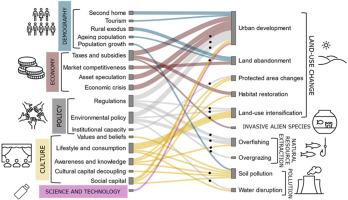
Dry rivers provide both benefits and detriments to people (NCP). However, the drivers of change governing this provision, particularly indirect drivers, and their effects remain poorly understood. Consequently, interactions between direct and indirect drivers are also unclear. Recent studies suggest that they could be reciprocal. This study provides a comprehensive analysis of the drivers of change that affect the NCP of dry rivers, examining the components that make up the system as well as the interactions between them. Three dry rivers in south-eastern Spain were selected. A total of 37 interviews were conducted with representatives of the ten main social groups in the study area. Interviews were analysed qualitatively to identify drivers, their interactions, and their relationships with NCP. Interviewees cited both direct drivers (e.g., urban development, soil pollution) and indirect drivers (e.g., social capital, rural exodus). Drivers exhibited many-to-many relationships with NCP, exerting both enhancing and reducing effects. Driver perceptions varied according to interviewees’ values and interests. Nevertheless, three patters emerged: drivers with predominantly negative effects on NCP (e.g., cultural capital decoupling, precipitation change), drivers with predominantly positive effects (e.g., protected area changes, taxes and subsidies), and drivers with both positive and negative effects (e.g., values and beliefs, environmental policy). Interactions between direct and indirect drivers are multidirectional and many-to-many, with reinforcing or inhibiting effects generating feedback loops. These findings call for rethinking how conceptual frameworks represent relationships between drivers and NCP and for adopting methods better suited to analysing complex systems, including focus group interviews and systems mapping.
期刊介绍:
The Journal of Arid Environments is an international journal publishing original scientific and technical research articles on physical, biological and cultural aspects of arid, semi-arid, and desert environments. As a forum of multi-disciplinary and interdisciplinary dialogue it addresses research on all aspects of arid environments and their past, present and future use.