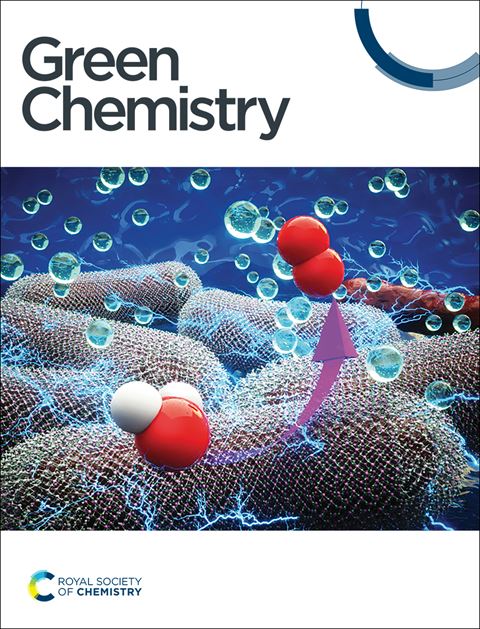
Sang Yoon Kim, Hyeonseo Im, Kisan Chhetri, Chandan Chandru Gudal, Jiyong Kim, Chan-Hwa Chung
{"title":"通过乙二醇氧化和二氧化碳电还原对PET废弃物进行综合升级回收:全电池示范及技术经济和环境评估","authors":"Sang Yoon Kim, Hyeonseo Im, Kisan Chhetri, Chandan Chandru Gudal, Jiyong Kim, Chan-Hwa Chung","doi":"10.1039/d6gc01540a","DOIUrl":null,"url":null,"abstract":"<div><div>The electrochemical CO<sub>2</sub> reduction reaction (CO<sub>2</sub>RR) offers a sustainable strategy for converting CO<sub>2</sub> into valuable products while utilizing renewable energy sources. However, the oxygen evolution reaction (OER), which is commonly coupled with the CO<sub>2</sub>RR, is a sluggish reaction that requires a high overpotential. To overcome this, we used the ethylene glycol oxidation reaction (EGOR) as an alternative anodic oxidation reaction, using ethylene glycol (EG) derived from waste poly(ethylene terephthalate) (PET). This strategy lowers the overall cell voltage and enables simultaneous carbon utilization and plastic waste valorization. The EGOR∥CO<sub>2</sub>RR system was operated with a Ni<sub>0.33</sub>Co<sub>0.67</sub>(OH)<sub>2</sub>/NF anode and an Ag-BTC/CP cathode. The as-prepared anode required less energy (135 mV) for the EGOR at 100 mA cm<sup>−2</sup> than for the OER. In the full cell, the EGOR at the anode achieved a faradaic efficiency (F.E.) of approximately 60% for formate production, while the CO<sub>2</sub>RR at the cathode reduced CO<sub>2</sub> to CO with a F.E. exceeding 95% over a wide range of potentials. Furthermore, to elucidate the commercialization potential of the EGOR∥CO<sub>2</sub>RR, we developed a rigorous process simulation with techno-economic and environmental assessments incorporating PET hydrolysis and downstream separation at an industrial scale. Three process configurations were designed and evaluated, revealing that hydrolysis and separation dominate the overall process efficiency rather than electrochemical performance alone. Moreover, we demonstrate that improvements in EGOR∥CO<sub>2</sub>RR technology can approach cost parity with fossil-based terephthalic acid and achieve lower CO<sub>2</sub>-equivalent emissions, thereby providing a viable pathway toward commercialization of the technology.</div></div>","PeriodicalId":78,"journal":{"name":"Green Chemistry","volume":"28 26","pages":"Pages 11120-11134"},"PeriodicalIF":10.6000,"publicationDate":"2026-07-06","publicationTypes":"Journal Article","fieldsOfStudy":null,"isOpenAccess":false,"openAccessPdf":"","citationCount":"0","resultStr":"{\"title\":\"Integrated upcycling of PET waste via ethylene glycol oxidation and CO2 electroreduction: full-cell demonstration with techno-economic and environmental assessments\",\"authors\":\"Sang Yoon Kim, Hyeonseo Im, Kisan Chhetri, Chandan Chandru Gudal, Jiyong Kim, Chan-Hwa Chung\",\"doi\":\"10.1039/d6gc01540a\",\"DOIUrl\":null,\"url\":null,\"abstract\":\"<div><div>The electrochemical CO<sub>2</sub> reduction reaction (CO<sub>2</sub>RR) offers a sustainable strategy for converting CO<sub>2</sub> into valuable products while utilizing renewable energy sources. However, the oxygen evolution reaction (OER), which is commonly coupled with the CO<sub>2</sub>RR, is a sluggish reaction that requires a high overpotential. To overcome this, we used the ethylene glycol oxidation reaction (EGOR) as an alternative anodic oxidation reaction, using ethylene glycol (EG) derived from waste poly(ethylene terephthalate) (PET). This strategy lowers the overall cell voltage and enables simultaneous carbon utilization and plastic waste valorization. The EGOR∥CO<sub>2</sub>RR system was operated with a Ni<sub>0.33</sub>Co<sub>0.67</sub>(OH)<sub>2</sub>/NF anode and an Ag-BTC/CP cathode. The as-prepared anode required less energy (135 mV) for the EGOR at 100 mA cm<sup>−2</sup> than for the OER. In the full cell, the EGOR at the anode achieved a faradaic efficiency (F.E.) of approximately 60% for formate production, while the CO<sub>2</sub>RR at the cathode reduced CO<sub>2</sub> to CO with a F.E. exceeding 95% over a wide range of potentials. Furthermore, to elucidate the commercialization potential of the EGOR∥CO<sub>2</sub>RR, we developed a rigorous process simulation with techno-economic and environmental assessments incorporating PET hydrolysis and downstream separation at an industrial scale. Three process configurations were designed and evaluated, revealing that hydrolysis and separation dominate the overall process efficiency rather than electrochemical performance alone. Moreover, we demonstrate that improvements in EGOR∥CO<sub>2</sub>RR technology can approach cost parity with fossil-based terephthalic acid and achieve lower CO<sub>2</sub>-equivalent emissions, thereby providing a viable pathway toward commercialization of the technology.</div></div>\",\"PeriodicalId\":78,\"journal\":{\"name\":\"Green Chemistry\",\"volume\":\"28 26\",\"pages\":\"Pages 11120-11134\"},\"PeriodicalIF\":10.6000,\"publicationDate\":\"2026-07-06\",\"publicationTypes\":\"Journal Article\",\"fieldsOfStudy\":null,\"isOpenAccess\":false,\"openAccessPdf\":\"\",\"citationCount\":\"0\",\"resultStr\":null,\"platform\":\"Semanticscholar\",\"paperid\":null,\"PeriodicalName\":\"Green Chemistry\",\"FirstCategoryId\":\"92\",\"ListUrlMain\":\"https://www.sciencedirect.com/org/science/article/pii/S1463926226005881\",\"RegionNum\":1,\"RegionCategory\":\"化学\",\"ArticlePicture\":[],\"TitleCN\":null,\"AbstractTextCN\":null,\"PMCID\":null,\"EPubDate\":\"2026/6/18 0:00:00\",\"PubModel\":\"Epub\",\"JCR\":\"Q1\",\"JCRName\":\"CHEMISTRY, MULTIDISCIPLINARY\",\"Score\":null,\"Total\":0}","platform":"Semanticscholar","paperid":null,"PeriodicalName":"Green Chemistry","FirstCategoryId":"92","ListUrlMain":"https://www.sciencedirect.com/org/science/article/pii/S1463926226005881","RegionNum":1,"RegionCategory":"化学","ArticlePicture":[],"TitleCN":null,"AbstractTextCN":null,"PMCID":null,"EPubDate":"2026/6/18 0:00:00","PubModel":"Epub","JCR":"Q1","JCRName":"CHEMISTRY, MULTIDISCIPLINARY","Score":null,"Total":0}
引用次数: 0
摘要
电化学CO2还原反应(CO2RR)提供了一种可持续的策略,将CO2转化为有价值的产品,同时利用可再生能源。然而,通常与CO2RR耦合的析氧反应(OER)是一个缓慢的反应,需要高过电位。为了克服这个问题,我们使用乙二醇氧化反应(EGOR)作为替代阳极氧化反应,使用从废弃聚对苯二甲酸乙二醇酯(PET)中提取的乙二醇(EG)。这种策略降低了整体电池电压,并使碳利用和塑料废物同时增值。EGOR∥CO2RR系统的阳极为Ni0.33Co0.67(OH)2/NF,阴极为Ag-BTC/CP。与OER相比,EGOR在100 mA cm - 2时所需的能量(135 mV)更少。在全电池中,阳极EGOR生成甲酸的法拉第效率(F.E.)约为60%,而阴极CO2RR在大电位范围内将CO2还原为CO, F.E.超过95%。此外,为了阐明EGOR∥CO2RR的商业化潜力,我们开发了一个严格的过程模拟,包括技术经济和环境评估,包括PET水解和工业规模的下游分离。设计并评估了三种工艺配置,揭示了水解和分离在整体工艺效率中占主导地位,而不仅仅是电化学性能。此外,我们证明了EGOR∥CO2RR技术的改进可以接近化石基对苯二甲酸的成本平价,并实现更低的二氧化碳当量排放,从而为该技术的商业化提供了一条可行的途径。
Integrated upcycling of PET waste via ethylene glycol oxidation and CO2 electroreduction: full-cell demonstration with techno-economic and environmental assessments
The electrochemical CO2 reduction reaction (CO2RR) offers a sustainable strategy for converting CO2 into valuable products while utilizing renewable energy sources. However, the oxygen evolution reaction (OER), which is commonly coupled with the CO2RR, is a sluggish reaction that requires a high overpotential. To overcome this, we used the ethylene glycol oxidation reaction (EGOR) as an alternative anodic oxidation reaction, using ethylene glycol (EG) derived from waste poly(ethylene terephthalate) (PET). This strategy lowers the overall cell voltage and enables simultaneous carbon utilization and plastic waste valorization. The EGOR∥CO2RR system was operated with a Ni0.33Co0.67(OH)2/NF anode and an Ag-BTC/CP cathode. The as-prepared anode required less energy (135 mV) for the EGOR at 100 mA cm−2 than for the OER. In the full cell, the EGOR at the anode achieved a faradaic efficiency (F.E.) of approximately 60% for formate production, while the CO2RR at the cathode reduced CO2 to CO with a F.E. exceeding 95% over a wide range of potentials. Furthermore, to elucidate the commercialization potential of the EGOR∥CO2RR, we developed a rigorous process simulation with techno-economic and environmental assessments incorporating PET hydrolysis and downstream separation at an industrial scale. Three process configurations were designed and evaluated, revealing that hydrolysis and separation dominate the overall process efficiency rather than electrochemical performance alone. Moreover, we demonstrate that improvements in EGOR∥CO2RR technology can approach cost parity with fossil-based terephthalic acid and achieve lower CO2-equivalent emissions, thereby providing a viable pathway toward commercialization of the technology.
期刊介绍:
Green Chemistry is a journal that provides a unique forum for the publication of innovative research on the development of alternative green and sustainable technologies. The scope of Green Chemistry is based on the definition proposed by Anastas and Warner (Green Chemistry: Theory and Practice, P T Anastas and J C Warner, Oxford University Press, Oxford, 1998), which defines green chemistry as the utilisation of a set of principles that reduces or eliminates the use or generation of hazardous substances in the design, manufacture and application of chemical products. Green Chemistry aims to reduce the environmental impact of the chemical enterprise by developing a technology base that is inherently non-toxic to living things and the environment. The journal welcomes submissions on all aspects of research relating to this endeavor and publishes original and significant cutting-edge research that is likely to be of wide general appeal. For a work to be published, it must present a significant advance in green chemistry, including a comparison with existing methods and a demonstration of advantages over those methods.