{"title":"回收碳纤维:CFRP低温回收的绿色催化途径","authors":"Yunzi Xin , Mai Goto , Takashi Shirai","doi":"10.1039/d5gc06006k","DOIUrl":null,"url":null,"abstract":"<div><div>A novel low-temperature and solid-state catalytic method using hydroxyapatite (HAp) and Pt nanoparticle-loaded HAp enables efficient recycling of carbon fibres from CFRP. The two-stage process decomposes the polymer matrix selectively, preserving fibre integrity. PtNPs@HAp shows superior catalytic activity, offering a sustainable and environmentally friendly route for high-quality CF recovery from CFRP waste.</div></div>","PeriodicalId":78,"journal":{"name":"Green Chemistry","volume":"28 24","pages":"Pages 9976-9982"},"PeriodicalIF":10.6000,"publicationDate":"2026-06-22","publicationTypes":"Journal Article","fieldsOfStudy":null,"isOpenAccess":false,"openAccessPdf":"","citationCount":"0","resultStr":"{\"title\":\"Reclaiming carbon fibres: a green catalytic route for low-temperature CFRP recycling\",\"authors\":\"Yunzi Xin , Mai Goto , Takashi Shirai\",\"doi\":\"10.1039/d5gc06006k\",\"DOIUrl\":null,\"url\":null,\"abstract\":\"<div><div>A novel low-temperature and solid-state catalytic method using hydroxyapatite (HAp) and Pt nanoparticle-loaded HAp enables efficient recycling of carbon fibres from CFRP. The two-stage process decomposes the polymer matrix selectively, preserving fibre integrity. PtNPs@HAp shows superior catalytic activity, offering a sustainable and environmentally friendly route for high-quality CF recovery from CFRP waste.</div></div>\",\"PeriodicalId\":78,\"journal\":{\"name\":\"Green Chemistry\",\"volume\":\"28 24\",\"pages\":\"Pages 9976-9982\"},\"PeriodicalIF\":10.6000,\"publicationDate\":\"2026-06-22\",\"publicationTypes\":\"Journal Article\",\"fieldsOfStudy\":null,\"isOpenAccess\":false,\"openAccessPdf\":\"\",\"citationCount\":\"0\",\"resultStr\":null,\"platform\":\"Semanticscholar\",\"paperid\":null,\"PeriodicalName\":\"Green Chemistry\",\"FirstCategoryId\":\"92\",\"ListUrlMain\":\"https://www.sciencedirect.com/org/science/article/pii/S1463926226005364\",\"RegionNum\":1,\"RegionCategory\":\"化学\",\"ArticlePicture\":[],\"TitleCN\":null,\"AbstractTextCN\":null,\"PMCID\":null,\"EPubDate\":\"2026/4/9 0:00:00\",\"PubModel\":\"Epub\",\"JCR\":\"Q1\",\"JCRName\":\"CHEMISTRY, MULTIDISCIPLINARY\",\"Score\":null,\"Total\":0}","platform":"Semanticscholar","paperid":null,"PeriodicalName":"Green Chemistry","FirstCategoryId":"92","ListUrlMain":"https://www.sciencedirect.com/org/science/article/pii/S1463926226005364","RegionNum":1,"RegionCategory":"化学","ArticlePicture":[],"TitleCN":null,"AbstractTextCN":null,"PMCID":null,"EPubDate":"2026/4/9 0:00:00","PubModel":"Epub","JCR":"Q1","JCRName":"CHEMISTRY, MULTIDISCIPLINARY","Score":null,"Total":0}
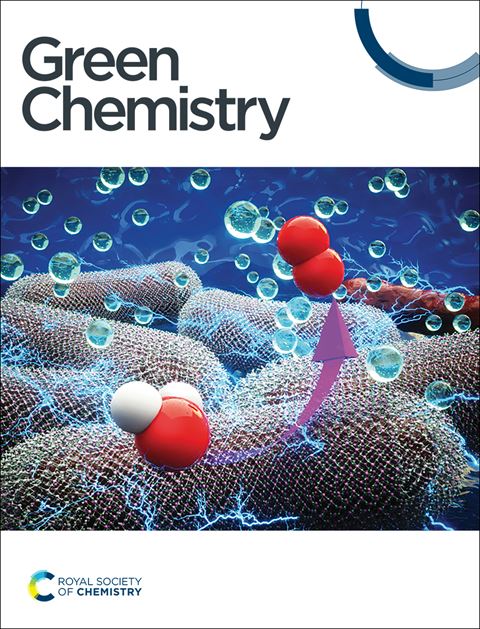
Reclaiming carbon fibres: a green catalytic route for low-temperature CFRP recycling
A novel low-temperature and solid-state catalytic method using hydroxyapatite (HAp) and Pt nanoparticle-loaded HAp enables efficient recycling of carbon fibres from CFRP. The two-stage process decomposes the polymer matrix selectively, preserving fibre integrity. PtNPs@HAp shows superior catalytic activity, offering a sustainable and environmentally friendly route for high-quality CF recovery from CFRP waste.
期刊介绍:
Green Chemistry is a journal that provides a unique forum for the publication of innovative research on the development of alternative green and sustainable technologies. The scope of Green Chemistry is based on the definition proposed by Anastas and Warner (Green Chemistry: Theory and Practice, P T Anastas and J C Warner, Oxford University Press, Oxford, 1998), which defines green chemistry as the utilisation of a set of principles that reduces or eliminates the use or generation of hazardous substances in the design, manufacture and application of chemical products. Green Chemistry aims to reduce the environmental impact of the chemical enterprise by developing a technology base that is inherently non-toxic to living things and the environment. The journal welcomes submissions on all aspects of research relating to this endeavor and publishes original and significant cutting-edge research that is likely to be of wide general appeal. For a work to be published, it must present a significant advance in green chemistry, including a comparison with existing methods and a demonstration of advantages over those methods.