{"title":"钌(ii)多吡啶复合物和DNA损伤反应:机制和治疗意义。","authors":"Martin R. Gill","doi":"10.1039/D6MD00154H","DOIUrl":null,"url":null,"abstract":"<p >Ruthenium(<small>II</small>) polypyridyl complexes (RPCs) have generated substantial interest due to their biomolecular binding capabilities, favourable photophysical properties, and anticancer activity. DNA is widely reported as a target for RPCs, and their recent development as photosensitisers for photodynamic therapy further emphasises DNA damage as a key biological outcome. The aim of this review is to highlight recent studies in the design of RPCs as pharmacological DNA-targeting agents and describe what is known about their impact on the DNA damage response (DDR). This, in turn, provides insight into the nature of the DNA lesions induced by these complexes. The relationship between binding mode, activation of specific DDR pathways, and resultant cell fate in human cancer cell lines is examined and, where appropriate, placed in a therapeutic context. Implications for enhancing cancer selectivity, including the use of RPCs alongside DDR inhibitors in combination strategies, as well as associated safety considerations, are discussed.</p>","PeriodicalId":88,"journal":{"name":"MedChemComm","volume":" 6","pages":" 2726-2742"},"PeriodicalIF":3.5970,"publicationDate":"2026-05-06","publicationTypes":"Journal Article","fieldsOfStudy":null,"isOpenAccess":false,"openAccessPdf":"https://www.ncbi.nlm.nih.gov/pmc/articles/PMC13148184/pdf/","citationCount":"0","resultStr":"{\"title\":\"Ruthenium(ii) polypyridyl complexes and the DNA damage response: mechanisms and therapeutic implications\",\"authors\":\"Martin R. Gill\",\"doi\":\"10.1039/D6MD00154H\",\"DOIUrl\":null,\"url\":null,\"abstract\":\"<p >Ruthenium(<small>II</small>) polypyridyl complexes (RPCs) have generated substantial interest due to their biomolecular binding capabilities, favourable photophysical properties, and anticancer activity. DNA is widely reported as a target for RPCs, and their recent development as photosensitisers for photodynamic therapy further emphasises DNA damage as a key biological outcome. The aim of this review is to highlight recent studies in the design of RPCs as pharmacological DNA-targeting agents and describe what is known about their impact on the DNA damage response (DDR). This, in turn, provides insight into the nature of the DNA lesions induced by these complexes. The relationship between binding mode, activation of specific DDR pathways, and resultant cell fate in human cancer cell lines is examined and, where appropriate, placed in a therapeutic context. Implications for enhancing cancer selectivity, including the use of RPCs alongside DDR inhibitors in combination strategies, as well as associated safety considerations, are discussed.</p>\",\"PeriodicalId\":88,\"journal\":{\"name\":\"MedChemComm\",\"volume\":\" 6\",\"pages\":\" 2726-2742\"},\"PeriodicalIF\":3.5970,\"publicationDate\":\"2026-05-06\",\"publicationTypes\":\"Journal Article\",\"fieldsOfStudy\":null,\"isOpenAccess\":false,\"openAccessPdf\":\"https://www.ncbi.nlm.nih.gov/pmc/articles/PMC13148184/pdf/\",\"citationCount\":\"0\",\"resultStr\":null,\"platform\":\"Semanticscholar\",\"paperid\":null,\"PeriodicalName\":\"MedChemComm\",\"FirstCategoryId\":\"1085\",\"ListUrlMain\":\"https://pubs.rsc.org/en/content/articlelanding/2026/md/d6md00154h\",\"RegionNum\":0,\"RegionCategory\":null,\"ArticlePicture\":[],\"TitleCN\":null,\"AbstractTextCN\":null,\"PMCID\":null,\"EPubDate\":\"\",\"PubModel\":\"\",\"JCR\":\"Q2\",\"JCRName\":\"Pharmacology, Toxicology and Pharmaceutics\",\"Score\":null,\"Total\":0}","platform":"Semanticscholar","paperid":null,"PeriodicalName":"MedChemComm","FirstCategoryId":"1085","ListUrlMain":"https://pubs.rsc.org/en/content/articlelanding/2026/md/d6md00154h","RegionNum":0,"RegionCategory":null,"ArticlePicture":[],"TitleCN":null,"AbstractTextCN":null,"PMCID":null,"EPubDate":"","PubModel":"","JCR":"Q2","JCRName":"Pharmacology, Toxicology and Pharmaceutics","Score":null,"Total":0}
Ruthenium(ii) polypyridyl complexes and the DNA damage response: mechanisms and therapeutic implications
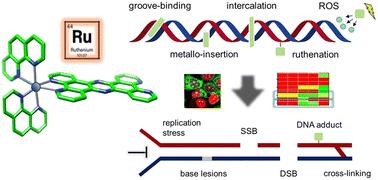
Ruthenium(II) polypyridyl complexes (RPCs) have generated substantial interest due to their biomolecular binding capabilities, favourable photophysical properties, and anticancer activity. DNA is widely reported as a target for RPCs, and their recent development as photosensitisers for photodynamic therapy further emphasises DNA damage as a key biological outcome. The aim of this review is to highlight recent studies in the design of RPCs as pharmacological DNA-targeting agents and describe what is known about their impact on the DNA damage response (DDR). This, in turn, provides insight into the nature of the DNA lesions induced by these complexes. The relationship between binding mode, activation of specific DDR pathways, and resultant cell fate in human cancer cell lines is examined and, where appropriate, placed in a therapeutic context. Implications for enhancing cancer selectivity, including the use of RPCs alongside DDR inhibitors in combination strategies, as well as associated safety considerations, are discussed.
期刊介绍:
Research and review articles in medicinal chemistry and related drug discovery science; the official journal of the European Federation for Medicinal Chemistry.
In 2020, MedChemComm will change its name to RSC Medicinal Chemistry. Issue 12, 2019 will be the last issue as MedChemComm.

 求助内容:
 应助结果提醒方式:


 京公网安备 11010802042870号


