Xin Sun, Yiwei Ouyang, Xiaoke Huang, Xiaonan Wang, Yiran Han, Duyan Zhang, Yang Liu, Xiaozhou Gong
{"title":"不同编织结构的三维管状编织复合材料低温压缩性能及损伤机理的系统研究","authors":"Xin Sun, Yiwei Ouyang, Xiaoke Huang, Xiaonan Wang, Yiran Han, Duyan Zhang, Yang Liu, Xiaozhou Gong","doi":"10.1007/s10443-026-10475-0","DOIUrl":null,"url":null,"abstract":"<div><p>This study focused on three typical three-dimensional woven tubular composites (3DWTCs) with different weaving architectures, namely through orthogonal (TO), shallow cross-linked (SCL), and shallow-crossed curved joint (SCCJ), aiming to clarify their low-temperature compressive performance and failure mechanisms. Axial and lateral compressive tests were conducted over a temperature range of 20 °C to -60 °C. The results indicated that the compressive properties of all 3DWTCs were significantly improved with decreasing temperature: when the temperature decreased from 20 °C to -60 °C, the axial ultimate stress of TO increased by 71.89%, the compressive modulus of SCCJ rose by 94.17%, and the lateral energy absorption of SCL improved by 30.52%. Structurally, TO exhibited the best axial compressive performance, followed by SCL and SCCJ, while SCL outperformed the other two weaving architectures in lateral compression. Low temperatures induced a ductile-to-brittle transition in 3DWTCs, with TO showing concentrated crack distribution and SCCJ presenting dispersed microcracks; the main micro-damage mechanisms included matrix cracking, fiber/matrix interfacial cracking, fiber pull-out, and resin embrittlement. The findings provide valuable guidance for the structural optimization, performance design, and safety evaluation of low-temperature-resistant lightweight components in extreme engineering fields.</p></div>","PeriodicalId":468,"journal":{"name":"Applied Composite Materials","volume":"33 3","pages":""},"PeriodicalIF":2.9000,"publicationDate":"2026-05-09","publicationTypes":"Journal Article","fieldsOfStudy":null,"isOpenAccess":false,"openAccessPdf":"","citationCount":"0","resultStr":"{\"title\":\"Systematic Investigation of the Low Temperature Compressive Properties and Damage Mechanisms of 3D Woven Tubular Composites with Diverse Weaving Architectures\",\"authors\":\"Xin Sun, Yiwei Ouyang, Xiaoke Huang, Xiaonan Wang, Yiran Han, Duyan Zhang, Yang Liu, Xiaozhou Gong\",\"doi\":\"10.1007/s10443-026-10475-0\",\"DOIUrl\":null,\"url\":null,\"abstract\":\"<div><p>This study focused on three typical three-dimensional woven tubular composites (3DWTCs) with different weaving architectures, namely through orthogonal (TO), shallow cross-linked (SCL), and shallow-crossed curved joint (SCCJ), aiming to clarify their low-temperature compressive performance and failure mechanisms. Axial and lateral compressive tests were conducted over a temperature range of 20 °C to -60 °C. The results indicated that the compressive properties of all 3DWTCs were significantly improved with decreasing temperature: when the temperature decreased from 20 °C to -60 °C, the axial ultimate stress of TO increased by 71.89%, the compressive modulus of SCCJ rose by 94.17%, and the lateral energy absorption of SCL improved by 30.52%. Structurally, TO exhibited the best axial compressive performance, followed by SCL and SCCJ, while SCL outperformed the other two weaving architectures in lateral compression. Low temperatures induced a ductile-to-brittle transition in 3DWTCs, with TO showing concentrated crack distribution and SCCJ presenting dispersed microcracks; the main micro-damage mechanisms included matrix cracking, fiber/matrix interfacial cracking, fiber pull-out, and resin embrittlement. The findings provide valuable guidance for the structural optimization, performance design, and safety evaluation of low-temperature-resistant lightweight components in extreme engineering fields.</p></div>\",\"PeriodicalId\":468,\"journal\":{\"name\":\"Applied Composite Materials\",\"volume\":\"33 3\",\"pages\":\"\"},\"PeriodicalIF\":2.9000,\"publicationDate\":\"2026-05-09\",\"publicationTypes\":\"Journal Article\",\"fieldsOfStudy\":null,\"isOpenAccess\":false,\"openAccessPdf\":\"\",\"citationCount\":\"0\",\"resultStr\":null,\"platform\":\"Semanticscholar\",\"paperid\":null,\"PeriodicalName\":\"Applied Composite Materials\",\"FirstCategoryId\":\"88\",\"ListUrlMain\":\"https://link.springer.com/article/10.1007/s10443-026-10475-0\",\"RegionNum\":4,\"RegionCategory\":\"材料科学\",\"ArticlePicture\":[],\"TitleCN\":null,\"AbstractTextCN\":null,\"PMCID\":null,\"EPubDate\":\"\",\"PubModel\":\"\",\"JCR\":\"Q3\",\"JCRName\":\"MATERIALS SCIENCE, COMPOSITES\",\"Score\":null,\"Total\":0}","platform":"Semanticscholar","paperid":null,"PeriodicalName":"Applied Composite Materials","FirstCategoryId":"88","ListUrlMain":"https://link.springer.com/article/10.1007/s10443-026-10475-0","RegionNum":4,"RegionCategory":"材料科学","ArticlePicture":[],"TitleCN":null,"AbstractTextCN":null,"PMCID":null,"EPubDate":"","PubModel":"","JCR":"Q3","JCRName":"MATERIALS SCIENCE, COMPOSITES","Score":null,"Total":0}
Systematic Investigation of the Low Temperature Compressive Properties and Damage Mechanisms of 3D Woven Tubular Composites with Diverse Weaving Architectures
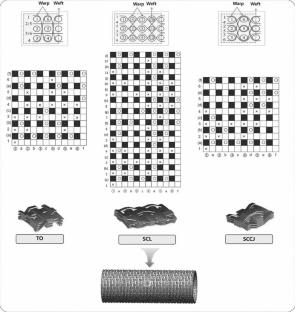
This study focused on three typical three-dimensional woven tubular composites (3DWTCs) with different weaving architectures, namely through orthogonal (TO), shallow cross-linked (SCL), and shallow-crossed curved joint (SCCJ), aiming to clarify their low-temperature compressive performance and failure mechanisms. Axial and lateral compressive tests were conducted over a temperature range of 20 °C to -60 °C. The results indicated that the compressive properties of all 3DWTCs were significantly improved with decreasing temperature: when the temperature decreased from 20 °C to -60 °C, the axial ultimate stress of TO increased by 71.89%, the compressive modulus of SCCJ rose by 94.17%, and the lateral energy absorption of SCL improved by 30.52%. Structurally, TO exhibited the best axial compressive performance, followed by SCL and SCCJ, while SCL outperformed the other two weaving architectures in lateral compression. Low temperatures induced a ductile-to-brittle transition in 3DWTCs, with TO showing concentrated crack distribution and SCCJ presenting dispersed microcracks; the main micro-damage mechanisms included matrix cracking, fiber/matrix interfacial cracking, fiber pull-out, and resin embrittlement. The findings provide valuable guidance for the structural optimization, performance design, and safety evaluation of low-temperature-resistant lightweight components in extreme engineering fields.
期刊介绍:
Applied Composite Materials is an international journal dedicated to the publication of original full-length papers, review articles and short communications of the highest quality that advance the development and application of engineering composite materials. Its articles identify problems that limit the performance and reliability of the composite material and composite part; and propose solutions that lead to innovation in design and the successful exploitation and commercialization of composite materials across the widest spectrum of engineering uses. The main focus is on the quantitative descriptions of material systems and processing routes.
Coverage includes management of time-dependent changes in microscopic and macroscopic structure and its exploitation from the material''s conception through to its eventual obsolescence.

 求助内容:
求助内容: 应助结果提醒方式:

 京公网安备 11010802042870号


