Anna Fusetti, Francesca Annunziata, Michael S. Christodoulou, Andrea Pinto, Andrea Kunova, Salvatore Princiotto, Sabrina Dallavalle
{"title":"作为稻瘟病铁中毒抑制剂的球铁蛋白和根铁蛋白的简易合成及生物学评价。","authors":"Anna Fusetti, Francesca Annunziata, Michael S. Christodoulou, Andrea Pinto, Andrea Kunova, Salvatore Princiotto, Sabrina Dallavalle","doi":"10.1007/s13659-026-00619-x","DOIUrl":null,"url":null,"abstract":"<div><p>Iron homeostasis has recently emerged as a key determinant in the early stages of plant–pathogen interactions, particularly in phytopathogens that exploit iron-dependent cell death (known as ferroptosis) to initiate host invasion. In <i>Pyricularia oryzae</i>, the causal agent of rice blast disease, appressorium formation is tightly linked to ferroptotic events in germinating conidia. Accumulation of intracellular Fe<sup>3</sup>⁺ and reactive oxygen species (ROS) promotes lipid peroxidation, ultimately triggering conidial cell death and, consequently, appressorium maturation. Therefore, inhibition of ferroptosis by targeting fungal iron homeostasis represents a promising strategy to suppress appressorium development and block subsequent host infection. Rhizoferrin, an α-hydroxy carboxylate siderophore secreted by <i>Rhizopus microspora</i>, was identified as a suitable precursor of its ring-closed derivative glomuferrin. The obtainment of an unexpected succinimide intermediate within the synthetic pathway enabled the access to both rhizoferrin and, to our knowledge for the first time, glomuferrin. Chelation evaluation revealed that rhizoferrin exhibits significantly higher affinity for iron than glomuferrin. The effects of these siderophores on conidial germination and appressorium formation were evaluated in wild-type and strobilurin-resistant <i>P. oryzae</i> strains, at concentrations ranging from 5 mM to 200 μM. The promising activity observed, especially for rhizoferrin, highlights the potential of α-hydroxy carboxylate siderophores as ferroptosis inhibitors and offers new perspectives for their development in crop protection.</p><h3>Graphical Abstract</h3><div><figure><div><div><picture><source><img></source></picture><span>The alternative text for this image may have been generated using AI.</span></div></div></figure></div></div>","PeriodicalId":718,"journal":{"name":"Natural Products and Bioprospecting","volume":"16 1","pages":""},"PeriodicalIF":4.9000,"publicationDate":"2026-05-04","publicationTypes":"Journal Article","fieldsOfStudy":null,"isOpenAccess":false,"openAccessPdf":"https://link.springer.com/content/pdf/10.1007/s13659-026-00619-x.pdf","citationCount":"0","resultStr":"{\"title\":\"Facile synthesis and biological evaluation of glomuferrin and rhizoferrin as ferroptosis inhibitors in rice blast disease\",\"authors\":\"Anna Fusetti, Francesca Annunziata, Michael S. Christodoulou, Andrea Pinto, Andrea Kunova, Salvatore Princiotto, Sabrina Dallavalle\",\"doi\":\"10.1007/s13659-026-00619-x\",\"DOIUrl\":null,\"url\":null,\"abstract\":\"<div><p>Iron homeostasis has recently emerged as a key determinant in the early stages of plant–pathogen interactions, particularly in phytopathogens that exploit iron-dependent cell death (known as ferroptosis) to initiate host invasion. In <i>Pyricularia oryzae</i>, the causal agent of rice blast disease, appressorium formation is tightly linked to ferroptotic events in germinating conidia. Accumulation of intracellular Fe<sup>3</sup>⁺ and reactive oxygen species (ROS) promotes lipid peroxidation, ultimately triggering conidial cell death and, consequently, appressorium maturation. Therefore, inhibition of ferroptosis by targeting fungal iron homeostasis represents a promising strategy to suppress appressorium development and block subsequent host infection. Rhizoferrin, an α-hydroxy carboxylate siderophore secreted by <i>Rhizopus microspora</i>, was identified as a suitable precursor of its ring-closed derivative glomuferrin. The obtainment of an unexpected succinimide intermediate within the synthetic pathway enabled the access to both rhizoferrin and, to our knowledge for the first time, glomuferrin. Chelation evaluation revealed that rhizoferrin exhibits significantly higher affinity for iron than glomuferrin. The effects of these siderophores on conidial germination and appressorium formation were evaluated in wild-type and strobilurin-resistant <i>P. oryzae</i> strains, at concentrations ranging from 5 mM to 200 μM. The promising activity observed, especially for rhizoferrin, highlights the potential of α-hydroxy carboxylate siderophores as ferroptosis inhibitors and offers new perspectives for their development in crop protection.</p><h3>Graphical Abstract</h3><div><figure><div><div><picture><source><img></source></picture><span>The alternative text for this image may have been generated using AI.</span></div></div></figure></div></div>\",\"PeriodicalId\":718,\"journal\":{\"name\":\"Natural Products and Bioprospecting\",\"volume\":\"16 1\",\"pages\":\"\"},\"PeriodicalIF\":4.9000,\"publicationDate\":\"2026-05-04\",\"publicationTypes\":\"Journal Article\",\"fieldsOfStudy\":null,\"isOpenAccess\":false,\"openAccessPdf\":\"https://link.springer.com/content/pdf/10.1007/s13659-026-00619-x.pdf\",\"citationCount\":\"0\",\"resultStr\":null,\"platform\":\"Semanticscholar\",\"paperid\":null,\"PeriodicalName\":\"Natural Products and Bioprospecting\",\"FirstCategoryId\":\"92\",\"ListUrlMain\":\"https://link.springer.com/article/10.1007/s13659-026-00619-x\",\"RegionNum\":3,\"RegionCategory\":\"化学\",\"ArticlePicture\":[],\"TitleCN\":null,\"AbstractTextCN\":null,\"PMCID\":null,\"EPubDate\":\"\",\"PubModel\":\"\",\"JCR\":\"Q1\",\"JCRName\":\"CHEMISTRY, MEDICINAL\",\"Score\":null,\"Total\":0}","platform":"Semanticscholar","paperid":null,"PeriodicalName":"Natural Products and Bioprospecting","FirstCategoryId":"92","ListUrlMain":"https://link.springer.com/article/10.1007/s13659-026-00619-x","RegionNum":3,"RegionCategory":"化学","ArticlePicture":[],"TitleCN":null,"AbstractTextCN":null,"PMCID":null,"EPubDate":"","PubModel":"","JCR":"Q1","JCRName":"CHEMISTRY, MEDICINAL","Score":null,"Total":0}
Facile synthesis and biological evaluation of glomuferrin and rhizoferrin as ferroptosis inhibitors in rice blast disease
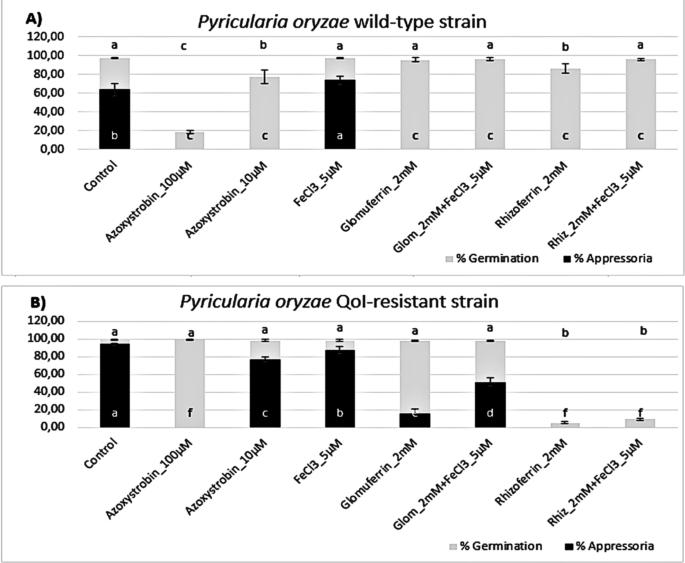
Iron homeostasis has recently emerged as a key determinant in the early stages of plant–pathogen interactions, particularly in phytopathogens that exploit iron-dependent cell death (known as ferroptosis) to initiate host invasion. In Pyricularia oryzae, the causal agent of rice blast disease, appressorium formation is tightly linked to ferroptotic events in germinating conidia. Accumulation of intracellular Fe3⁺ and reactive oxygen species (ROS) promotes lipid peroxidation, ultimately triggering conidial cell death and, consequently, appressorium maturation. Therefore, inhibition of ferroptosis by targeting fungal iron homeostasis represents a promising strategy to suppress appressorium development and block subsequent host infection. Rhizoferrin, an α-hydroxy carboxylate siderophore secreted by Rhizopus microspora, was identified as a suitable precursor of its ring-closed derivative glomuferrin. The obtainment of an unexpected succinimide intermediate within the synthetic pathway enabled the access to both rhizoferrin and, to our knowledge for the first time, glomuferrin. Chelation evaluation revealed that rhizoferrin exhibits significantly higher affinity for iron than glomuferrin. The effects of these siderophores on conidial germination and appressorium formation were evaluated in wild-type and strobilurin-resistant P. oryzae strains, at concentrations ranging from 5 mM to 200 μM. The promising activity observed, especially for rhizoferrin, highlights the potential of α-hydroxy carboxylate siderophores as ferroptosis inhibitors and offers new perspectives for their development in crop protection.
Graphical Abstract
The alternative text for this image may have been generated using AI.
期刊介绍:
Natural Products and Bioprospecting serves as an international forum for essential research on natural products and focuses on, but is not limited to, the following aspects:
Natural products: isolation and structure elucidation
Natural products: synthesis
Biological evaluation of biologically active natural products
Bioorganic and medicinal chemistry
Biosynthesis and microbiological transformation
Fermentation and plant tissue cultures
Bioprospecting of natural products from natural resources
All research articles published in this journal have undergone rigorous peer review. In addition to original research articles, Natural Products and Bioprospecting publishes reviews and short communications, aiming to rapidly disseminate the research results of timely interest, and comprehensive reviews of emerging topics in all the areas of natural products. It is also an open access journal, which provides free access to its articles to anyone, anywhere.

 求助内容:
求助内容: 应助结果提醒方式:

 京公网安备 11010802042870号


