“意想不到的附生植物”-仙人掌生长在树上的Barranca de Metztitlán,墨西哥

IF 2.5 3区 环境科学与生态学 Q2 ECOLOGY
Yonatan Aguilar-Cruz , Arturo Flores-Martínez , Amelia Cornejo-Romero , Diana Martínez-Hernández , Sonia Sánchez-Serano , Carlos Gómez-Hinostrosa , Vincent Hoeber , Gerhard Zotz , Alicia Callejas-Chavero
{"title":"“意想不到的附生植物”-仙人掌生长在树上的Barranca de Metztitlán,墨西哥","authors":"Yonatan Aguilar-Cruz ,&nbsp;Arturo Flores-Martínez ,&nbsp;Amelia Cornejo-Romero ,&nbsp;Diana Martínez-Hernández ,&nbsp;Sonia Sánchez-Serano ,&nbsp;Carlos Gómez-Hinostrosa ,&nbsp;Vincent Hoeber ,&nbsp;Gerhard Zotz ,&nbsp;Alicia Callejas-Chavero","doi":"10.1016/j.jaridenv.2026.105617","DOIUrl":null,"url":null,"abstract":"<div><div>Epiphytic growth in Cactaceae has been typically linked to moist habitats. However, there are scattered reports of terrestrial cacti growing on other plants in arid environments. This phenomenon was first mentioned over a century ago but largely ignored by the scientific community. The current study assessed cacti substrate preference and analysed epiphyte-host tree relationships in a xerophilous scrubland in Mexico. It also compared the size structure of epiphytic and terrestrial individuals of common cacti species. Epiphytic growth was found in at least 9 of the 13 locally occurring cacti species. We observed, i.e., globose cacti (<em>Mammillaria polythele</em>, <em>M. crinita</em>) that mainly grew on trees and even produced flowers when growing epiphytically, arborescent cacti (<em>Isolatocereus dumortieri</em>, <em>Myrtillocactus geometrizans</em>) with a high proportion of small individuals growing on trees and larger ones only found as terrestrials, and cacti such as <em>M. longimamma</em> and <em>Opuntia</em> spp., with a clear preference for terrestrial growth. Although we identified seven possible host species at the study sites, 99% of epiphytic cacti were found just on just one of them (<em>Neltuma laevigata</em>). The only other host was <em>I. dumortieri</em>. The study of this phenomenon broadens our understanding of functional diversity in arid ecosystems and provides an area for exploring evolutionary processes and mechanisms of coexistence in one of Mexico's most emblematic plant families. Furthermore, it contributes to the current discussion of the evolution of epiphytism in general.</div></div>","PeriodicalId":51080,"journal":{"name":"Journal of Arid Environments","volume":"235 ","pages":"Article 105617"},"PeriodicalIF":2.5000,"publicationDate":"2026-05-01","publicationTypes":"Journal Article","fieldsOfStudy":null,"isOpenAccess":false,"openAccessPdf":"","citationCount":"0","resultStr":"{\"title\":\"“Unexpected epiphytes” - Cacti growing on trees in the xerophytic scrubland of the Barranca de Metztitlán, México\",\"authors\":\"Yonatan Aguilar-Cruz ,&nbsp;Arturo Flores-Martínez ,&nbsp;Amelia Cornejo-Romero ,&nbsp;Diana Martínez-Hernández ,&nbsp;Sonia Sánchez-Serano ,&nbsp;Carlos Gómez-Hinostrosa ,&nbsp;Vincent Hoeber ,&nbsp;Gerhard Zotz ,&nbsp;Alicia Callejas-Chavero\",\"doi\":\"10.1016/j.jaridenv.2026.105617\",\"DOIUrl\":null,\"url\":null,\"abstract\":\"<div><div>Epiphytic growth in Cactaceae has been typically linked to moist habitats. However, there are scattered reports of terrestrial cacti growing on other plants in arid environments. This phenomenon was first mentioned over a century ago but largely ignored by the scientific community. The current study assessed cacti substrate preference and analysed epiphyte-host tree relationships in a xerophilous scrubland in Mexico. It also compared the size structure of epiphytic and terrestrial individuals of common cacti species. Epiphytic growth was found in at least 9 of the 13 locally occurring cacti species. We observed, i.e., globose cacti (<em>Mammillaria polythele</em>, <em>M. crinita</em>) that mainly grew on trees and even produced flowers when growing epiphytically, arborescent cacti (<em>Isolatocereus dumortieri</em>, <em>Myrtillocactus geometrizans</em>) with a high proportion of small individuals growing on trees and larger ones only found as terrestrials, and cacti such as <em>M. longimamma</em> and <em>Opuntia</em> spp., with a clear preference for terrestrial growth. Although we identified seven possible host species at the study sites, 99% of epiphytic cacti were found just on just one of them (<em>Neltuma laevigata</em>). The only other host was <em>I. dumortieri</em>. The study of this phenomenon broadens our understanding of functional diversity in arid ecosystems and provides an area for exploring evolutionary processes and mechanisms of coexistence in one of Mexico's most emblematic plant families. Furthermore, it contributes to the current discussion of the evolution of epiphytism in general.</div></div>\",\"PeriodicalId\":51080,\"journal\":{\"name\":\"Journal of Arid Environments\",\"volume\":\"235 \",\"pages\":\"Article 105617\"},\"PeriodicalIF\":2.5000,\"publicationDate\":\"2026-05-01\",\"publicationTypes\":\"Journal Article\",\"fieldsOfStudy\":null,\"isOpenAccess\":false,\"openAccessPdf\":\"\",\"citationCount\":\"0\",\"resultStr\":null,\"platform\":\"Semanticscholar\",\"paperid\":null,\"PeriodicalName\":\"Journal of Arid Environments\",\"FirstCategoryId\":\"93\",\"ListUrlMain\":\"https://www.sciencedirect.com/science/article/pii/S0140196326000698\",\"RegionNum\":3,\"RegionCategory\":\"环境科学与生态学\",\"ArticlePicture\":[],\"TitleCN\":null,\"AbstractTextCN\":null,\"PMCID\":null,\"EPubDate\":\"\",\"PubModel\":\"\",\"JCR\":\"Q2\",\"JCRName\":\"ECOLOGY\",\"Score\":null,\"Total\":0}","platform":"Semanticscholar","paperid":null,"PeriodicalName":"Journal of Arid Environments","FirstCategoryId":"93","ListUrlMain":"https://www.sciencedirect.com/science/article/pii/S0140196326000698","RegionNum":3,"RegionCategory":"环境科学与生态学","ArticlePicture":[],"TitleCN":null,"AbstractTextCN":null,"PMCID":null,"EPubDate":"","PubModel":"","JCR":"Q2","JCRName":"ECOLOGY","Score":null,"Total":0}
引用次数: 0

摘要

仙人掌科的附生生长通常与潮湿的栖息地有关。然而,也有零星的报道说,在干旱环境中,陆地仙人掌生长在其他植物上。这一现象在一个多世纪前首次被提及,但在很大程度上被科学界忽视了。目前的研究评估了仙人掌对基质的偏好,并分析了墨西哥干旱灌木丛中附生植物与寄主树的关系。并比较了常见仙人掌种附生和陆生个体的大小结构。在13种本地仙人掌中,至少有9种发现附生生长。我们观察到,球状仙人掌(Mammillaria polythele, M. criinita)主要生长在树上,附生时甚至会开花;乔木仙人掌(Isolatocereus dumortieri, Myrtillocactus geometrizans)的小个体生长在树上的比例很高,而大个体只在陆地上发现;虽然我们在研究地点确定了7种可能的寄主物种,但99%的附生仙人掌只在其中一种(Neltuma laevigata)上被发现。唯一的其他主人是I. dumortieri。对这一现象的研究拓宽了我们对干旱生态系统功能多样性的理解,并为探索墨西哥最具代表性的植物科之一的进化过程和共存机制提供了一个领域。此外,它有助于当前关于附生生物进化的讨论。
本文章由计算机程序翻译,如有差异,请以英文原文为准。

“Unexpected epiphytes” - Cacti growing on trees in the xerophytic scrubland of the Barranca de Metztitlán, México

“Unexpected epiphytes” - Cacti growing on trees in the xerophytic scrubland of the Barranca de Metztitlán, México
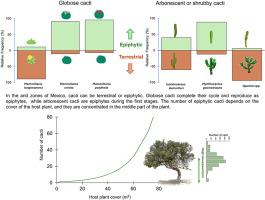
Epiphytic growth in Cactaceae has been typically linked to moist habitats. However, there are scattered reports of terrestrial cacti growing on other plants in arid environments. This phenomenon was first mentioned over a century ago but largely ignored by the scientific community. The current study assessed cacti substrate preference and analysed epiphyte-host tree relationships in a xerophilous scrubland in Mexico. It also compared the size structure of epiphytic and terrestrial individuals of common cacti species. Epiphytic growth was found in at least 9 of the 13 locally occurring cacti species. We observed, i.e., globose cacti (Mammillaria polythele, M. crinita) that mainly grew on trees and even produced flowers when growing epiphytically, arborescent cacti (Isolatocereus dumortieri, Myrtillocactus geometrizans) with a high proportion of small individuals growing on trees and larger ones only found as terrestrials, and cacti such as M. longimamma and Opuntia spp., with a clear preference for terrestrial growth. Although we identified seven possible host species at the study sites, 99% of epiphytic cacti were found just on just one of them (Neltuma laevigata). The only other host was I. dumortieri. The study of this phenomenon broadens our understanding of functional diversity in arid ecosystems and provides an area for exploring evolutionary processes and mechanisms of coexistence in one of Mexico's most emblematic plant families. Furthermore, it contributes to the current discussion of the evolution of epiphytism in general.
求助全文
通过发布文献求助,成功后即可免费获取论文全文。 去求助
来源期刊
Journal of Arid Environments
Journal of Arid Environments 环境科学-环境科学
CiteScore
5.70
自引率
3.70%
发文量
144
审稿时长
55 days
期刊介绍: The Journal of Arid Environments is an international journal publishing original scientific and technical research articles on physical, biological and cultural aspects of arid, semi-arid, and desert environments. As a forum of multi-disciplinary and interdisciplinary dialogue it addresses research on all aspects of arid environments and their past, present and future use.

×
引用
GB/T 7714-2015
复制
MLA
复制
APA
复制
导出至
BibTeX EndNote RefMan NoteFirst NoteExpress
×
提示
您的信息不完整,为了账户安全,请先补充。
现在去补充
×
提示
您因"违规操作"
具体请查看互助需知
我知道了
×
提示
确定
请完成安全验证×
copy
已复制链接
快去分享给好友吧!
我知道了
右上角分享
点击右上角分享
0
联系我们:info@booksci.cn Book学术提供免费学术资源搜索服务,方便国内外学者检索中英文文献。致力于提供最便捷和优质的服务体验。 Copyright © 2023 布克学术 All rights reserved.
京ICP备2023020795号-1
ghs 京公网安备 11010802042870号
Book学术文献互助
Book学术文献互助群
群 号:604180095
Book学术官方微信
小红书