Seung-Jae Ha, Hyocheol Lee, Changkyu Kim, Min-Seong Jo, Taehyeon Kim, Jin-Yong Hong, Young-Pyo Jeon
{"title":"快速充电天然石墨阳极:优化球化与tle定制沥青涂层的协同效应","authors":"Seung-Jae Ha, Hyocheol Lee, Changkyu Kim, Min-Seong Jo, Taehyeon Kim, Jin-Yong Hong, Young-Pyo Jeon","doi":"10.1007/s42823-026-01048-z","DOIUrl":null,"url":null,"abstract":"<div><p>Lithium-ion batteries (LIBs) are widely used as key components in electric vehicles (EVs) and energy storage systems (ESS) owing to their high energy density, long cycle life, and stable operation. The rapid expansion of the EV market has intensified the demand for advanced graphite anode materials that combine cost competitiveness with superior electrochemical performance, including fast-charging capability and structural stability. This study presents an integrated approach for optimizing the physical spheronization of natural graphite and synthesizing a high-performance coating pitch (CP) for chemical spheronization. The correlation between mechanical stress and morphological evolution during the process was quantitatively analyzed using an Air Classifier Mill (ACM). Optimal spheronization was achieved by aligning theoretically calculated stress levels (≈ 3.72 MPa for particle rounding and > 14.86 MPa for fracture) with experimental results. High-performance coating pitches were prepared via stepwise polymerization of pyrolysis fuel oil (PFO), followed by Thin Layer Evaporation (TLE)-based molecular weight distribution tailoring. The resulting pitch exhibited a softening point of 279.4 °C, coking value of 70.7%, and zero quinoline insoluble (QI) content, and was applied as a coating precursor. The optimized spheronized graphite anode showed excellent electrochemical properties, including an initial Coulombic efficiency of 92.6% and 97.4% capacity retention after 50 cycles. Electrochemical impedance spectroscopy (EIS) and galvanostatic intermittent titration technique (GITT) analyses further confirmed efficient lithium-ion diffusion at both the surface and core, demonstrating suitability for fast-charging LIB applications.</p><h3>Graphical abstract</h3><div><figure><div><div><picture><source><img></source></picture><span>The alternative text for this image may have been generated using AI.</span></div></div></figure></div></div>","PeriodicalId":506,"journal":{"name":"Carbon Letters","volume":"36 2","pages":"1007 - 1027"},"PeriodicalIF":6.2000,"publicationDate":"2026-03-12","publicationTypes":"Journal Article","fieldsOfStudy":null,"isOpenAccess":false,"openAccessPdf":"","citationCount":"0","resultStr":"{\"title\":\"Fast-charging natural graphite anodes: synergistic effects of optimized spheronization and TLE-tailored pitch coating\",\"authors\":\"Seung-Jae Ha, Hyocheol Lee, Changkyu Kim, Min-Seong Jo, Taehyeon Kim, Jin-Yong Hong, Young-Pyo Jeon\",\"doi\":\"10.1007/s42823-026-01048-z\",\"DOIUrl\":null,\"url\":null,\"abstract\":\"<div><p>Lithium-ion batteries (LIBs) are widely used as key components in electric vehicles (EVs) and energy storage systems (ESS) owing to their high energy density, long cycle life, and stable operation. The rapid expansion of the EV market has intensified the demand for advanced graphite anode materials that combine cost competitiveness with superior electrochemical performance, including fast-charging capability and structural stability. This study presents an integrated approach for optimizing the physical spheronization of natural graphite and synthesizing a high-performance coating pitch (CP) for chemical spheronization. The correlation between mechanical stress and morphological evolution during the process was quantitatively analyzed using an Air Classifier Mill (ACM). Optimal spheronization was achieved by aligning theoretically calculated stress levels (≈ 3.72 MPa for particle rounding and > 14.86 MPa for fracture) with experimental results. High-performance coating pitches were prepared via stepwise polymerization of pyrolysis fuel oil (PFO), followed by Thin Layer Evaporation (TLE)-based molecular weight distribution tailoring. The resulting pitch exhibited a softening point of 279.4 °C, coking value of 70.7%, and zero quinoline insoluble (QI) content, and was applied as a coating precursor. The optimized spheronized graphite anode showed excellent electrochemical properties, including an initial Coulombic efficiency of 92.6% and 97.4% capacity retention after 50 cycles. Electrochemical impedance spectroscopy (EIS) and galvanostatic intermittent titration technique (GITT) analyses further confirmed efficient lithium-ion diffusion at both the surface and core, demonstrating suitability for fast-charging LIB applications.</p><h3>Graphical abstract</h3><div><figure><div><div><picture><source><img></source></picture><span>The alternative text for this image may have been generated using AI.</span></div></div></figure></div></div>\",\"PeriodicalId\":506,\"journal\":{\"name\":\"Carbon Letters\",\"volume\":\"36 2\",\"pages\":\"1007 - 1027\"},\"PeriodicalIF\":6.2000,\"publicationDate\":\"2026-03-12\",\"publicationTypes\":\"Journal Article\",\"fieldsOfStudy\":null,\"isOpenAccess\":false,\"openAccessPdf\":\"\",\"citationCount\":\"0\",\"resultStr\":null,\"platform\":\"Semanticscholar\",\"paperid\":null,\"PeriodicalName\":\"Carbon Letters\",\"FirstCategoryId\":\"88\",\"ListUrlMain\":\"https://link.springer.com/article/10.1007/s42823-026-01048-z\",\"RegionNum\":3,\"RegionCategory\":\"材料科学\",\"ArticlePicture\":[],\"TitleCN\":null,\"AbstractTextCN\":null,\"PMCID\":null,\"EPubDate\":\"\",\"PubModel\":\"\",\"JCR\":\"Q2\",\"JCRName\":\"CHEMISTRY, MULTIDISCIPLINARY\",\"Score\":null,\"Total\":0}","platform":"Semanticscholar","paperid":null,"PeriodicalName":"Carbon Letters","FirstCategoryId":"88","ListUrlMain":"https://link.springer.com/article/10.1007/s42823-026-01048-z","RegionNum":3,"RegionCategory":"材料科学","ArticlePicture":[],"TitleCN":null,"AbstractTextCN":null,"PMCID":null,"EPubDate":"","PubModel":"","JCR":"Q2","JCRName":"CHEMISTRY, MULTIDISCIPLINARY","Score":null,"Total":0}
Fast-charging natural graphite anodes: synergistic effects of optimized spheronization and TLE-tailored pitch coating
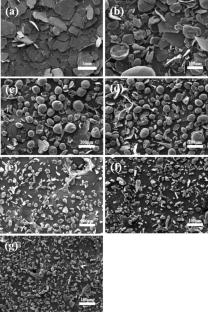
Lithium-ion batteries (LIBs) are widely used as key components in electric vehicles (EVs) and energy storage systems (ESS) owing to their high energy density, long cycle life, and stable operation. The rapid expansion of the EV market has intensified the demand for advanced graphite anode materials that combine cost competitiveness with superior electrochemical performance, including fast-charging capability and structural stability. This study presents an integrated approach for optimizing the physical spheronization of natural graphite and synthesizing a high-performance coating pitch (CP) for chemical spheronization. The correlation between mechanical stress and morphological evolution during the process was quantitatively analyzed using an Air Classifier Mill (ACM). Optimal spheronization was achieved by aligning theoretically calculated stress levels (≈ 3.72 MPa for particle rounding and > 14.86 MPa for fracture) with experimental results. High-performance coating pitches were prepared via stepwise polymerization of pyrolysis fuel oil (PFO), followed by Thin Layer Evaporation (TLE)-based molecular weight distribution tailoring. The resulting pitch exhibited a softening point of 279.4 °C, coking value of 70.7%, and zero quinoline insoluble (QI) content, and was applied as a coating precursor. The optimized spheronized graphite anode showed excellent electrochemical properties, including an initial Coulombic efficiency of 92.6% and 97.4% capacity retention after 50 cycles. Electrochemical impedance spectroscopy (EIS) and galvanostatic intermittent titration technique (GITT) analyses further confirmed efficient lithium-ion diffusion at both the surface and core, demonstrating suitability for fast-charging LIB applications.
Graphical abstract
The alternative text for this image may have been generated using AI.
期刊介绍:
Carbon Letters aims to be a comprehensive journal with complete coverage of carbon materials and carbon-rich molecules. These materials range from, but are not limited to, diamond and graphite through chars, semicokes, mesophase substances, carbon fibers, carbon nanotubes, graphenes, carbon blacks, activated carbons, pyrolytic carbons, glass-like carbons, etc. Papers on the secondary production of new carbon and composite materials from the above mentioned various carbons are within the scope of the journal. Papers on organic substances, including coals, will be considered only if the research has close relation to the resulting carbon materials. Carbon Letters also seeks to keep abreast of new developments in their specialist fields and to unite in finding alternative energy solutions to current issues such as the greenhouse effect and the depletion of the ozone layer. The renewable energy basics, energy storage and conversion, solar energy, wind energy, water energy, nuclear energy, biomass energy, hydrogen production technology, and other clean energy technologies are also within the scope of the journal. Carbon Letters invites original reports of fundamental research in all branches of the theory and practice of carbon science and technology.

 求助内容:
求助内容: 应助结果提醒方式:

 京公网安备 11010802042870号


