Kaijie Ma
(马凯捷), Yu Cui
(崔宇), Yizhang Ren
(任奕璋), Qiunan Liu
(刘秋男), Song Luo
(罗嵩), Jiaxin Mao
(毛嘉欣), Guopeng Li
(李国鹏), Yueshao Zheng
(郑月哨), Kazu Suenaga
(末永 和知), Jiang Zeng
(曾犟), Yung-Chang Lin
(林永昌), Song Liu
(刘松), Rui Hao
(郝瑞)
{"title":"用干涉电光显微镜成像纳米二硫化钼的动态电催化过程","authors":"Kaijie Ma \n (马凯捷), Yu Cui \n (崔宇), Yizhang Ren \n (任奕璋), Qiunan Liu \n (刘秋男), Song Luo \n (罗嵩), Jiaxin Mao \n (毛嘉欣), Guopeng Li \n (李国鹏), Yueshao Zheng \n (郑月哨), Kazu Suenaga \n (末永 和知), Jiang Zeng \n (曾犟), Yung-Chang Lin \n (林永昌), Song Liu \n (刘松), Rui Hao \n (郝瑞)","doi":"10.1038/s41560-026-02043-4","DOIUrl":null,"url":null,"abstract":"Understanding the dynamic heterogeneity of the hydrogen evolution reaction (HER) at electrochemical interfaces is crucial for advancing HER electrocatalysis. However, conventional electrochemical imaging methods offer limited simultaneous spatial and temporal resolution, hindering capture of dynamic electrocatalytic current distributions. Here we introduce interferometric electro-optical microscopy to in situ map electrocatalytic current with simultaneous nanometre and millisecond resolution. We validate interferometric electro-optical microscopy with Au and Pt electrocatalysts and apply it to investigate the HER activity of bilayer MoS2. The spatial evolution of HER currents reveals sequential activation of HER sites along trajectories aligned with the zigzag or armchair directions of MoS2. Correlative atomic-level structural analysis and simulations reveal that the directional chain electrocatalytic reaction dynamics originate from the more favourable adsorption free energy along nanoscale strain stripes. This method for uncovering dynamically evolving structure relationships at nanoscopic electrochemical interfaces and identifying strain-related electrocatalytic performance holds promise for advancing the rational design of electrocatalysts.","PeriodicalId":19073,"journal":{"name":"Nature Energy","volume":"9 1","pages":""},"PeriodicalIF":60.1000,"publicationDate":"2026-04-24","publicationTypes":"Journal Article","fieldsOfStudy":null,"isOpenAccess":false,"openAccessPdf":"","citationCount":"0","resultStr":"{\"title\":\"Imaging dynamic electrocatalytic processes on nano-strained MoS2 using interferometric electro-optical microscopy\",\"authors\":\"Kaijie Ma \\n (马凯捷), Yu Cui \\n (崔宇), Yizhang Ren \\n (任奕璋), Qiunan Liu \\n (刘秋男), Song Luo \\n (罗嵩), Jiaxin Mao \\n (毛嘉欣), Guopeng Li \\n (李国鹏), Yueshao Zheng \\n (郑月哨), Kazu Suenaga \\n (末永 和知), Jiang Zeng \\n (曾犟), Yung-Chang Lin \\n (林永昌), Song Liu \\n (刘松), Rui Hao \\n (郝瑞)\",\"doi\":\"10.1038/s41560-026-02043-4\",\"DOIUrl\":null,\"url\":null,\"abstract\":\"Understanding the dynamic heterogeneity of the hydrogen evolution reaction (HER) at electrochemical interfaces is crucial for advancing HER electrocatalysis. However, conventional electrochemical imaging methods offer limited simultaneous spatial and temporal resolution, hindering capture of dynamic electrocatalytic current distributions. Here we introduce interferometric electro-optical microscopy to in situ map electrocatalytic current with simultaneous nanometre and millisecond resolution. We validate interferometric electro-optical microscopy with Au and Pt electrocatalysts and apply it to investigate the HER activity of bilayer MoS2. The spatial evolution of HER currents reveals sequential activation of HER sites along trajectories aligned with the zigzag or armchair directions of MoS2. Correlative atomic-level structural analysis and simulations reveal that the directional chain electrocatalytic reaction dynamics originate from the more favourable adsorption free energy along nanoscale strain stripes. This method for uncovering dynamically evolving structure relationships at nanoscopic electrochemical interfaces and identifying strain-related electrocatalytic performance holds promise for advancing the rational design of electrocatalysts.\",\"PeriodicalId\":19073,\"journal\":{\"name\":\"Nature Energy\",\"volume\":\"9 1\",\"pages\":\"\"},\"PeriodicalIF\":60.1000,\"publicationDate\":\"2026-04-24\",\"publicationTypes\":\"Journal Article\",\"fieldsOfStudy\":null,\"isOpenAccess\":false,\"openAccessPdf\":\"\",\"citationCount\":\"0\",\"resultStr\":null,\"platform\":\"Semanticscholar\",\"paperid\":null,\"PeriodicalName\":\"Nature Energy\",\"FirstCategoryId\":\"88\",\"ListUrlMain\":\"https://doi.org/10.1038/s41560-026-02043-4\",\"RegionNum\":1,\"RegionCategory\":\"材料科学\",\"ArticlePicture\":[],\"TitleCN\":null,\"AbstractTextCN\":null,\"PMCID\":null,\"EPubDate\":\"\",\"PubModel\":\"\",\"JCR\":\"Q1\",\"JCRName\":\"ENERGY & FUELS\",\"Score\":null,\"Total\":0}","platform":"Semanticscholar","paperid":null,"PeriodicalName":"Nature Energy","FirstCategoryId":"88","ListUrlMain":"https://doi.org/10.1038/s41560-026-02043-4","RegionNum":1,"RegionCategory":"材料科学","ArticlePicture":[],"TitleCN":null,"AbstractTextCN":null,"PMCID":null,"EPubDate":"","PubModel":"","JCR":"Q1","JCRName":"ENERGY & FUELS","Score":null,"Total":0}
Imaging dynamic electrocatalytic processes on nano-strained MoS2 using interferometric electro-optical microscopy
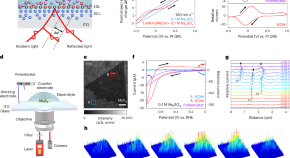
Understanding the dynamic heterogeneity of the hydrogen evolution reaction (HER) at electrochemical interfaces is crucial for advancing HER electrocatalysis. However, conventional electrochemical imaging methods offer limited simultaneous spatial and temporal resolution, hindering capture of dynamic electrocatalytic current distributions. Here we introduce interferometric electro-optical microscopy to in situ map electrocatalytic current with simultaneous nanometre and millisecond resolution. We validate interferometric electro-optical microscopy with Au and Pt electrocatalysts and apply it to investigate the HER activity of bilayer MoS2. The spatial evolution of HER currents reveals sequential activation of HER sites along trajectories aligned with the zigzag or armchair directions of MoS2. Correlative atomic-level structural analysis and simulations reveal that the directional chain electrocatalytic reaction dynamics originate from the more favourable adsorption free energy along nanoscale strain stripes. This method for uncovering dynamically evolving structure relationships at nanoscopic electrochemical interfaces and identifying strain-related electrocatalytic performance holds promise for advancing the rational design of electrocatalysts.
Nature EnergyEnergy-Energy Engineering and Power Technology
CiteScore
75.10
自引率
1.10%
发文量
193
期刊介绍:
Nature Energy is a monthly, online-only journal committed to showcasing the most impactful research on energy, covering everything from its generation and distribution to the societal implications of energy technologies and policies.
With a focus on exploring all facets of the ongoing energy discourse, Nature Energy delves into topics such as energy generation, storage, distribution, management, and the societal impacts of energy technologies and policies. Emphasizing studies that push the boundaries of knowledge and contribute to the development of next-generation solutions, the journal serves as a platform for the exchange of ideas among stakeholders at the forefront of the energy sector.
Maintaining the hallmark standards of the Nature brand, Nature Energy boasts a dedicated team of professional editors, a rigorous peer-review process, meticulous copy-editing and production, rapid publication times, and editorial independence.
In addition to original research articles, Nature Energy also publishes a range of content types, including Comments, Perspectives, Reviews, News & Views, Features, and Correspondence, covering a diverse array of disciplines relevant to the field of energy.