{"title":"TAF15在神经退行性疾病和癌症中的生理病理功能","authors":"Congcong Liu, Lanxia Meng, Zhentao Zhang","doi":"10.1016/j.jare.2026.04.066","DOIUrl":null,"url":null,"abstract":"<h3>Background</h3>TATA-box binding protein associated factor 15 (TAF15) is a multifunctional DNA/RNA-binding protein that plays pivotal roles in transcription regulation, precursor mRNA splicing, and cellular stress responses. Accumulating evidence demonstrates that TAF15 is strongly implicated in two distinct pathological classes: neurodegenerative diseases and cancers. In neurodegenerative diseases including frontotemporal lobar degeneration (FTLD) and amyotrophic lateral sclerosis (ALS), TAF15 undergoes abnormal cytoplasmic aggregation and mislocalization in neurons and glia, and TAF15 has been established as a candidate disease gene for ALS. In a wide range of cancers, TAF15 drives oncogenic transcriptional dysregulation either via wild-type protein dysfunction or the formation of oncogenic fusion proteins derived from chromosomal translocations.<h3>Aim of review</h3>A central unresolved question is how TAF15 contributes to two mechanistically distinct disease entities. This review aims to provide a mechanistically integrated analysis of the physiological and pathological functions of TAF15. We use TAF15′s intrinsic molecular properties as a unifying framework to connect its roles in neurodegeneration and cancer. We also summarize key pathogenic mechanisms and emerging therapeutic strategies targeting TAF15, with the goal of proposing a novel conceptual perspective to guide future research.Key scientific concepts of review.TAF15 may act as a biologically relevant molecular link between neurodegeneration and cancer through its intrinsic molecular characteristics, such as nucleic acid binding, phase separation, and nucleocytoplasmic shuttling. The “localization determines outcome” hypothesis offers a unifying framework to explain the connection between the two diseases. TAF15 holds promise as a target for novel biomarkers and precision therapeutics across both disease areas. Deepening mechanistic studies of TAF15 will not only advance understanding of its dual pathological roles but also illuminate the largely unexplored molecular link between neurodegenerative diseases and cancers","PeriodicalId":14952,"journal":{"name":"Journal of Advanced Research","volume":"144 1","pages":""},"PeriodicalIF":13.0000,"publicationDate":"2026-04-26","publicationTypes":"Journal Article","fieldsOfStudy":null,"isOpenAccess":false,"openAccessPdf":"","citationCount":"0","resultStr":"{\"title\":\"Physiological and pathological functions of TAF15 in neurodegenerative diseases and cancers\",\"authors\":\"Congcong Liu, Lanxia Meng, Zhentao Zhang\",\"doi\":\"10.1016/j.jare.2026.04.066\",\"DOIUrl\":null,\"url\":null,\"abstract\":\"<h3>Background</h3>TATA-box binding protein associated factor 15 (TAF15) is a multifunctional DNA/RNA-binding protein that plays pivotal roles in transcription regulation, precursor mRNA splicing, and cellular stress responses. Accumulating evidence demonstrates that TAF15 is strongly implicated in two distinct pathological classes: neurodegenerative diseases and cancers. In neurodegenerative diseases including frontotemporal lobar degeneration (FTLD) and amyotrophic lateral sclerosis (ALS), TAF15 undergoes abnormal cytoplasmic aggregation and mislocalization in neurons and glia, and TAF15 has been established as a candidate disease gene for ALS. In a wide range of cancers, TAF15 drives oncogenic transcriptional dysregulation either via wild-type protein dysfunction or the formation of oncogenic fusion proteins derived from chromosomal translocations.<h3>Aim of review</h3>A central unresolved question is how TAF15 contributes to two mechanistically distinct disease entities. This review aims to provide a mechanistically integrated analysis of the physiological and pathological functions of TAF15. We use TAF15′s intrinsic molecular properties as a unifying framework to connect its roles in neurodegeneration and cancer. We also summarize key pathogenic mechanisms and emerging therapeutic strategies targeting TAF15, with the goal of proposing a novel conceptual perspective to guide future research.Key scientific concepts of review.TAF15 may act as a biologically relevant molecular link between neurodegeneration and cancer through its intrinsic molecular characteristics, such as nucleic acid binding, phase separation, and nucleocytoplasmic shuttling. The “localization determines outcome” hypothesis offers a unifying framework to explain the connection between the two diseases. TAF15 holds promise as a target for novel biomarkers and precision therapeutics across both disease areas. Deepening mechanistic studies of TAF15 will not only advance understanding of its dual pathological roles but also illuminate the largely unexplored molecular link between neurodegenerative diseases and cancers\",\"PeriodicalId\":14952,\"journal\":{\"name\":\"Journal of Advanced Research\",\"volume\":\"144 1\",\"pages\":\"\"},\"PeriodicalIF\":13.0000,\"publicationDate\":\"2026-04-26\",\"publicationTypes\":\"Journal Article\",\"fieldsOfStudy\":null,\"isOpenAccess\":false,\"openAccessPdf\":\"\",\"citationCount\":\"0\",\"resultStr\":null,\"platform\":\"Semanticscholar\",\"paperid\":null,\"PeriodicalName\":\"Journal of Advanced Research\",\"FirstCategoryId\":\"103\",\"ListUrlMain\":\"https://doi.org/10.1016/j.jare.2026.04.066\",\"RegionNum\":1,\"RegionCategory\":\"综合性期刊\",\"ArticlePicture\":[],\"TitleCN\":null,\"AbstractTextCN\":null,\"PMCID\":null,\"EPubDate\":\"\",\"PubModel\":\"\",\"JCR\":\"Q1\",\"JCRName\":\"MULTIDISCIPLINARY SCIENCES\",\"Score\":null,\"Total\":0}","platform":"Semanticscholar","paperid":null,"PeriodicalName":"Journal of Advanced Research","FirstCategoryId":"103","ListUrlMain":"https://doi.org/10.1016/j.jare.2026.04.066","RegionNum":1,"RegionCategory":"综合性期刊","ArticlePicture":[],"TitleCN":null,"AbstractTextCN":null,"PMCID":null,"EPubDate":"","PubModel":"","JCR":"Q1","JCRName":"MULTIDISCIPLINARY SCIENCES","Score":null,"Total":0}
Physiological and pathological functions of TAF15 in neurodegenerative diseases and cancers
Background
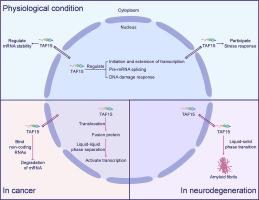
TATA-box binding protein associated factor 15 (TAF15) is a multifunctional DNA/RNA-binding protein that plays pivotal roles in transcription regulation, precursor mRNA splicing, and cellular stress responses. Accumulating evidence demonstrates that TAF15 is strongly implicated in two distinct pathological classes: neurodegenerative diseases and cancers. In neurodegenerative diseases including frontotemporal lobar degeneration (FTLD) and amyotrophic lateral sclerosis (ALS), TAF15 undergoes abnormal cytoplasmic aggregation and mislocalization in neurons and glia, and TAF15 has been established as a candidate disease gene for ALS. In a wide range of cancers, TAF15 drives oncogenic transcriptional dysregulation either via wild-type protein dysfunction or the formation of oncogenic fusion proteins derived from chromosomal translocations.
Aim of review
A central unresolved question is how TAF15 contributes to two mechanistically distinct disease entities. This review aims to provide a mechanistically integrated analysis of the physiological and pathological functions of TAF15. We use TAF15′s intrinsic molecular properties as a unifying framework to connect its roles in neurodegeneration and cancer. We also summarize key pathogenic mechanisms and emerging therapeutic strategies targeting TAF15, with the goal of proposing a novel conceptual perspective to guide future research.Key scientific concepts of review.TAF15 may act as a biologically relevant molecular link between neurodegeneration and cancer through its intrinsic molecular characteristics, such as nucleic acid binding, phase separation, and nucleocytoplasmic shuttling. The “localization determines outcome” hypothesis offers a unifying framework to explain the connection between the two diseases. TAF15 holds promise as a target for novel biomarkers and precision therapeutics across both disease areas. Deepening mechanistic studies of TAF15 will not only advance understanding of its dual pathological roles but also illuminate the largely unexplored molecular link between neurodegenerative diseases and cancers
期刊介绍:
Journal of Advanced Research (J. Adv. Res.) is an applied/natural sciences, peer-reviewed journal that focuses on interdisciplinary research. The journal aims to contribute to applied research and knowledge worldwide through the publication of original and high-quality research articles in the fields of Medicine, Pharmaceutical Sciences, Dentistry, Physical Therapy, Veterinary Medicine, and Basic and Biological Sciences.
The following abstracting and indexing services cover the Journal of Advanced Research: PubMed/Medline, Essential Science Indicators, Web of Science, Scopus, PubMed Central, PubMed, Science Citation Index Expanded, Directory of Open Access Journals (DOAJ), and INSPEC.