Hee-Yeon Kim , Eun Nam Choi , Gee Eun Lee , Sanghwa Yoon , Su Ran Mun , Eui Jung Jung , Minji Kim , Hyomin Lim , Yang Jae Kang , Woo-Jae Park , Yong Tae Kwon , Joo-Won Park
{"title":"靶向递送葡萄糖脑苷酶到溶酶体:LYSOTAC(溶酶体靶向嵌合体)技术","authors":"Hee-Yeon Kim , Eun Nam Choi , Gee Eun Lee , Sanghwa Yoon , Su Ran Mun , Eui Jung Jung , Minji Kim , Hyomin Lim , Yang Jae Kang , Woo-Jae Park , Yong Tae Kwon , Joo-Won Park","doi":"10.1016/j.ajps.2026.101149","DOIUrl":null,"url":null,"abstract":"<div><div>Lysosomal storage diseases (LSDs) are a group of inherited metabolic disorders caused by misfolding of lysosomal proteins and their degradation via endoplasmic reticulum-associated degradation (ERAD). Deficiency in LSD-associated enzymes leads to the accumulation of toxic materials within the lysosome. In macroautophagy (hereafter autophagy), autophagic receptors as represented by p62/SQSTM1/Sequestosome-1 collect and deliver their cargoes to the lysosome. Here, we developed the LYSOTAC (LYSOsome-TArgeting Chimera) technology, which enables lysosomal targeting of LSD-associated enzymes while preserving their enzymatic activities. LYSOTAC employs a bifunctional chimera that simultaneously binds an LSD-associated enzyme via the enzyme-binding ligand (EBL) and p62 via the autophagy-targeting ligand (ATL). Upon binding, p62 undergoes self-polymerization to form cargo-p62 complexes, which are sequestered into autophagosomes and delivered to lysosomes, where the enzymes exhibit maximal activity. Here, LYSOTAC compounds targeting β-glucocerebrosidase (GCase) were designed to restore GCase activity in lysosomes and promote glucosylceramide degradation in Gaucher disease fibroblasts. We suggest that LYSOTAC provides a potential therapeutic strategy for LSDs.</div></div>","PeriodicalId":8539,"journal":{"name":"Asian Journal of Pharmaceutical Sciences","volume":"21 2","pages":"Article 101149"},"PeriodicalIF":11.9000,"publicationDate":"2026-04-01","publicationTypes":"Journal Article","fieldsOfStudy":null,"isOpenAccess":false,"openAccessPdf":"","citationCount":"0","resultStr":"{\"title\":\"Targeted delivery of glucocerebrosidase to lysosomes: The LYSOTAC (LYSOsome-TArgeting Chimera) technology\",\"authors\":\"Hee-Yeon Kim , Eun Nam Choi , Gee Eun Lee , Sanghwa Yoon , Su Ran Mun , Eui Jung Jung , Minji Kim , Hyomin Lim , Yang Jae Kang , Woo-Jae Park , Yong Tae Kwon , Joo-Won Park\",\"doi\":\"10.1016/j.ajps.2026.101149\",\"DOIUrl\":null,\"url\":null,\"abstract\":\"<div><div>Lysosomal storage diseases (LSDs) are a group of inherited metabolic disorders caused by misfolding of lysosomal proteins and their degradation via endoplasmic reticulum-associated degradation (ERAD). Deficiency in LSD-associated enzymes leads to the accumulation of toxic materials within the lysosome. In macroautophagy (hereafter autophagy), autophagic receptors as represented by p62/SQSTM1/Sequestosome-1 collect and deliver their cargoes to the lysosome. Here, we developed the LYSOTAC (LYSOsome-TArgeting Chimera) technology, which enables lysosomal targeting of LSD-associated enzymes while preserving their enzymatic activities. LYSOTAC employs a bifunctional chimera that simultaneously binds an LSD-associated enzyme via the enzyme-binding ligand (EBL) and p62 via the autophagy-targeting ligand (ATL). Upon binding, p62 undergoes self-polymerization to form cargo-p62 complexes, which are sequestered into autophagosomes and delivered to lysosomes, where the enzymes exhibit maximal activity. Here, LYSOTAC compounds targeting β-glucocerebrosidase (GCase) were designed to restore GCase activity in lysosomes and promote glucosylceramide degradation in Gaucher disease fibroblasts. We suggest that LYSOTAC provides a potential therapeutic strategy for LSDs.</div></div>\",\"PeriodicalId\":8539,\"journal\":{\"name\":\"Asian Journal of Pharmaceutical Sciences\",\"volume\":\"21 2\",\"pages\":\"Article 101149\"},\"PeriodicalIF\":11.9000,\"publicationDate\":\"2026-04-01\",\"publicationTypes\":\"Journal Article\",\"fieldsOfStudy\":null,\"isOpenAccess\":false,\"openAccessPdf\":\"\",\"citationCount\":\"0\",\"resultStr\":null,\"platform\":\"Semanticscholar\",\"paperid\":null,\"PeriodicalName\":\"Asian Journal of Pharmaceutical Sciences\",\"FirstCategoryId\":\"3\",\"ListUrlMain\":\"https://www.sciencedirect.com/science/article/pii/S1818087626000358\",\"RegionNum\":1,\"RegionCategory\":\"医学\",\"ArticlePicture\":[],\"TitleCN\":null,\"AbstractTextCN\":null,\"PMCID\":null,\"EPubDate\":\"2026/3/16 0:00:00\",\"PubModel\":\"Epub\",\"JCR\":\"Q1\",\"JCRName\":\"PHARMACOLOGY & PHARMACY\",\"Score\":null,\"Total\":0}","platform":"Semanticscholar","paperid":null,"PeriodicalName":"Asian Journal of Pharmaceutical Sciences","FirstCategoryId":"3","ListUrlMain":"https://www.sciencedirect.com/science/article/pii/S1818087626000358","RegionNum":1,"RegionCategory":"医学","ArticlePicture":[],"TitleCN":null,"AbstractTextCN":null,"PMCID":null,"EPubDate":"2026/3/16 0:00:00","PubModel":"Epub","JCR":"Q1","JCRName":"PHARMACOLOGY & PHARMACY","Score":null,"Total":0}
Targeted delivery of glucocerebrosidase to lysosomes: The LYSOTAC (LYSOsome-TArgeting Chimera) technology
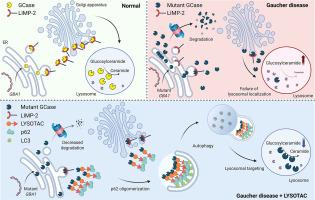
Lysosomal storage diseases (LSDs) are a group of inherited metabolic disorders caused by misfolding of lysosomal proteins and their degradation via endoplasmic reticulum-associated degradation (ERAD). Deficiency in LSD-associated enzymes leads to the accumulation of toxic materials within the lysosome. In macroautophagy (hereafter autophagy), autophagic receptors as represented by p62/SQSTM1/Sequestosome-1 collect and deliver their cargoes to the lysosome. Here, we developed the LYSOTAC (LYSOsome-TArgeting Chimera) technology, which enables lysosomal targeting of LSD-associated enzymes while preserving their enzymatic activities. LYSOTAC employs a bifunctional chimera that simultaneously binds an LSD-associated enzyme via the enzyme-binding ligand (EBL) and p62 via the autophagy-targeting ligand (ATL). Upon binding, p62 undergoes self-polymerization to form cargo-p62 complexes, which are sequestered into autophagosomes and delivered to lysosomes, where the enzymes exhibit maximal activity. Here, LYSOTAC compounds targeting β-glucocerebrosidase (GCase) were designed to restore GCase activity in lysosomes and promote glucosylceramide degradation in Gaucher disease fibroblasts. We suggest that LYSOTAC provides a potential therapeutic strategy for LSDs.
期刊介绍:
The Asian Journal of Pharmaceutical Sciences (AJPS) serves as the official journal of the Asian Federation for Pharmaceutical Sciences (AFPS). Recognized by the Science Citation Index Expanded (SCIE), AJPS offers a platform for the reporting of advancements, production methodologies, technologies, initiatives, and the practical application of scientific knowledge in the field of pharmaceutics. The journal covers a wide range of topics including but not limited to controlled drug release systems, drug targeting, physical pharmacy, pharmacodynamics, pharmacokinetics, pharmacogenomics, biopharmaceutics, drug and prodrug design, pharmaceutical analysis, drug stability, quality control, pharmaceutical engineering, and material sciences.