{"title":"氩气大气压等离子体射流(APPJ)的机器学习(ML)建模与表征","authors":"S. Patil, V. M. Shelar, R. Asharaf, A. S. Deepak","doi":"10.1134/S1063780X25604171","DOIUrl":null,"url":null,"abstract":"<p>Plasma, characterized by partially ionized gas containing reactive species, has become indispensable for advanced surface modification and biomedical applications. Argon-based non-thermal atmospheric pressure plasma jets (APPJs) enable precise material processing through controlled generation and efficient production of reactive species. This experimental and computational study characterizes an argon-based atmospheric pressure plasma jet generated in a narrow 2 mm quartz capillary. The discharge was initiated using a resonant transformer circuit. High-resolution optical emission spectroscopy measurements were performed under controlled gas flow conditions at 850–900 mbar. Extensive spectral data collection enabled detailed statistical analysis. The spectra exhibit intense neutral argon lines, ionized argon signatures, and nitrogen molecular bands from ambient air entrainment. Quantitative analysis revealed a direct correlation between applied voltage and Ar I line intensities, while gas flow rate variations produced complex non-monotonic intensity patterns. Electron temperatures of 5400–5800 K were determined using Boltzmann plot methodology. Stark broadening measurements of the 763.51 nm line yielded electron densities of (1.30‒1.33) × 10<sup>17</sup> cm<sup>–3</sup>. A probabilistic machine learning approach employing Bayesian neural networks demonstrated outstanding predictive performance for estimating plasma parameters from operational variables, with remarkably low associated uncertainties. This integrated diagnostic framework provides new insights into plasma parameter relationships while offering practical tools for optimizing plasma-assisted surface treatments and chemical processes and the developed algorithms will be used to determine the parameters.</p>","PeriodicalId":735,"journal":{"name":"Plasma Physics Reports","volume":"52 2","pages":"224 - 233"},"PeriodicalIF":1.1000,"publicationDate":"2026-04-16","publicationTypes":"Journal Article","fieldsOfStudy":null,"isOpenAccess":false,"openAccessPdf":"","citationCount":"0","resultStr":"{\"title\":\"Machine Learning (ML) Modelling and Characterization of Atmospheric Pressure Plasma Jet (APPJ) of Argon\",\"authors\":\"S. Patil, V. M. Shelar, R. Asharaf, A. S. Deepak\",\"doi\":\"10.1134/S1063780X25604171\",\"DOIUrl\":null,\"url\":null,\"abstract\":\"<p>Plasma, characterized by partially ionized gas containing reactive species, has become indispensable for advanced surface modification and biomedical applications. Argon-based non-thermal atmospheric pressure plasma jets (APPJs) enable precise material processing through controlled generation and efficient production of reactive species. This experimental and computational study characterizes an argon-based atmospheric pressure plasma jet generated in a narrow 2 mm quartz capillary. The discharge was initiated using a resonant transformer circuit. High-resolution optical emission spectroscopy measurements were performed under controlled gas flow conditions at 850–900 mbar. Extensive spectral data collection enabled detailed statistical analysis. The spectra exhibit intense neutral argon lines, ionized argon signatures, and nitrogen molecular bands from ambient air entrainment. Quantitative analysis revealed a direct correlation between applied voltage and Ar I line intensities, while gas flow rate variations produced complex non-monotonic intensity patterns. Electron temperatures of 5400–5800 K were determined using Boltzmann plot methodology. Stark broadening measurements of the 763.51 nm line yielded electron densities of (1.30‒1.33) × 10<sup>17</sup> cm<sup>–3</sup>. A probabilistic machine learning approach employing Bayesian neural networks demonstrated outstanding predictive performance for estimating plasma parameters from operational variables, with remarkably low associated uncertainties. This integrated diagnostic framework provides new insights into plasma parameter relationships while offering practical tools for optimizing plasma-assisted surface treatments and chemical processes and the developed algorithms will be used to determine the parameters.</p>\",\"PeriodicalId\":735,\"journal\":{\"name\":\"Plasma Physics Reports\",\"volume\":\"52 2\",\"pages\":\"224 - 233\"},\"PeriodicalIF\":1.1000,\"publicationDate\":\"2026-04-16\",\"publicationTypes\":\"Journal Article\",\"fieldsOfStudy\":null,\"isOpenAccess\":false,\"openAccessPdf\":\"\",\"citationCount\":\"0\",\"resultStr\":null,\"platform\":\"Semanticscholar\",\"paperid\":null,\"PeriodicalName\":\"Plasma Physics Reports\",\"FirstCategoryId\":\"101\",\"ListUrlMain\":\"https://link.springer.com/article/10.1134/S1063780X25604171\",\"RegionNum\":4,\"RegionCategory\":\"物理与天体物理\",\"ArticlePicture\":[],\"TitleCN\":null,\"AbstractTextCN\":null,\"PMCID\":null,\"EPubDate\":\"\",\"PubModel\":\"\",\"JCR\":\"Q4\",\"JCRName\":\"PHYSICS, FLUIDS & PLASMAS\",\"Score\":null,\"Total\":0}","platform":"Semanticscholar","paperid":null,"PeriodicalName":"Plasma Physics Reports","FirstCategoryId":"101","ListUrlMain":"https://link.springer.com/article/10.1134/S1063780X25604171","RegionNum":4,"RegionCategory":"物理与天体物理","ArticlePicture":[],"TitleCN":null,"AbstractTextCN":null,"PMCID":null,"EPubDate":"","PubModel":"","JCR":"Q4","JCRName":"PHYSICS, FLUIDS & PLASMAS","Score":null,"Total":0}
Machine Learning (ML) Modelling and Characterization of Atmospheric Pressure Plasma Jet (APPJ) of Argon
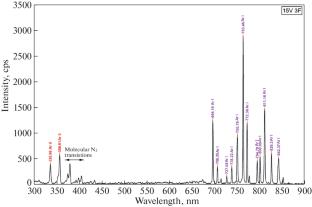
Plasma, characterized by partially ionized gas containing reactive species, has become indispensable for advanced surface modification and biomedical applications. Argon-based non-thermal atmospheric pressure plasma jets (APPJs) enable precise material processing through controlled generation and efficient production of reactive species. This experimental and computational study characterizes an argon-based atmospheric pressure plasma jet generated in a narrow 2 mm quartz capillary. The discharge was initiated using a resonant transformer circuit. High-resolution optical emission spectroscopy measurements were performed under controlled gas flow conditions at 850–900 mbar. Extensive spectral data collection enabled detailed statistical analysis. The spectra exhibit intense neutral argon lines, ionized argon signatures, and nitrogen molecular bands from ambient air entrainment. Quantitative analysis revealed a direct correlation between applied voltage and Ar I line intensities, while gas flow rate variations produced complex non-monotonic intensity patterns. Electron temperatures of 5400–5800 K were determined using Boltzmann plot methodology. Stark broadening measurements of the 763.51 nm line yielded electron densities of (1.30‒1.33) × 1017 cm–3. A probabilistic machine learning approach employing Bayesian neural networks demonstrated outstanding predictive performance for estimating plasma parameters from operational variables, with remarkably low associated uncertainties. This integrated diagnostic framework provides new insights into plasma parameter relationships while offering practical tools for optimizing plasma-assisted surface treatments and chemical processes and the developed algorithms will be used to determine the parameters.
期刊介绍:
Plasma Physics Reports is a peer reviewed journal devoted to plasma physics. The journal covers the following topics: high-temperature plasma physics related to the problem of controlled nuclear fusion based on magnetic and inertial confinement; physics of cosmic plasma, including magnetosphere plasma, sun and stellar plasma, etc.; gas discharge plasma and plasma generated by laser and particle beams. The journal also publishes papers on such related topics as plasma electronics, generation of radiation in plasma, and plasma diagnostics. As well as other original communications, the journal publishes topical reviews and conference proceedings.

 求助内容:
求助内容: 应助结果提醒方式:

 京公网安备 11010802042870号


