A. A. Kosoi, A. V. Krysov, O. S. Popel’, S. P. Filippov
{"title":"集二氧化碳捕集与低温储能于一体的新型发电装置","authors":"A. A. Kosoi, A. V. Krysov, O. S. Popel’, S. P. Filippov","doi":"10.1134/S0040601525700818","DOIUrl":null,"url":null,"abstract":"<p>The article presents the concept of a combined cycle turbine unit based on the innovative thermodynamic cycle developed at the Joint Institute for High Temperatures of the Russian Academy of Sciences (JIHT RAS) with integrated carbon dioxide (СО<sub>2</sub>) capture and cryogenic energy storage. The developed cycle relates to the class of semi-closed cycles, but retains all advantages of open and closed cycles. Owing to a wide range in which the power unit electrical and thermal power outputs can be adjusted, units implemented on the basis of the JIHT RAS thermodynamic cycle can efficiently participate in covering the electric and thermal load curves. Owing to the use of working fluid initial components (fuel, oxidizer, and ballasting carbon dioxide and water) in liquid state, it becomes possible to do without compressor equipment and replace it with pumps, thereby reducing energy consumption for plant auxiliaries and decreasing the required capital outlays. Due to the use of oxygen fuel combustion, it becomes possible to implement integrated carbon dioxide capture and prevent its emission into the atmosphere almost completely. Owing to the fact that the heat releasing during steam condensation and the carbon dioxide generated during fuel combustion both return into the cycle, it becomes possible to achieve extremely high efficiency of using the fuel energy in the plant (95% or higher with the plant operating in the cogeneration mode). Owing to the availability of large volumes of cryogenic liquids (air separation products and liquefied natural gas), it becomes possible to implement, on their basis, integrated energy storage based on the phase transition energy. Since cryogenic liquids and equipment for obtaining them are integral components of the power unit process circuit, this makes it possible to compensate for the drawbacks inherent in the cryogenic energy storage method. As a result, a dual effect can be obtained in one unit: carbon dioxide capture and energy storage. The presented combined cycle turbine unit on the basis of the JIHT RAS cycle opens possibilities for retaining large-scale use of organic fuels with simultaneously solving the economy decarbonization problems.</p>","PeriodicalId":799,"journal":{"name":"Thermal Engineering","volume":"73 2","pages":"71 - 80"},"PeriodicalIF":1.0000,"publicationDate":"2026-04-03","publicationTypes":"Journal Article","fieldsOfStudy":null,"isOpenAccess":false,"openAccessPdf":"","citationCount":"0","resultStr":"{\"title\":\"A New Concept of a Power Generating Facility with Integrated Carbon Dioxide Capture and Cryogenic Energy Storage\",\"authors\":\"A. A. Kosoi, A. V. Krysov, O. S. Popel’, S. P. Filippov\",\"doi\":\"10.1134/S0040601525700818\",\"DOIUrl\":null,\"url\":null,\"abstract\":\"<p>The article presents the concept of a combined cycle turbine unit based on the innovative thermodynamic cycle developed at the Joint Institute for High Temperatures of the Russian Academy of Sciences (JIHT RAS) with integrated carbon dioxide (СО<sub>2</sub>) capture and cryogenic energy storage. The developed cycle relates to the class of semi-closed cycles, but retains all advantages of open and closed cycles. Owing to a wide range in which the power unit electrical and thermal power outputs can be adjusted, units implemented on the basis of the JIHT RAS thermodynamic cycle can efficiently participate in covering the electric and thermal load curves. Owing to the use of working fluid initial components (fuel, oxidizer, and ballasting carbon dioxide and water) in liquid state, it becomes possible to do without compressor equipment and replace it with pumps, thereby reducing energy consumption for plant auxiliaries and decreasing the required capital outlays. Due to the use of oxygen fuel combustion, it becomes possible to implement integrated carbon dioxide capture and prevent its emission into the atmosphere almost completely. Owing to the fact that the heat releasing during steam condensation and the carbon dioxide generated during fuel combustion both return into the cycle, it becomes possible to achieve extremely high efficiency of using the fuel energy in the plant (95% or higher with the plant operating in the cogeneration mode). Owing to the availability of large volumes of cryogenic liquids (air separation products and liquefied natural gas), it becomes possible to implement, on their basis, integrated energy storage based on the phase transition energy. Since cryogenic liquids and equipment for obtaining them are integral components of the power unit process circuit, this makes it possible to compensate for the drawbacks inherent in the cryogenic energy storage method. As a result, a dual effect can be obtained in one unit: carbon dioxide capture and energy storage. The presented combined cycle turbine unit on the basis of the JIHT RAS cycle opens possibilities for retaining large-scale use of organic fuels with simultaneously solving the economy decarbonization problems.</p>\",\"PeriodicalId\":799,\"journal\":{\"name\":\"Thermal Engineering\",\"volume\":\"73 2\",\"pages\":\"71 - 80\"},\"PeriodicalIF\":1.0000,\"publicationDate\":\"2026-04-03\",\"publicationTypes\":\"Journal Article\",\"fieldsOfStudy\":null,\"isOpenAccess\":false,\"openAccessPdf\":\"\",\"citationCount\":\"0\",\"resultStr\":null,\"platform\":\"Semanticscholar\",\"paperid\":null,\"PeriodicalName\":\"Thermal Engineering\",\"FirstCategoryId\":\"1085\",\"ListUrlMain\":\"https://link.springer.com/article/10.1134/S0040601525700818\",\"RegionNum\":0,\"RegionCategory\":null,\"ArticlePicture\":[],\"TitleCN\":null,\"AbstractTextCN\":null,\"PMCID\":null,\"EPubDate\":\"\",\"PubModel\":\"\",\"JCR\":\"Q4\",\"JCRName\":\"ENERGY & FUELS\",\"Score\":null,\"Total\":0}","platform":"Semanticscholar","paperid":null,"PeriodicalName":"Thermal Engineering","FirstCategoryId":"1085","ListUrlMain":"https://link.springer.com/article/10.1134/S0040601525700818","RegionNum":0,"RegionCategory":null,"ArticlePicture":[],"TitleCN":null,"AbstractTextCN":null,"PMCID":null,"EPubDate":"","PubModel":"","JCR":"Q4","JCRName":"ENERGY & FUELS","Score":null,"Total":0}
A New Concept of a Power Generating Facility with Integrated Carbon Dioxide Capture and Cryogenic Energy Storage
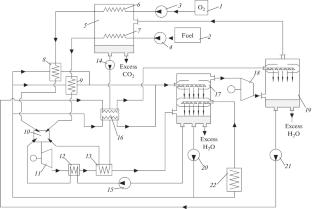
The article presents the concept of a combined cycle turbine unit based on the innovative thermodynamic cycle developed at the Joint Institute for High Temperatures of the Russian Academy of Sciences (JIHT RAS) with integrated carbon dioxide (СО2) capture and cryogenic energy storage. The developed cycle relates to the class of semi-closed cycles, but retains all advantages of open and closed cycles. Owing to a wide range in which the power unit electrical and thermal power outputs can be adjusted, units implemented on the basis of the JIHT RAS thermodynamic cycle can efficiently participate in covering the electric and thermal load curves. Owing to the use of working fluid initial components (fuel, oxidizer, and ballasting carbon dioxide and water) in liquid state, it becomes possible to do without compressor equipment and replace it with pumps, thereby reducing energy consumption for plant auxiliaries and decreasing the required capital outlays. Due to the use of oxygen fuel combustion, it becomes possible to implement integrated carbon dioxide capture and prevent its emission into the atmosphere almost completely. Owing to the fact that the heat releasing during steam condensation and the carbon dioxide generated during fuel combustion both return into the cycle, it becomes possible to achieve extremely high efficiency of using the fuel energy in the plant (95% or higher with the plant operating in the cogeneration mode). Owing to the availability of large volumes of cryogenic liquids (air separation products and liquefied natural gas), it becomes possible to implement, on their basis, integrated energy storage based on the phase transition energy. Since cryogenic liquids and equipment for obtaining them are integral components of the power unit process circuit, this makes it possible to compensate for the drawbacks inherent in the cryogenic energy storage method. As a result, a dual effect can be obtained in one unit: carbon dioxide capture and energy storage. The presented combined cycle turbine unit on the basis of the JIHT RAS cycle opens possibilities for retaining large-scale use of organic fuels with simultaneously solving the economy decarbonization problems.


 求助内容:
求助内容: 应助结果提醒方式:

 京公网安备 11010802042870号


