P. N. Myagkikh, E. D. Merson, V. A. Poluyanov, A. A. Sergeev, D. L. Merson
{"title":"镁合金ZX10表面刮擦局部变形对丝状腐蚀萌生和扩展的影响","authors":"P. N. Myagkikh, E. D. Merson, V. A. Poluyanov, A. A. Sergeev, D. L. Merson","doi":"10.1134/S106782122560142X","DOIUrl":null,"url":null,"abstract":"<p>Bioresorbable magnesium alloys are a promising material for the manufacture of self-dissolving surgical implants. Since the process of biological resorption is essentially corrosion, it is important to have a complete understanding of the influence of various factors on corrosion. The scientific literature contains numerous works devoted to the influence of such factors as the crystallographic orientation of grains, the presence and nature of the distribution of secondary phase particles in the volume of the metal, and their electrode potential on the corrosion properties of magnesium. Unfortunately, the influence of local deformation of the material on its corrosion characteristics has not been studied in sufficient detail. In some of our previous works, the spread of filiform corrosion on the surface of ZX10 alloy was observed along scratches that marked the area under study. This observation led to the hypothesis that locally deformed material might be vulnerable to this type of damage. This work is devoted to confirming this hypothesis. Using a Vickers diamond pyramid, scratches were applied to the surface of extruded ZX10 alloy samples with a force of 5, 15, and 30 N, after which the samples were tested by immersion at a temperature of 37°C in solutions simulating the ionic composition of human blood plasma: Ringer, SBF, and PBS. During the tests, video monitoring of the sample surface was used, as well as recording of the open circuit potential. After testing, the composition of corrosion products and the morphology of corrosion damage were analyzed in a scanning electron microscope column. The hypothesis was fully confirmed: in all three solutions, the initiation and spread of filiform corrosion in the deformed scratch material was recorded; however, no correlation was found between the onset time of filiform corrosion and the scribing force. A study of the filiform corrosion products showed that the mechanism of its propagation is probably the same for all three solutions, but in the case of SBF and PBS solutions, the surface area affected by filiform corrosion is significantly smaller than in Ringer’s solution. This indicates that the presence of phosphate ions in the solution has a significant effect on the formation of filiform corrosion products and the inhibition of its spread.</p>","PeriodicalId":765,"journal":{"name":"Russian Journal of Non-Ferrous Metals","volume":"67 1","pages":"56 - 68"},"PeriodicalIF":0.9000,"publicationDate":"2026-04-02","publicationTypes":"Journal Article","fieldsOfStudy":null,"isOpenAccess":false,"openAccessPdf":"","citationCount":"0","resultStr":"{\"title\":\"Influence of Local Deformation by Scratching the Surface of the Magnesium Biodegradable Alloy ZX10 on the Initiation and Propagation of Filiform Corrosion\",\"authors\":\"P. N. Myagkikh, E. D. Merson, V. A. Poluyanov, A. A. Sergeev, D. L. Merson\",\"doi\":\"10.1134/S106782122560142X\",\"DOIUrl\":null,\"url\":null,\"abstract\":\"<p>Bioresorbable magnesium alloys are a promising material for the manufacture of self-dissolving surgical implants. Since the process of biological resorption is essentially corrosion, it is important to have a complete understanding of the influence of various factors on corrosion. The scientific literature contains numerous works devoted to the influence of such factors as the crystallographic orientation of grains, the presence and nature of the distribution of secondary phase particles in the volume of the metal, and their electrode potential on the corrosion properties of magnesium. Unfortunately, the influence of local deformation of the material on its corrosion characteristics has not been studied in sufficient detail. In some of our previous works, the spread of filiform corrosion on the surface of ZX10 alloy was observed along scratches that marked the area under study. This observation led to the hypothesis that locally deformed material might be vulnerable to this type of damage. This work is devoted to confirming this hypothesis. Using a Vickers diamond pyramid, scratches were applied to the surface of extruded ZX10 alloy samples with a force of 5, 15, and 30 N, after which the samples were tested by immersion at a temperature of 37°C in solutions simulating the ionic composition of human blood plasma: Ringer, SBF, and PBS. During the tests, video monitoring of the sample surface was used, as well as recording of the open circuit potential. After testing, the composition of corrosion products and the morphology of corrosion damage were analyzed in a scanning electron microscope column. The hypothesis was fully confirmed: in all three solutions, the initiation and spread of filiform corrosion in the deformed scratch material was recorded; however, no correlation was found between the onset time of filiform corrosion and the scribing force. A study of the filiform corrosion products showed that the mechanism of its propagation is probably the same for all three solutions, but in the case of SBF and PBS solutions, the surface area affected by filiform corrosion is significantly smaller than in Ringer’s solution. This indicates that the presence of phosphate ions in the solution has a significant effect on the formation of filiform corrosion products and the inhibition of its spread.</p>\",\"PeriodicalId\":765,\"journal\":{\"name\":\"Russian Journal of Non-Ferrous Metals\",\"volume\":\"67 1\",\"pages\":\"56 - 68\"},\"PeriodicalIF\":0.9000,\"publicationDate\":\"2026-04-02\",\"publicationTypes\":\"Journal Article\",\"fieldsOfStudy\":null,\"isOpenAccess\":false,\"openAccessPdf\":\"\",\"citationCount\":\"0\",\"resultStr\":null,\"platform\":\"Semanticscholar\",\"paperid\":null,\"PeriodicalName\":\"Russian Journal of Non-Ferrous Metals\",\"FirstCategoryId\":\"88\",\"ListUrlMain\":\"https://link.springer.com/article/10.1134/S106782122560142X\",\"RegionNum\":4,\"RegionCategory\":\"材料科学\",\"ArticlePicture\":[],\"TitleCN\":null,\"AbstractTextCN\":null,\"PMCID\":null,\"EPubDate\":\"\",\"PubModel\":\"\",\"JCR\":\"Q4\",\"JCRName\":\"METALLURGY & METALLURGICAL ENGINEERING\",\"Score\":null,\"Total\":0}","platform":"Semanticscholar","paperid":null,"PeriodicalName":"Russian Journal of Non-Ferrous Metals","FirstCategoryId":"88","ListUrlMain":"https://link.springer.com/article/10.1134/S106782122560142X","RegionNum":4,"RegionCategory":"材料科学","ArticlePicture":[],"TitleCN":null,"AbstractTextCN":null,"PMCID":null,"EPubDate":"","PubModel":"","JCR":"Q4","JCRName":"METALLURGY & METALLURGICAL ENGINEERING","Score":null,"Total":0}
Influence of Local Deformation by Scratching the Surface of the Magnesium Biodegradable Alloy ZX10 on the Initiation and Propagation of Filiform Corrosion
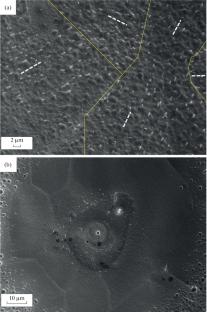
Bioresorbable magnesium alloys are a promising material for the manufacture of self-dissolving surgical implants. Since the process of biological resorption is essentially corrosion, it is important to have a complete understanding of the influence of various factors on corrosion. The scientific literature contains numerous works devoted to the influence of such factors as the crystallographic orientation of grains, the presence and nature of the distribution of secondary phase particles in the volume of the metal, and their electrode potential on the corrosion properties of magnesium. Unfortunately, the influence of local deformation of the material on its corrosion characteristics has not been studied in sufficient detail. In some of our previous works, the spread of filiform corrosion on the surface of ZX10 alloy was observed along scratches that marked the area under study. This observation led to the hypothesis that locally deformed material might be vulnerable to this type of damage. This work is devoted to confirming this hypothesis. Using a Vickers diamond pyramid, scratches were applied to the surface of extruded ZX10 alloy samples with a force of 5, 15, and 30 N, after which the samples were tested by immersion at a temperature of 37°C in solutions simulating the ionic composition of human blood plasma: Ringer, SBF, and PBS. During the tests, video monitoring of the sample surface was used, as well as recording of the open circuit potential. After testing, the composition of corrosion products and the morphology of corrosion damage were analyzed in a scanning electron microscope column. The hypothesis was fully confirmed: in all three solutions, the initiation and spread of filiform corrosion in the deformed scratch material was recorded; however, no correlation was found between the onset time of filiform corrosion and the scribing force. A study of the filiform corrosion products showed that the mechanism of its propagation is probably the same for all three solutions, but in the case of SBF and PBS solutions, the surface area affected by filiform corrosion is significantly smaller than in Ringer’s solution. This indicates that the presence of phosphate ions in the solution has a significant effect on the formation of filiform corrosion products and the inhibition of its spread.
期刊介绍:
Russian Journal of Non-Ferrous Metals is a journal the main goal of which is to achieve new knowledge in the following topics: extraction metallurgy, hydro- and pirometallurgy, casting, plastic deformation, metallography and heat treatment, powder metallurgy and composites, self-propagating high-temperature synthesis, surface engineering and advanced protected coatings, environments, and energy capacity in non-ferrous metallurgy.

 求助内容:
求助内容: 应助结果提醒方式:

 京公网安备 11010802042870号


