人工湿地的微生物动态和季节性恢复力:范围综述。

IF 7.8 2区 环境科学与生态学 Q1 ENGINEERING, CHEMICAL
Anna Tumeo , Gaia Streparola , Caolan Harrington , Aila Carty , Finola Leonard , Catherine Burgess , Dearbháile Morris , Georgios Miliotis
{"title":"人工湿地的微生物动态和季节性恢复力:范围综述。","authors":"Anna Tumeo ,&nbsp;Gaia Streparola ,&nbsp;Caolan Harrington ,&nbsp;Aila Carty ,&nbsp;Finola Leonard ,&nbsp;Catherine Burgess ,&nbsp;Dearbháile Morris ,&nbsp;Georgios Miliotis","doi":"10.1016/j.psep.2026.108772","DOIUrl":null,"url":null,"abstract":"<div><div>Microbial communities in constructed wetlands (CWs) drive wastewater treatment efficacy through pollutant biodegradation and outcompeting of pathogenic taxa. Nevertheless, evidence on the ecological complexity of these communities and the effects of seasonal variability on treatment outcomes remains fragmented across climates and system configurations. This scoping review (ScR) addresses the need to map the available literature on microbial dynamics in CWs and the impact of seasonality on the mitigation of antimicrobial resistance and opportunistic pathogens, to inform future CW applications and environmental pollution management. Database search followed by deduplication and screening yielded 116 relevant records published between 2005 and 2025, spanning 36 countries worldwide, seven wastewater types, ten wetland configurations, and seven molecular detection methods. This ScR pinpoints that: i) microbial communities shift across macrohabitats and treatment stages towards pollutant removal capabilities (<em>Rhodoferax</em>, <em>Polaromonas</em>, <em>Flavobacterium</em>) at the expense of fecal and pathogenic contaminants (<em>Arcobacter</em>, <em>Mycobacterium</em>, <em>Pseudomonas</em>); ii) CWs can achieve &gt;99% removal of carbapenem-resistant bacteria and antimicrobial resistance genes (<em>ermB</em>, <em>bla/sul/tet</em> genes), with the highest overall removal achieved by subsurface flow designs; iii) warmer temperatures can enhance persistence of ARGs by increasing microbial biomass turnover and horizontal gene transfer potential; iv) future environmental pollution management should incorporate long-term AMR monitoring.</div></div>","PeriodicalId":20743,"journal":{"name":"Process Safety and Environmental Protection","volume":"211 ","pages":"Article 108772"},"PeriodicalIF":7.8000,"publicationDate":"2026-03-25","publicationTypes":"Journal Article","fieldsOfStudy":null,"isOpenAccess":false,"openAccessPdf":"","citationCount":"0","resultStr":"{\"title\":\"Microbial dynamics and seasonal resilience in constructed wetlands: a scoping review.\",\"authors\":\"Anna Tumeo ,&nbsp;Gaia Streparola ,&nbsp;Caolan Harrington ,&nbsp;Aila Carty ,&nbsp;Finola Leonard ,&nbsp;Catherine Burgess ,&nbsp;Dearbháile Morris ,&nbsp;Georgios Miliotis\",\"doi\":\"10.1016/j.psep.2026.108772\",\"DOIUrl\":null,\"url\":null,\"abstract\":\"<div><div>Microbial communities in constructed wetlands (CWs) drive wastewater treatment efficacy through pollutant biodegradation and outcompeting of pathogenic taxa. Nevertheless, evidence on the ecological complexity of these communities and the effects of seasonal variability on treatment outcomes remains fragmented across climates and system configurations. This scoping review (ScR) addresses the need to map the available literature on microbial dynamics in CWs and the impact of seasonality on the mitigation of antimicrobial resistance and opportunistic pathogens, to inform future CW applications and environmental pollution management. Database search followed by deduplication and screening yielded 116 relevant records published between 2005 and 2025, spanning 36 countries worldwide, seven wastewater types, ten wetland configurations, and seven molecular detection methods. This ScR pinpoints that: i) microbial communities shift across macrohabitats and treatment stages towards pollutant removal capabilities (<em>Rhodoferax</em>, <em>Polaromonas</em>, <em>Flavobacterium</em>) at the expense of fecal and pathogenic contaminants (<em>Arcobacter</em>, <em>Mycobacterium</em>, <em>Pseudomonas</em>); ii) CWs can achieve &gt;99% removal of carbapenem-resistant bacteria and antimicrobial resistance genes (<em>ermB</em>, <em>bla/sul/tet</em> genes), with the highest overall removal achieved by subsurface flow designs; iii) warmer temperatures can enhance persistence of ARGs by increasing microbial biomass turnover and horizontal gene transfer potential; iv) future environmental pollution management should incorporate long-term AMR monitoring.</div></div>\",\"PeriodicalId\":20743,\"journal\":{\"name\":\"Process Safety and Environmental Protection\",\"volume\":\"211 \",\"pages\":\"Article 108772\"},\"PeriodicalIF\":7.8000,\"publicationDate\":\"2026-03-25\",\"publicationTypes\":\"Journal Article\",\"fieldsOfStudy\":null,\"isOpenAccess\":false,\"openAccessPdf\":\"\",\"citationCount\":\"0\",\"resultStr\":null,\"platform\":\"Semanticscholar\",\"paperid\":null,\"PeriodicalName\":\"Process Safety and Environmental Protection\",\"FirstCategoryId\":\"93\",\"ListUrlMain\":\"https://www.sciencedirect.com/science/article/pii/S0957582026003897\",\"RegionNum\":2,\"RegionCategory\":\"环境科学与生态学\",\"ArticlePicture\":[],\"TitleCN\":null,\"AbstractTextCN\":null,\"PMCID\":null,\"EPubDate\":\"\",\"PubModel\":\"\",\"JCR\":\"Q1\",\"JCRName\":\"ENGINEERING, CHEMICAL\",\"Score\":null,\"Total\":0}","platform":"Semanticscholar","paperid":null,"PeriodicalName":"Process Safety and Environmental Protection","FirstCategoryId":"93","ListUrlMain":"https://www.sciencedirect.com/science/article/pii/S0957582026003897","RegionNum":2,"RegionCategory":"环境科学与生态学","ArticlePicture":[],"TitleCN":null,"AbstractTextCN":null,"PMCID":null,"EPubDate":"","PubModel":"","JCR":"Q1","JCRName":"ENGINEERING, CHEMICAL","Score":null,"Total":0}
引用次数: 0

摘要

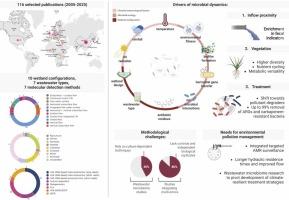
人工湿地中的微生物群落通过对污染物的生物降解和对病原菌群的竞争来驱动污水处理效果。然而,关于这些群落的生态复杂性和季节变化对处理结果的影响的证据在气候和系统配置方面仍然是零散的。这一范围审查(ScR)解决了绘制化学武器中微生物动力学的现有文献以及季节性对减轻抗菌素耐药性和机会性病原体的影响的需要,为未来的化学武器应用和环境污染管理提供信息。数据库检索之后进行了重复数据删除和筛选,得到了2005年至2025年间发表的116条相关记录,涵盖全球36个国家、7种废水类型、10种湿地配置和7种分子检测方法。该ScR指出:i)微生物群落在大生境和处理阶段向污染物去除能力(红铁属、Polaromonas、黄杆菌属)转变,以牺牲粪便和致病性污染物(Arcobacter、分枝杆菌、假单胞菌)为代价;ii) CWs对碳青霉烯类耐药菌和耐药基因(ermB、bla/sul/tet基因)的去除率可达99%,其中潜流设计的总体去除率最高;iii)温度升高可以通过增加微生物生物量周转和水平基因转移潜力来增强ARGs的持久性;iv)未来的环境污染管理应纳入抗生素耐药性的长期监测。
本文章由计算机程序翻译,如有差异,请以英文原文为准。

Microbial dynamics and seasonal resilience in constructed wetlands: a scoping review.

Microbial dynamics and seasonal resilience in constructed wetlands: a scoping review.
Microbial communities in constructed wetlands (CWs) drive wastewater treatment efficacy through pollutant biodegradation and outcompeting of pathogenic taxa. Nevertheless, evidence on the ecological complexity of these communities and the effects of seasonal variability on treatment outcomes remains fragmented across climates and system configurations. This scoping review (ScR) addresses the need to map the available literature on microbial dynamics in CWs and the impact of seasonality on the mitigation of antimicrobial resistance and opportunistic pathogens, to inform future CW applications and environmental pollution management. Database search followed by deduplication and screening yielded 116 relevant records published between 2005 and 2025, spanning 36 countries worldwide, seven wastewater types, ten wetland configurations, and seven molecular detection methods. This ScR pinpoints that: i) microbial communities shift across macrohabitats and treatment stages towards pollutant removal capabilities (Rhodoferax, Polaromonas, Flavobacterium) at the expense of fecal and pathogenic contaminants (Arcobacter, Mycobacterium, Pseudomonas); ii) CWs can achieve >99% removal of carbapenem-resistant bacteria and antimicrobial resistance genes (ermB, bla/sul/tet genes), with the highest overall removal achieved by subsurface flow designs; iii) warmer temperatures can enhance persistence of ARGs by increasing microbial biomass turnover and horizontal gene transfer potential; iv) future environmental pollution management should incorporate long-term AMR monitoring.
求助全文
通过发布文献求助,成功后即可免费获取论文全文。 去求助
来源期刊
Process Safety and Environmental Protection
Process Safety and Environmental Protection 环境科学-工程:化工
CiteScore
11.40
自引率
15.40%
发文量
929
审稿时长
8.0 months
期刊介绍: The Process Safety and Environmental Protection (PSEP) journal is a leading international publication that focuses on the publication of high-quality, original research papers in the field of engineering, specifically those related to the safety of industrial processes and environmental protection. The journal encourages submissions that present new developments in safety and environmental aspects, particularly those that show how research findings can be applied in process engineering design and practice. PSEP is particularly interested in research that brings fresh perspectives to established engineering principles, identifies unsolved problems, or suggests directions for future research. The journal also values contributions that push the boundaries of traditional engineering and welcomes multidisciplinary papers. PSEP's articles are abstracted and indexed by a range of databases and services, which helps to ensure that the journal's research is accessible and recognized in the academic and professional communities. These databases include ANTE, Chemical Abstracts, Chemical Hazards in Industry, Current Contents, Elsevier Engineering Information database, Pascal Francis, Web of Science, Scopus, Engineering Information Database EnCompass LIT (Elsevier), and INSPEC. This wide coverage facilitates the dissemination of the journal's content to a global audience interested in process safety and environmental engineering.

×
引用
GB/T 7714-2015
复制
MLA
复制
APA
复制
导出至
BibTeX EndNote RefMan NoteFirst NoteExpress
×
提示
您的信息不完整,为了账户安全,请先补充。
现在去补充
×
提示
您因"违规操作"
具体请查看互助需知
我知道了
×
提示
确定
请完成安全验证×
copy
已复制链接
快去分享给好友吧!
我知道了
右上角分享
点击右上角分享
0
联系我们:info@booksci.cn Book学术提供免费学术资源搜索服务,方便国内外学者检索中英文文献。致力于提供最便捷和优质的服务体验。 Copyright © 2023 布克学术 All rights reserved.
京ICP备2023020795号-1
ghs 京公网安备 11010802042870号
Book学术文献互助
Book学术文献互助群
群 号:604180095
Book学术官方微信
小红书