Chaofeng Wei, Qihui Liang, Danqi Liu, Yi Yu, Yihe Wei, Yuan Li, Haicui Wu, Fang Lian
{"title":"精子DNA断裂指数与精液质量和抗逆转录病毒治疗结果的关联:来自回顾性队列的真实证据。","authors":"Chaofeng Wei, Qihui Liang, Danqi Liu, Yi Yu, Yihe Wei, Yuan Li, Haicui Wu, Fang Lian","doi":"10.1186/s12610-026-00308-2","DOIUrl":null,"url":null,"abstract":"<p><p>BACKGROUND: Sperm DNA fragmentation index (DFI) has emerged as a potential marker of male fertility, but its clinical value in assisted reproductive technology (ART) remains debated. This study aimed to investigate the association between sperm DFI and conventional semen parameters, embryological outcomes, and pregnancy outcomes in ART, using a large real-world dataset. RESULTS: A total of 1,784 ART cycles performed at a single center between January 2020 and January 2022 were analyzed. Patients were categorized into normal (< 30%) and high (≥ 30%) DFI groups. Compared with the normal DFI group, men with high DFI had significantly lower sperm concentration (B = − 31.15, 95% CI: − 44.75 to − 17.55), progressive motility (B = − 12.21, 95% CI: − 14.87 to − 9.56), and total motility (B = − 18.00, 95% CI: − 21.38 to − 14.62; all P < 0.001). After adjusting for female and male factors, high DFI was associated with a significantly lower 2PN fertilization rate (β = − 0.257, 95% CI: − 0.491 to − 0.024, P = 0.031), while no significant differences were observed in top-quality embryo rate, transferable embryo rate, or pregnancy outcomes. Sensitivity analyses using alternative statistical methods (ZOIB and PSM) and varying DFI thresholds (25% and 35%) yielded results completely consistent with the main analyses. CONCLUSIONS: High sperm DFI is independently associated with poorer semen quality and a reduced 2PN fertilization rate but was not significantly associated with embryo quality or pregnancy outcomes in this study. These findings support the clinical relevance of DFI in evaluating male fertility potential while suggesting its limited predictive value for ART success when female and cycle-related factors are considered. </p>","PeriodicalId":8730,"journal":{"name":"Basic and Clinical Andrology","volume":"36 1","pages":""},"PeriodicalIF":2.3000,"publicationDate":"2026-03-20","publicationTypes":"Journal Article","fieldsOfStudy":null,"isOpenAccess":false,"openAccessPdf":"https://www.ncbi.nlm.nih.gov/pmc/articles/PMC13003730/pdf/","citationCount":"0","resultStr":"{\"title\":\"Association of sperm DNA fragmentation index with semen quality and ART outcomes: real-world evidence from a retrospective cohort.\",\"authors\":\"Chaofeng Wei, Qihui Liang, Danqi Liu, Yi Yu, Yihe Wei, Yuan Li, Haicui Wu, Fang Lian\",\"doi\":\"10.1186/s12610-026-00308-2\",\"DOIUrl\":null,\"url\":null,\"abstract\":\"<p><p>BACKGROUND: Sperm DNA fragmentation index (DFI) has emerged as a potential marker of male fertility, but its clinical value in assisted reproductive technology (ART) remains debated. This study aimed to investigate the association between sperm DFI and conventional semen parameters, embryological outcomes, and pregnancy outcomes in ART, using a large real-world dataset. RESULTS: A total of 1,784 ART cycles performed at a single center between January 2020 and January 2022 were analyzed. Patients were categorized into normal (< 30%) and high (≥ 30%) DFI groups. Compared with the normal DFI group, men with high DFI had significantly lower sperm concentration (B = − 31.15, 95% CI: − 44.75 to − 17.55), progressive motility (B = − 12.21, 95% CI: − 14.87 to − 9.56), and total motility (B = − 18.00, 95% CI: − 21.38 to − 14.62; all P < 0.001). After adjusting for female and male factors, high DFI was associated with a significantly lower 2PN fertilization rate (β = − 0.257, 95% CI: − 0.491 to − 0.024, P = 0.031), while no significant differences were observed in top-quality embryo rate, transferable embryo rate, or pregnancy outcomes. Sensitivity analyses using alternative statistical methods (ZOIB and PSM) and varying DFI thresholds (25% and 35%) yielded results completely consistent with the main analyses. CONCLUSIONS: High sperm DFI is independently associated with poorer semen quality and a reduced 2PN fertilization rate but was not significantly associated with embryo quality or pregnancy outcomes in this study. These findings support the clinical relevance of DFI in evaluating male fertility potential while suggesting its limited predictive value for ART success when female and cycle-related factors are considered. </p>\",\"PeriodicalId\":8730,\"journal\":{\"name\":\"Basic and Clinical Andrology\",\"volume\":\"36 1\",\"pages\":\"\"},\"PeriodicalIF\":2.3000,\"publicationDate\":\"2026-03-20\",\"publicationTypes\":\"Journal Article\",\"fieldsOfStudy\":null,\"isOpenAccess\":false,\"openAccessPdf\":\"https://www.ncbi.nlm.nih.gov/pmc/articles/PMC13003730/pdf/\",\"citationCount\":\"0\",\"resultStr\":null,\"platform\":\"Semanticscholar\",\"paperid\":null,\"PeriodicalName\":\"Basic and Clinical Andrology\",\"FirstCategoryId\":\"3\",\"ListUrlMain\":\"https://doi.org/10.1186/s12610-026-00308-2\",\"RegionNum\":3,\"RegionCategory\":\"医学\",\"ArticlePicture\":[],\"TitleCN\":null,\"AbstractTextCN\":null,\"PMCID\":null,\"EPubDate\":\"\",\"PubModel\":\"\",\"JCR\":\"Q2\",\"JCRName\":\"ANDROLOGY\",\"Score\":null,\"Total\":0}","platform":"Semanticscholar","paperid":null,"PeriodicalName":"Basic and Clinical Andrology","FirstCategoryId":"3","ListUrlMain":"https://doi.org/10.1186/s12610-026-00308-2","RegionNum":3,"RegionCategory":"医学","ArticlePicture":[],"TitleCN":null,"AbstractTextCN":null,"PMCID":null,"EPubDate":"","PubModel":"","JCR":"Q2","JCRName":"ANDROLOGY","Score":null,"Total":0}
Association of sperm DNA fragmentation index with semen quality and ART outcomes: real-world evidence from a retrospective cohort.
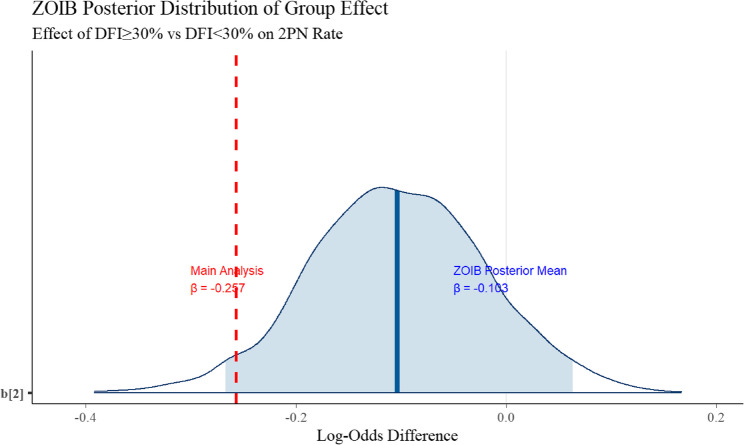
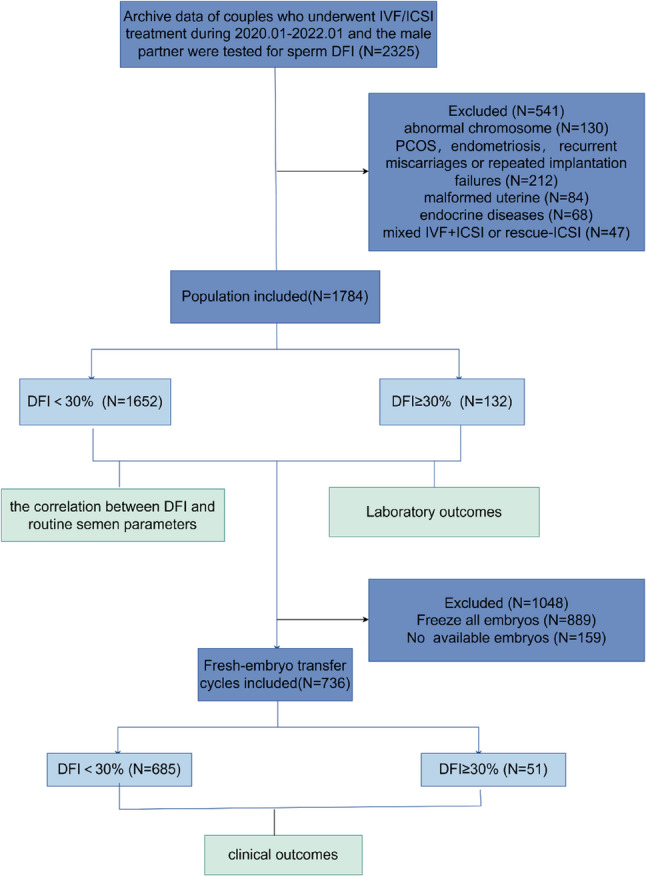
BACKGROUND: Sperm DNA fragmentation index (DFI) has emerged as a potential marker of male fertility, but its clinical value in assisted reproductive technology (ART) remains debated. This study aimed to investigate the association between sperm DFI and conventional semen parameters, embryological outcomes, and pregnancy outcomes in ART, using a large real-world dataset. RESULTS: A total of 1,784 ART cycles performed at a single center between January 2020 and January 2022 were analyzed. Patients were categorized into normal (< 30%) and high (≥ 30%) DFI groups. Compared with the normal DFI group, men with high DFI had significantly lower sperm concentration (B = − 31.15, 95% CI: − 44.75 to − 17.55), progressive motility (B = − 12.21, 95% CI: − 14.87 to − 9.56), and total motility (B = − 18.00, 95% CI: − 21.38 to − 14.62; all P < 0.001). After adjusting for female and male factors, high DFI was associated with a significantly lower 2PN fertilization rate (β = − 0.257, 95% CI: − 0.491 to − 0.024, P = 0.031), while no significant differences were observed in top-quality embryo rate, transferable embryo rate, or pregnancy outcomes. Sensitivity analyses using alternative statistical methods (ZOIB and PSM) and varying DFI thresholds (25% and 35%) yielded results completely consistent with the main analyses. CONCLUSIONS: High sperm DFI is independently associated with poorer semen quality and a reduced 2PN fertilization rate but was not significantly associated with embryo quality or pregnancy outcomes in this study. These findings support the clinical relevance of DFI in evaluating male fertility potential while suggesting its limited predictive value for ART success when female and cycle-related factors are considered.
期刊介绍:
Basic and Clinical Andrology is an open access journal in the domain of andrology covering all aspects of male reproductive and sexual health in both human and animal models. The journal aims to bring to light the various clinical advancements and research developments in andrology from the international community.


 求助内容:
 应助结果提醒方式:


 京公网安备 11010802042870号


