Charfudin Sacoor, Arsénio Nhacolo, Jonathan A Muir, Edgar Jamisse, Beth Tippet Barr, Ariel Nhacolo, Chodziwadziwa Kabudula, Jean Juste Harrisson Bashingwa, Orvalho Augusto, Alberto Chaúque, Teodimiro Matsena, Arlindo Malheia, Aura Hunguana, Francisco Saúte, Solveig A Argeseanu, Stephen Tollman, Esperança Sevene, Quique Bassat, Inácio Mandomando
{"title":"莫桑比克南部曼希帕拉县COVID-19大流行之前和期间的死亡率。","authors":"Charfudin Sacoor, Arsénio Nhacolo, Jonathan A Muir, Edgar Jamisse, Beth Tippet Barr, Ariel Nhacolo, Chodziwadziwa Kabudula, Jean Juste Harrisson Bashingwa, Orvalho Augusto, Alberto Chaúque, Teodimiro Matsena, Arlindo Malheia, Aura Hunguana, Francisco Saúte, Solveig A Argeseanu, Stephen Tollman, Esperança Sevene, Quique Bassat, Inácio Mandomando","doi":"10.1186/s12963-025-00449-y","DOIUrl":null,"url":null,"abstract":"<p><strong>Introduction: </strong>Mozambique reported its first COVID-19 case in March 2020, and the pandemic exposed significant vulnerabilities in its healthcare system. Measuring mortality attributable to COVID-19 in Mozambique, has been challenging due to limitations in health information systems and incomplete death documentation outside health facilities. By mid-2023, a total of 2,234 deaths from 233,334 cases were confirmed but the figures can be much higher. METHODS : We conducted a trend analysis of mortality using data from the Manhiça Health and Demographic Surveillance System from the periods before (2016-2019) and during the pandemic (2020-2021) to measure sex differences in mortality patterns (life expectancy and mortality rates). Excess mortality ratios during the pandemic were assessed using time series analysis with COVID-19 a generalized additive model.</p><p><strong>Results: </strong>From 2019 to 2020, the life expectancy in males increased 5.1%, from 61.3 (95% CI: 60.3-62.2) years to 64.4 (95% CI: 63.5-65.3) years, and 6.1%, from 69.3 (95% CI: 68.5-70.2) years to 73.5 (95% CI: 72.6-74.3) years in females. However, from 2020 to 2021, a decline was observed in both males and females. In males, it dropped 3.1% while in females the life expectancy dropped 3.5%. All-age male mortality rates decreased from 15.3 to 11.2 (26.8%) deaths per 1000 person-years from 2016 to 2020, then rose to approximately 13.4 in 2021. All-age female mortality experienced a similar trend, with an increase of 9.0% from 6.7 deaths per 1000 person-years in 2020 to 7.3 in 2021. During pandemic, the male elderly population (65+ years old) experienced the highest excess mortality in July 2021, reaching a ratio of 1.57 (CI: 1.37-1.84), whereas for females, the highest excess mortality among females was observed in the age group of 05-14 years, with a ratio of 1.86 (CI: 1.44 - 2.17) in January 2021 between the observed and expected deaths.</p><p><strong>Conclusion: </strong>Mortality in Manhiça district declined from 2016 until 2019 but increased during COVID-19 pandemic with excess deaths in 2021, particularly among those aged 65 and older. This study highlights the value of robust health and demographic information systems in resource-limited settings for assessing public health impacts.</p>","PeriodicalId":51476,"journal":{"name":"Population Health Metrics","volume":"23 Suppl 2","pages":""},"PeriodicalIF":2.5000,"publicationDate":"2026-03-18","publicationTypes":"Journal Article","fieldsOfStudy":null,"isOpenAccess":false,"openAccessPdf":"https://www.ncbi.nlm.nih.gov/pmc/articles/PMC13001221/pdf/","citationCount":"0","resultStr":"{\"title\":\"Mortality before and during the COVID-19 pandemic in Manhiça district, Southern Mozambique.\",\"authors\":\"Charfudin Sacoor, Arsénio Nhacolo, Jonathan A Muir, Edgar Jamisse, Beth Tippet Barr, Ariel Nhacolo, Chodziwadziwa Kabudula, Jean Juste Harrisson Bashingwa, Orvalho Augusto, Alberto Chaúque, Teodimiro Matsena, Arlindo Malheia, Aura Hunguana, Francisco Saúte, Solveig A Argeseanu, Stephen Tollman, Esperança Sevene, Quique Bassat, Inácio Mandomando\",\"doi\":\"10.1186/s12963-025-00449-y\",\"DOIUrl\":null,\"url\":null,\"abstract\":\"<p><strong>Introduction: </strong>Mozambique reported its first COVID-19 case in March 2020, and the pandemic exposed significant vulnerabilities in its healthcare system. Measuring mortality attributable to COVID-19 in Mozambique, has been challenging due to limitations in health information systems and incomplete death documentation outside health facilities. By mid-2023, a total of 2,234 deaths from 233,334 cases were confirmed but the figures can be much higher. METHODS : We conducted a trend analysis of mortality using data from the Manhiça Health and Demographic Surveillance System from the periods before (2016-2019) and during the pandemic (2020-2021) to measure sex differences in mortality patterns (life expectancy and mortality rates). Excess mortality ratios during the pandemic were assessed using time series analysis with COVID-19 a generalized additive model.</p><p><strong>Results: </strong>From 2019 to 2020, the life expectancy in males increased 5.1%, from 61.3 (95% CI: 60.3-62.2) years to 64.4 (95% CI: 63.5-65.3) years, and 6.1%, from 69.3 (95% CI: 68.5-70.2) years to 73.5 (95% CI: 72.6-74.3) years in females. However, from 2020 to 2021, a decline was observed in both males and females. In males, it dropped 3.1% while in females the life expectancy dropped 3.5%. All-age male mortality rates decreased from 15.3 to 11.2 (26.8%) deaths per 1000 person-years from 2016 to 2020, then rose to approximately 13.4 in 2021. All-age female mortality experienced a similar trend, with an increase of 9.0% from 6.7 deaths per 1000 person-years in 2020 to 7.3 in 2021. During pandemic, the male elderly population (65+ years old) experienced the highest excess mortality in July 2021, reaching a ratio of 1.57 (CI: 1.37-1.84), whereas for females, the highest excess mortality among females was observed in the age group of 05-14 years, with a ratio of 1.86 (CI: 1.44 - 2.17) in January 2021 between the observed and expected deaths.</p><p><strong>Conclusion: </strong>Mortality in Manhiça district declined from 2016 until 2019 but increased during COVID-19 pandemic with excess deaths in 2021, particularly among those aged 65 and older. This study highlights the value of robust health and demographic information systems in resource-limited settings for assessing public health impacts.</p>\",\"PeriodicalId\":51476,\"journal\":{\"name\":\"Population Health Metrics\",\"volume\":\"23 Suppl 2\",\"pages\":\"\"},\"PeriodicalIF\":2.5000,\"publicationDate\":\"2026-03-18\",\"publicationTypes\":\"Journal Article\",\"fieldsOfStudy\":null,\"isOpenAccess\":false,\"openAccessPdf\":\"https://www.ncbi.nlm.nih.gov/pmc/articles/PMC13001221/pdf/\",\"citationCount\":\"0\",\"resultStr\":null,\"platform\":\"Semanticscholar\",\"paperid\":null,\"PeriodicalName\":\"Population Health Metrics\",\"FirstCategoryId\":\"3\",\"ListUrlMain\":\"https://doi.org/10.1186/s12963-025-00449-y\",\"RegionNum\":2,\"RegionCategory\":\"医学\",\"ArticlePicture\":[],\"TitleCN\":null,\"AbstractTextCN\":null,\"PMCID\":null,\"EPubDate\":\"\",\"PubModel\":\"\",\"JCR\":\"Q2\",\"JCRName\":\"PUBLIC, ENVIRONMENTAL & OCCUPATIONAL HEALTH\",\"Score\":null,\"Total\":0}","platform":"Semanticscholar","paperid":null,"PeriodicalName":"Population Health Metrics","FirstCategoryId":"3","ListUrlMain":"https://doi.org/10.1186/s12963-025-00449-y","RegionNum":2,"RegionCategory":"医学","ArticlePicture":[],"TitleCN":null,"AbstractTextCN":null,"PMCID":null,"EPubDate":"","PubModel":"","JCR":"Q2","JCRName":"PUBLIC, ENVIRONMENTAL & OCCUPATIONAL HEALTH","Score":null,"Total":0}
Mortality before and during the COVID-19 pandemic in Manhiça district, Southern Mozambique.
Introduction: Mozambique reported its first COVID-19 case in March 2020, and the pandemic exposed significant vulnerabilities in its healthcare system. Measuring mortality attributable to COVID-19 in Mozambique, has been challenging due to limitations in health information systems and incomplete death documentation outside health facilities. By mid-2023, a total of 2,234 deaths from 233,334 cases were confirmed but the figures can be much higher. METHODS : We conducted a trend analysis of mortality using data from the Manhiça Health and Demographic Surveillance System from the periods before (2016-2019) and during the pandemic (2020-2021) to measure sex differences in mortality patterns (life expectancy and mortality rates). Excess mortality ratios during the pandemic were assessed using time series analysis with COVID-19 a generalized additive model.
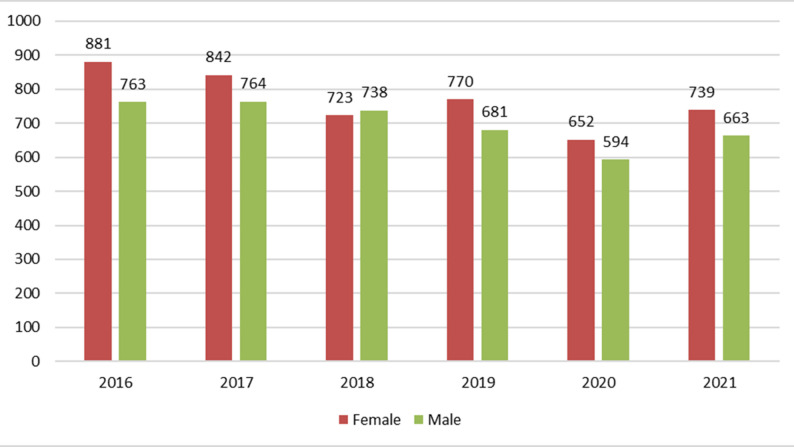
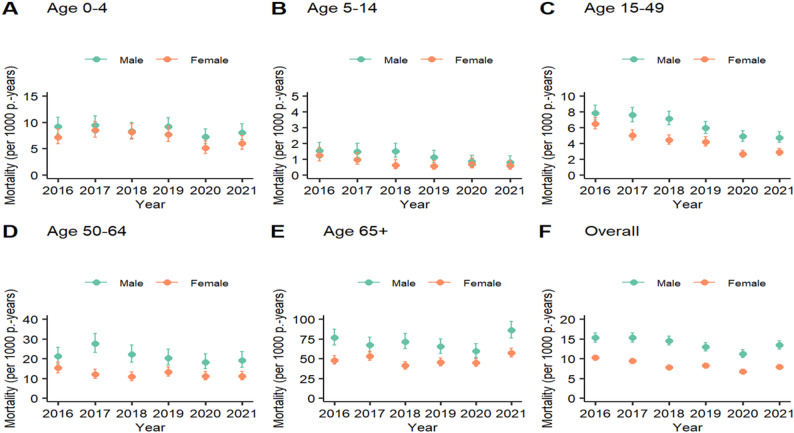
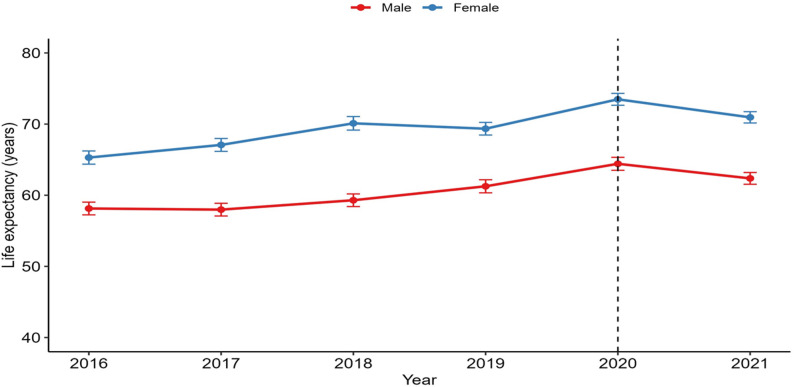
Results: From 2019 to 2020, the life expectancy in males increased 5.1%, from 61.3 (95% CI: 60.3-62.2) years to 64.4 (95% CI: 63.5-65.3) years, and 6.1%, from 69.3 (95% CI: 68.5-70.2) years to 73.5 (95% CI: 72.6-74.3) years in females. However, from 2020 to 2021, a decline was observed in both males and females. In males, it dropped 3.1% while in females the life expectancy dropped 3.5%. All-age male mortality rates decreased from 15.3 to 11.2 (26.8%) deaths per 1000 person-years from 2016 to 2020, then rose to approximately 13.4 in 2021. All-age female mortality experienced a similar trend, with an increase of 9.0% from 6.7 deaths per 1000 person-years in 2020 to 7.3 in 2021. During pandemic, the male elderly population (65+ years old) experienced the highest excess mortality in July 2021, reaching a ratio of 1.57 (CI: 1.37-1.84), whereas for females, the highest excess mortality among females was observed in the age group of 05-14 years, with a ratio of 1.86 (CI: 1.44 - 2.17) in January 2021 between the observed and expected deaths.
Conclusion: Mortality in Manhiça district declined from 2016 until 2019 but increased during COVID-19 pandemic with excess deaths in 2021, particularly among those aged 65 and older. This study highlights the value of robust health and demographic information systems in resource-limited settings for assessing public health impacts.
期刊介绍:
Population Health Metrics aims to advance the science of population health assessment, and welcomes papers relating to concepts, methods, ethics, applications, and summary measures of population health. The journal provides a unique platform for population health researchers to share their findings with the global community. We seek research that addresses the communication of population health measures and policy implications to stakeholders; this includes papers related to burden estimation and risk assessment, and research addressing population health across the full range of development. Population Health Metrics covers a broad range of topics encompassing health state measurement and valuation, summary measures of population health, descriptive epidemiology at the population level, burden of disease and injury analysis, disease and risk factor modeling for populations, and comparative assessment of risks to health at the population level. The journal is also interested in how to use and communicate indicators of population health to reduce disease burden, and the approaches for translating from indicators of population health to health-advancing actions. As a cross-cutting topic of importance, we are particularly interested in inequalities in population health and their measurement.

 求助内容:
求助内容: 应助结果提醒方式:

 京公网安备 11010802042870号


