Ginevra Floridi, Maria Gargiulo, José Manuel Aburto
{"title":"墨西哥凶杀案激增后生育趋势和妇女生育欲望的变化。","authors":"Ginevra Floridi, Maria Gargiulo, José Manuel Aburto","doi":"10.1007/s11113-026-09999-x","DOIUrl":null,"url":null,"abstract":"<p><p>Since 2006, Mexico has experienced a surge in homicides due to national policies and international influences on drug trafficking activities. Although the effects of the so-called \"Drug War\" have been extensively studied in demography and social science research, whether and how the increase in homicides has affected fertility is poorly understood. This study provides a comprehensive account of the association between homicides and changes in fertility rates and desires in Mexico. Using population-level administrative data on births, deaths, and homicides for 2443 municipalities, we apply fixed-effects models and a staggered difference-in-differences estimator to study the effect of homicidal violence on total fertility rate (TFR), crude birth rate (CBR), and birth counts across Mexican municipalities between 2000 and 2020. Then, using random-intercept and fixed-effects models, we analyze the association between changes in homicide rates and fertility desires for 6341 women from the Mexican Family Life Survey (2002-2012). Our findings show very small negative associations, and no overall effect of homicides on fertility for the period considered. Similarly, we find no association between municipality-level homicide rates and fertility desires, consistently by education, age, and parity. Our results show remarkable continuity in the Mexican fertility decline despite the rapid escalation of violence.</p><p><strong>Supplementary information: </strong>The online version contains supplementary material available at 10.1007/s11113-026-09999-x.</p>","PeriodicalId":47633,"journal":{"name":"Population Research and Policy Review","volume":"45 2","pages":"17"},"PeriodicalIF":1.5000,"publicationDate":"2026-01-01","publicationTypes":"Journal Article","fieldsOfStudy":null,"isOpenAccess":false,"openAccessPdf":"https://www.ncbi.nlm.nih.gov/pmc/articles/PMC12992446/pdf/","citationCount":"0","resultStr":"{\"title\":\"Changes in Fertility Trends and Women's Fertility Desires in the Wake of the Homicide Surge in Mexico.\",\"authors\":\"Ginevra Floridi, Maria Gargiulo, José Manuel Aburto\",\"doi\":\"10.1007/s11113-026-09999-x\",\"DOIUrl\":null,\"url\":null,\"abstract\":\"<p><p>Since 2006, Mexico has experienced a surge in homicides due to national policies and international influences on drug trafficking activities. Although the effects of the so-called \\\"Drug War\\\" have been extensively studied in demography and social science research, whether and how the increase in homicides has affected fertility is poorly understood. This study provides a comprehensive account of the association between homicides and changes in fertility rates and desires in Mexico. Using population-level administrative data on births, deaths, and homicides for 2443 municipalities, we apply fixed-effects models and a staggered difference-in-differences estimator to study the effect of homicidal violence on total fertility rate (TFR), crude birth rate (CBR), and birth counts across Mexican municipalities between 2000 and 2020. Then, using random-intercept and fixed-effects models, we analyze the association between changes in homicide rates and fertility desires for 6341 women from the Mexican Family Life Survey (2002-2012). Our findings show very small negative associations, and no overall effect of homicides on fertility for the period considered. Similarly, we find no association between municipality-level homicide rates and fertility desires, consistently by education, age, and parity. Our results show remarkable continuity in the Mexican fertility decline despite the rapid escalation of violence.</p><p><strong>Supplementary information: </strong>The online version contains supplementary material available at 10.1007/s11113-026-09999-x.</p>\",\"PeriodicalId\":47633,\"journal\":{\"name\":\"Population Research and Policy Review\",\"volume\":\"45 2\",\"pages\":\"17\"},\"PeriodicalIF\":1.5000,\"publicationDate\":\"2026-01-01\",\"publicationTypes\":\"Journal Article\",\"fieldsOfStudy\":null,\"isOpenAccess\":false,\"openAccessPdf\":\"https://www.ncbi.nlm.nih.gov/pmc/articles/PMC12992446/pdf/\",\"citationCount\":\"0\",\"resultStr\":null,\"platform\":\"Semanticscholar\",\"paperid\":null,\"PeriodicalName\":\"Population Research and Policy Review\",\"FirstCategoryId\":\"90\",\"ListUrlMain\":\"https://doi.org/10.1007/s11113-026-09999-x\",\"RegionNum\":3,\"RegionCategory\":\"社会学\",\"ArticlePicture\":[],\"TitleCN\":null,\"AbstractTextCN\":null,\"PMCID\":null,\"EPubDate\":\"2026/3/16 0:00:00\",\"PubModel\":\"Epub\",\"JCR\":\"Q1\",\"JCRName\":\"DEMOGRAPHY\",\"Score\":null,\"Total\":0}","platform":"Semanticscholar","paperid":null,"PeriodicalName":"Population Research and Policy Review","FirstCategoryId":"90","ListUrlMain":"https://doi.org/10.1007/s11113-026-09999-x","RegionNum":3,"RegionCategory":"社会学","ArticlePicture":[],"TitleCN":null,"AbstractTextCN":null,"PMCID":null,"EPubDate":"2026/3/16 0:00:00","PubModel":"Epub","JCR":"Q1","JCRName":"DEMOGRAPHY","Score":null,"Total":0}
Changes in Fertility Trends and Women's Fertility Desires in the Wake of the Homicide Surge in Mexico.
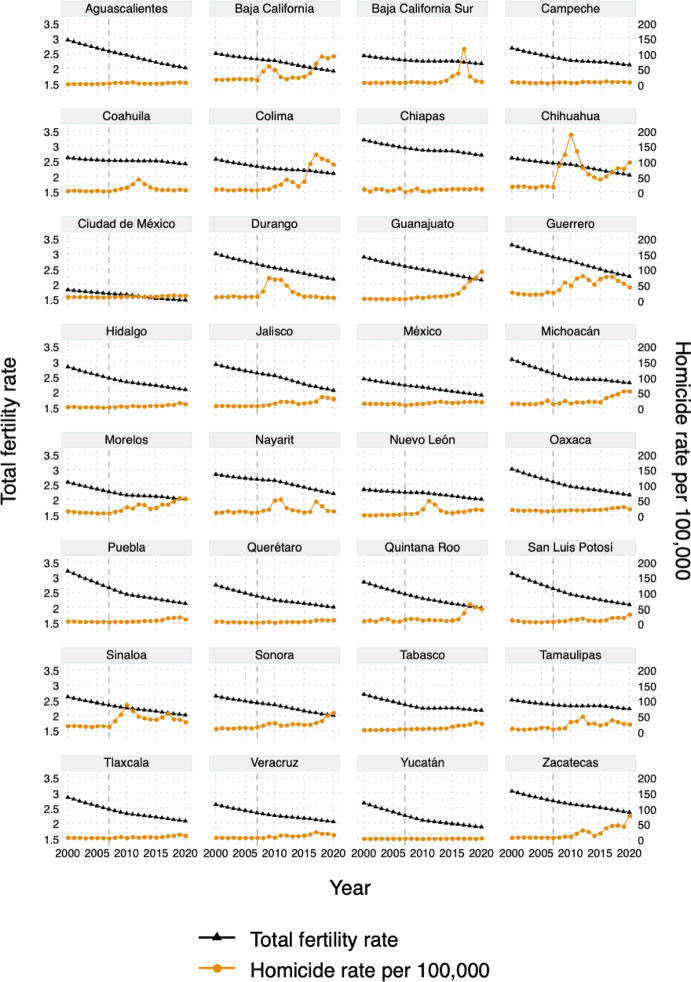
Since 2006, Mexico has experienced a surge in homicides due to national policies and international influences on drug trafficking activities. Although the effects of the so-called "Drug War" have been extensively studied in demography and social science research, whether and how the increase in homicides has affected fertility is poorly understood. This study provides a comprehensive account of the association between homicides and changes in fertility rates and desires in Mexico. Using population-level administrative data on births, deaths, and homicides for 2443 municipalities, we apply fixed-effects models and a staggered difference-in-differences estimator to study the effect of homicidal violence on total fertility rate (TFR), crude birth rate (CBR), and birth counts across Mexican municipalities between 2000 and 2020. Then, using random-intercept and fixed-effects models, we analyze the association between changes in homicide rates and fertility desires for 6341 women from the Mexican Family Life Survey (2002-2012). Our findings show very small negative associations, and no overall effect of homicides on fertility for the period considered. Similarly, we find no association between municipality-level homicide rates and fertility desires, consistently by education, age, and parity. Our results show remarkable continuity in the Mexican fertility decline despite the rapid escalation of violence.
Supplementary information: The online version contains supplementary material available at 10.1007/s11113-026-09999-x.
期刊介绍:
Now accepted in JSTOR! Population Research and Policy Review has a twofold goal: it provides a convenient source for government officials and scholars in which they can learn about the policy implications of recent research relevant to the causes and consequences of changing population size and composition; and it provides a broad, interdisciplinary coverage of population research.
Population Research and Policy Review seeks to publish quality material of interest to professionals working in the fields of population, and those fields which intersect and overlap with population studies. The publication includes demographic, economic, social, political and health research papers and related contributions which are based on either the direct scientific evaluation of particular policies or programs, or general contributions intended to advance knowledge that informs policy and program development.



 求助内容:
求助内容: 应助结果提醒方式:

 京公网安备 11010802042870号


