Anastasia Caluja, Sebastian G Vetter-Lang, Lisamarie Lehner, Katharina Mahr
{"title":"雌性喙色的季节动态:圈养家雀(Passer domesticus)的观察。","authors":"Anastasia Caluja, Sebastian G Vetter-Lang, Lisamarie Lehner, Katharina Mahr","doi":"10.1007/s10336-025-02326-9","DOIUrl":null,"url":null,"abstract":"<p><p>Bill colouration is a highly variable trait with the potential to rapidly change over time. We observed strong interindividual and seasonal variation in the bill colour of captive female House Sparrows (<i>Passer domesticus</i>) and describe two colour traits by using a simple categorization: i) the presence or absence of yellow markings on the upper mandible and ii) whether the female bill is light horn-coloured or dark brown. In spring, females display either light horn-coloured or dark, almost black, bills and half of the birds have yellow markings on the upper mandible. However, this changes markedly when the birds start breeding. In our observation, after the first brood, the proportion of individuals with yellow markings was significantly lower and in none of the females that raised offspring this trait was present. However, during the non-reproductive period in autumn, the yellow pigmentation of the upper mandible became visible in all individuals. Furthermore, the proportion of females with light bills increased from pre-breeding to the non-reproductive stage. The distinct differences in bill colouration together with the seasonal changes may indicate a potential signalling function and might serve in sexual selection.</p>","PeriodicalId":55999,"journal":{"name":"Journal of Ornithology","volume":"167 2","pages":"593-597"},"PeriodicalIF":1.4000,"publicationDate":"2026-01-01","publicationTypes":"Journal Article","fieldsOfStudy":null,"isOpenAccess":false,"openAccessPdf":"https://www.ncbi.nlm.nih.gov/pmc/articles/PMC12989020/pdf/","citationCount":"0","resultStr":"{\"title\":\"Seasonal dynamics of female bill colouration: an observation in captive House Sparrows (<i>Passer domesticus</i>).\",\"authors\":\"Anastasia Caluja, Sebastian G Vetter-Lang, Lisamarie Lehner, Katharina Mahr\",\"doi\":\"10.1007/s10336-025-02326-9\",\"DOIUrl\":null,\"url\":null,\"abstract\":\"<p><p>Bill colouration is a highly variable trait with the potential to rapidly change over time. We observed strong interindividual and seasonal variation in the bill colour of captive female House Sparrows (<i>Passer domesticus</i>) and describe two colour traits by using a simple categorization: i) the presence or absence of yellow markings on the upper mandible and ii) whether the female bill is light horn-coloured or dark brown. In spring, females display either light horn-coloured or dark, almost black, bills and half of the birds have yellow markings on the upper mandible. However, this changes markedly when the birds start breeding. In our observation, after the first brood, the proportion of individuals with yellow markings was significantly lower and in none of the females that raised offspring this trait was present. However, during the non-reproductive period in autumn, the yellow pigmentation of the upper mandible became visible in all individuals. Furthermore, the proportion of females with light bills increased from pre-breeding to the non-reproductive stage. The distinct differences in bill colouration together with the seasonal changes may indicate a potential signalling function and might serve in sexual selection.</p>\",\"PeriodicalId\":55999,\"journal\":{\"name\":\"Journal of Ornithology\",\"volume\":\"167 2\",\"pages\":\"593-597\"},\"PeriodicalIF\":1.4000,\"publicationDate\":\"2026-01-01\",\"publicationTypes\":\"Journal Article\",\"fieldsOfStudy\":null,\"isOpenAccess\":false,\"openAccessPdf\":\"https://www.ncbi.nlm.nih.gov/pmc/articles/PMC12989020/pdf/\",\"citationCount\":\"0\",\"resultStr\":null,\"platform\":\"Semanticscholar\",\"paperid\":null,\"PeriodicalName\":\"Journal of Ornithology\",\"FirstCategoryId\":\"99\",\"ListUrlMain\":\"https://doi.org/10.1007/s10336-025-02326-9\",\"RegionNum\":4,\"RegionCategory\":\"生物学\",\"ArticlePicture\":[],\"TitleCN\":null,\"AbstractTextCN\":null,\"PMCID\":null,\"EPubDate\":\"2025/9/26 0:00:00\",\"PubModel\":\"Epub\",\"JCR\":\"Q2\",\"JCRName\":\"ORNITHOLOGY\",\"Score\":null,\"Total\":0}","platform":"Semanticscholar","paperid":null,"PeriodicalName":"Journal of Ornithology","FirstCategoryId":"99","ListUrlMain":"https://doi.org/10.1007/s10336-025-02326-9","RegionNum":4,"RegionCategory":"生物学","ArticlePicture":[],"TitleCN":null,"AbstractTextCN":null,"PMCID":null,"EPubDate":"2025/9/26 0:00:00","PubModel":"Epub","JCR":"Q2","JCRName":"ORNITHOLOGY","Score":null,"Total":0}
Seasonal dynamics of female bill colouration: an observation in captive House Sparrows (Passer domesticus).
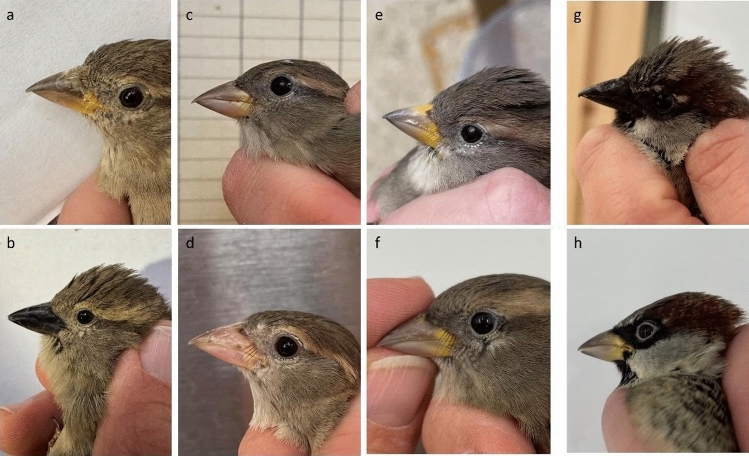
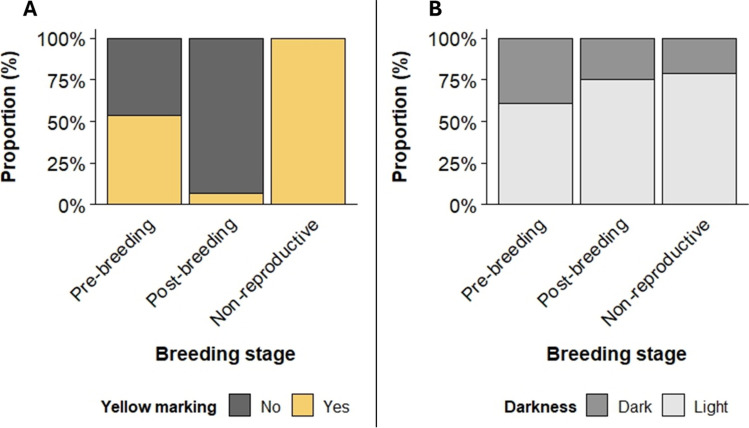
Bill colouration is a highly variable trait with the potential to rapidly change over time. We observed strong interindividual and seasonal variation in the bill colour of captive female House Sparrows (Passer domesticus) and describe two colour traits by using a simple categorization: i) the presence or absence of yellow markings on the upper mandible and ii) whether the female bill is light horn-coloured or dark brown. In spring, females display either light horn-coloured or dark, almost black, bills and half of the birds have yellow markings on the upper mandible. However, this changes markedly when the birds start breeding. In our observation, after the first brood, the proportion of individuals with yellow markings was significantly lower and in none of the females that raised offspring this trait was present. However, during the non-reproductive period in autumn, the yellow pigmentation of the upper mandible became visible in all individuals. Furthermore, the proportion of females with light bills increased from pre-breeding to the non-reproductive stage. The distinct differences in bill colouration together with the seasonal changes may indicate a potential signalling function and might serve in sexual selection.
期刊介绍:
The Journal of Ornithology (formerly Journal für Ornithologie) is the official journal of the German Ornithologists'' Society (http://www.do-g.de/ ) and has been the Society´s periodical since 1853, making it the oldest still existing ornithological journal worldwide.

 求助内容:
求助内容: 应助结果提醒方式:

 京公网安备 11010802042870号


