{"title":"前庭功能障碍是中耳神经内分泌肿瘤的新表现。","authors":"Amor Niksic, Rance Jt Fujiwara, Brandon Isaacson","doi":"10.1055/a-2823-9080","DOIUrl":null,"url":null,"abstract":"<p><strong>Objectives: </strong>This study aimed to contribute to the sparse literature on middle ear neuroendocrine tumors (MeNETs) by detailing a unique case of MeNET-associated cochlear-vestibular dysfunction and outlining diagnostic, therapeutic, and follow-up considerations.</p><p><strong>Design: </strong>A single-patient case report.</p><p><strong>Setting: </strong>A tertiary academic referral center.</p><p><strong>Participant: </strong>A 40-year-old male presenting with profound left sensorineural hearing loss (SNHL), left vestibular hypofunction, and a middle ear mass.</p><p><strong>Main outcome measures: </strong>Histopathologic confirmation of MeNET, radiological identification of residual disease, postoperative symptom progression, and rehabilitation outcome.</p><p><strong>Results: </strong>Clinical evaluation, imaging, and histopathology confirmed the diagnosis of MeNET. Immunohistochemistry revealed positivity for chromogranin, synaptophysin, insulinoma-associated protein 1 (INSM1), cytokeratin mouse monoclonal antibody (CAM 5.2). An endoscopic middle ear exploration with tympanoplasty and canalplasty was performed, followed by vestibular rehabilitation. Surveillance with DOTA-Tyr3-octreotate PET/MRI identified residual disease, leading to a revision mastoidectomy. The patient experienced persistent imbalance postoperatively, requiring vestibular rehabilitation, and profound SNHL, for which a hearing aid evaluation was recommended.</p><p><strong>Conclusions: </strong>This case represents the first report of MeNET-associated cochlear-vestibular dysfunction. The significance of this report lies in the unique clinical presentation, the role of advanced imaging for surveillance, and the need for revision mastoidectomy following an initial endoscopic approach. This report discusses the challenges in achieving complete tumor clearance and emphasizes the need for continued case documentation and research into adjunctive therapies.</p>","PeriodicalId":44256,"journal":{"name":"Journal of Neurological Surgery Reports","volume":"87 1","pages":"e41-e45"},"PeriodicalIF":0.7000,"publicationDate":"2026-03-13","publicationTypes":"Journal Article","fieldsOfStudy":null,"isOpenAccess":false,"openAccessPdf":"https://www.ncbi.nlm.nih.gov/pmc/articles/PMC12987700/pdf/","citationCount":"0","resultStr":"{\"title\":\"Vestibular Dysfunction as a Novel Presentation of Middle Ear Neuroendocrine Tumor.\",\"authors\":\"Amor Niksic, Rance Jt Fujiwara, Brandon Isaacson\",\"doi\":\"10.1055/a-2823-9080\",\"DOIUrl\":null,\"url\":null,\"abstract\":\"<p><strong>Objectives: </strong>This study aimed to contribute to the sparse literature on middle ear neuroendocrine tumors (MeNETs) by detailing a unique case of MeNET-associated cochlear-vestibular dysfunction and outlining diagnostic, therapeutic, and follow-up considerations.</p><p><strong>Design: </strong>A single-patient case report.</p><p><strong>Setting: </strong>A tertiary academic referral center.</p><p><strong>Participant: </strong>A 40-year-old male presenting with profound left sensorineural hearing loss (SNHL), left vestibular hypofunction, and a middle ear mass.</p><p><strong>Main outcome measures: </strong>Histopathologic confirmation of MeNET, radiological identification of residual disease, postoperative symptom progression, and rehabilitation outcome.</p><p><strong>Results: </strong>Clinical evaluation, imaging, and histopathology confirmed the diagnosis of MeNET. Immunohistochemistry revealed positivity for chromogranin, synaptophysin, insulinoma-associated protein 1 (INSM1), cytokeratin mouse monoclonal antibody (CAM 5.2). An endoscopic middle ear exploration with tympanoplasty and canalplasty was performed, followed by vestibular rehabilitation. Surveillance with DOTA-Tyr3-octreotate PET/MRI identified residual disease, leading to a revision mastoidectomy. The patient experienced persistent imbalance postoperatively, requiring vestibular rehabilitation, and profound SNHL, for which a hearing aid evaluation was recommended.</p><p><strong>Conclusions: </strong>This case represents the first report of MeNET-associated cochlear-vestibular dysfunction. The significance of this report lies in the unique clinical presentation, the role of advanced imaging for surveillance, and the need for revision mastoidectomy following an initial endoscopic approach. This report discusses the challenges in achieving complete tumor clearance and emphasizes the need for continued case documentation and research into adjunctive therapies.</p>\",\"PeriodicalId\":44256,\"journal\":{\"name\":\"Journal of Neurological Surgery Reports\",\"volume\":\"87 1\",\"pages\":\"e41-e45\"},\"PeriodicalIF\":0.7000,\"publicationDate\":\"2026-03-13\",\"publicationTypes\":\"Journal Article\",\"fieldsOfStudy\":null,\"isOpenAccess\":false,\"openAccessPdf\":\"https://www.ncbi.nlm.nih.gov/pmc/articles/PMC12987700/pdf/\",\"citationCount\":\"0\",\"resultStr\":null,\"platform\":\"Semanticscholar\",\"paperid\":null,\"PeriodicalName\":\"Journal of Neurological Surgery Reports\",\"FirstCategoryId\":\"1085\",\"ListUrlMain\":\"https://doi.org/10.1055/a-2823-9080\",\"RegionNum\":0,\"RegionCategory\":null,\"ArticlePicture\":[],\"TitleCN\":null,\"AbstractTextCN\":null,\"PMCID\":null,\"EPubDate\":\"2026/1/1 0:00:00\",\"PubModel\":\"eCollection\",\"JCR\":\"Q4\",\"JCRName\":\"CLINICAL NEUROLOGY\",\"Score\":null,\"Total\":0}","platform":"Semanticscholar","paperid":null,"PeriodicalName":"Journal of Neurological Surgery Reports","FirstCategoryId":"1085","ListUrlMain":"https://doi.org/10.1055/a-2823-9080","RegionNum":0,"RegionCategory":null,"ArticlePicture":[],"TitleCN":null,"AbstractTextCN":null,"PMCID":null,"EPubDate":"2026/1/1 0:00:00","PubModel":"eCollection","JCR":"Q4","JCRName":"CLINICAL NEUROLOGY","Score":null,"Total":0}
Vestibular Dysfunction as a Novel Presentation of Middle Ear Neuroendocrine Tumor.
Objectives: This study aimed to contribute to the sparse literature on middle ear neuroendocrine tumors (MeNETs) by detailing a unique case of MeNET-associated cochlear-vestibular dysfunction and outlining diagnostic, therapeutic, and follow-up considerations.
Design: A single-patient case report.
Setting: A tertiary academic referral center.
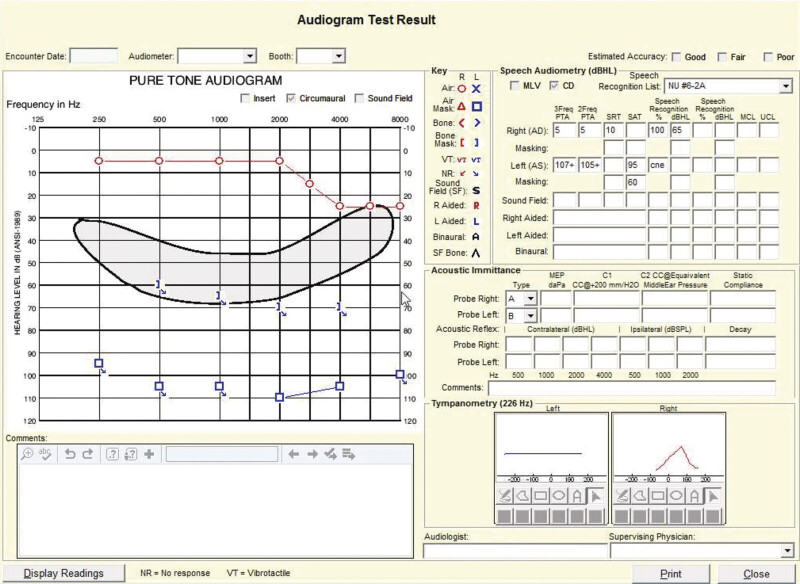
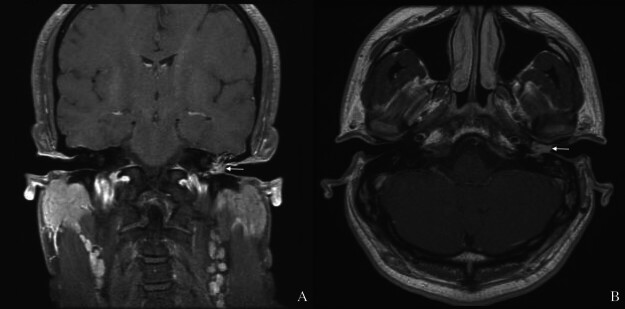
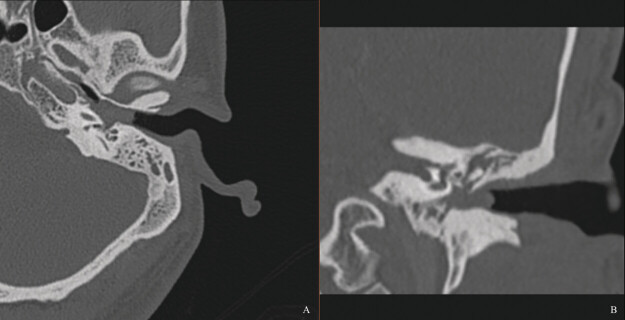
Participant: A 40-year-old male presenting with profound left sensorineural hearing loss (SNHL), left vestibular hypofunction, and a middle ear mass.
Main outcome measures: Histopathologic confirmation of MeNET, radiological identification of residual disease, postoperative symptom progression, and rehabilitation outcome.
Results: Clinical evaluation, imaging, and histopathology confirmed the diagnosis of MeNET. Immunohistochemistry revealed positivity for chromogranin, synaptophysin, insulinoma-associated protein 1 (INSM1), cytokeratin mouse monoclonal antibody (CAM 5.2). An endoscopic middle ear exploration with tympanoplasty and canalplasty was performed, followed by vestibular rehabilitation. Surveillance with DOTA-Tyr3-octreotate PET/MRI identified residual disease, leading to a revision mastoidectomy. The patient experienced persistent imbalance postoperatively, requiring vestibular rehabilitation, and profound SNHL, for which a hearing aid evaluation was recommended.
Conclusions: This case represents the first report of MeNET-associated cochlear-vestibular dysfunction. The significance of this report lies in the unique clinical presentation, the role of advanced imaging for surveillance, and the need for revision mastoidectomy following an initial endoscopic approach. This report discusses the challenges in achieving complete tumor clearance and emphasizes the need for continued case documentation and research into adjunctive therapies.


 求助内容:
求助内容: 应助结果提醒方式:

 京公网安备 11010802042870号


