Xiangdong Wang , Bolu Sun , Chenyu Qin , Dewei Huang , Xintian Li , Xiaodie Chen , Jingchao Zhang , Jinlong Liu , Rong Huang , Jiali Kang , Haiying He
{"title":"可解释的人工智能增强双模电化学传感器,用于在线监测乐果","authors":"Xiangdong Wang , Bolu Sun , Chenyu Qin , Dewei Huang , Xintian Li , Xiaodie Chen , Jingchao Zhang , Jinlong Liu , Rong Huang , Jiali Kang , Haiying He","doi":"10.1016/j.bios.2026.118595","DOIUrl":null,"url":null,"abstract":"<div><div>Electrochemical impedance spectroscopy (EIS) uses small alternating-current perturbations to probe charge-transfer and mass-transport processes across frequencies. The physical mechanisms underlying EIS responses are governed by the measurement frequency range: high-frequency responses reflect rapid charge-transfer kinetics, whereas low-frequency signals reveal diffusion-controlled mass-transport processes. Leveraging machine learning to directly interpret these multiscale electrochemical signatures, this study reports an intelligent dual-mode sensing platform that bypasses conventional circuit-fitting workflows and enables sensitive detection of the organophosphate dimethoate. A composite gold nanoparticle/graphene (AuNPs/GR) interface enhances conductivity and electroactive surface area accelerate electron transfer and reduces the charge-transfer resistance (Rct), creating an optimal microenvironment for acetylcholinesterase (AChE) biocatalysis. Molecular docking revealed potential Au–S interactions between AChE and gold nanoparticles and supported the binding of dimethoate at the enzyme's active site. A Tabular Prior Data Fitted Network-based machine-learning strategy optimized the analytical conditions. By integrating differential pulse voltammetry with EIS and developing a Bayesian-optimized Extreme Gradient Boosting for the latter, the model directly predicts Rct from raw EIS data and achieves full decision transparency through Shapley additive explanations. This strategy avoids labor-intensive circuit fitting and enables automated analysis. The dual-mode sensor delivers a wide linear range, good selectivity, reliable precision, and strong recovery in real samples, not only offering a new paradigm for next-generation Point-of-Care Testing, but also demonstrating the potential of integrating advanced machine-learning techniques into electrochemical analysis.</div></div>","PeriodicalId":259,"journal":{"name":"Biosensors and Bioelectronics","volume":"304 ","pages":"Article 118595"},"PeriodicalIF":10.5000,"publicationDate":"2026-07-15","publicationTypes":"Journal Article","fieldsOfStudy":null,"isOpenAccess":false,"openAccessPdf":"","citationCount":"0","resultStr":"{\"title\":\"Explainable artificial intelligence-enhanced dual-mode electrochemical sensor for online monitoring of dimethoate\",\"authors\":\"Xiangdong Wang , Bolu Sun , Chenyu Qin , Dewei Huang , Xintian Li , Xiaodie Chen , Jingchao Zhang , Jinlong Liu , Rong Huang , Jiali Kang , Haiying He\",\"doi\":\"10.1016/j.bios.2026.118595\",\"DOIUrl\":null,\"url\":null,\"abstract\":\"<div><div>Electrochemical impedance spectroscopy (EIS) uses small alternating-current perturbations to probe charge-transfer and mass-transport processes across frequencies. The physical mechanisms underlying EIS responses are governed by the measurement frequency range: high-frequency responses reflect rapid charge-transfer kinetics, whereas low-frequency signals reveal diffusion-controlled mass-transport processes. Leveraging machine learning to directly interpret these multiscale electrochemical signatures, this study reports an intelligent dual-mode sensing platform that bypasses conventional circuit-fitting workflows and enables sensitive detection of the organophosphate dimethoate. A composite gold nanoparticle/graphene (AuNPs/GR) interface enhances conductivity and electroactive surface area accelerate electron transfer and reduces the charge-transfer resistance (Rct), creating an optimal microenvironment for acetylcholinesterase (AChE) biocatalysis. Molecular docking revealed potential Au–S interactions between AChE and gold nanoparticles and supported the binding of dimethoate at the enzyme's active site. A Tabular Prior Data Fitted Network-based machine-learning strategy optimized the analytical conditions. By integrating differential pulse voltammetry with EIS and developing a Bayesian-optimized Extreme Gradient Boosting for the latter, the model directly predicts Rct from raw EIS data and achieves full decision transparency through Shapley additive explanations. This strategy avoids labor-intensive circuit fitting and enables automated analysis. The dual-mode sensor delivers a wide linear range, good selectivity, reliable precision, and strong recovery in real samples, not only offering a new paradigm for next-generation Point-of-Care Testing, but also demonstrating the potential of integrating advanced machine-learning techniques into electrochemical analysis.</div></div>\",\"PeriodicalId\":259,\"journal\":{\"name\":\"Biosensors and Bioelectronics\",\"volume\":\"304 \",\"pages\":\"Article 118595\"},\"PeriodicalIF\":10.5000,\"publicationDate\":\"2026-07-15\",\"publicationTypes\":\"Journal Article\",\"fieldsOfStudy\":null,\"isOpenAccess\":false,\"openAccessPdf\":\"\",\"citationCount\":\"0\",\"resultStr\":null,\"platform\":\"Semanticscholar\",\"paperid\":null,\"PeriodicalName\":\"Biosensors and Bioelectronics\",\"FirstCategoryId\":\"1\",\"ListUrlMain\":\"https://www.sciencedirect.com/science/article/pii/S0956566326002277\",\"RegionNum\":1,\"RegionCategory\":\"生物学\",\"ArticlePicture\":[],\"TitleCN\":null,\"AbstractTextCN\":null,\"PMCID\":null,\"EPubDate\":\"2026/3/10 0:00:00\",\"PubModel\":\"Epub\",\"JCR\":\"Q1\",\"JCRName\":\"BIOPHYSICS\",\"Score\":null,\"Total\":0}","platform":"Semanticscholar","paperid":null,"PeriodicalName":"Biosensors and Bioelectronics","FirstCategoryId":"1","ListUrlMain":"https://www.sciencedirect.com/science/article/pii/S0956566326002277","RegionNum":1,"RegionCategory":"生物学","ArticlePicture":[],"TitleCN":null,"AbstractTextCN":null,"PMCID":null,"EPubDate":"2026/3/10 0:00:00","PubModel":"Epub","JCR":"Q1","JCRName":"BIOPHYSICS","Score":null,"Total":0}
Explainable artificial intelligence-enhanced dual-mode electrochemical sensor for online monitoring of dimethoate
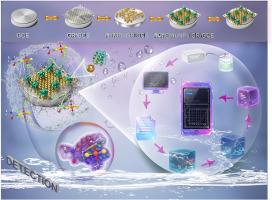
Electrochemical impedance spectroscopy (EIS) uses small alternating-current perturbations to probe charge-transfer and mass-transport processes across frequencies. The physical mechanisms underlying EIS responses are governed by the measurement frequency range: high-frequency responses reflect rapid charge-transfer kinetics, whereas low-frequency signals reveal diffusion-controlled mass-transport processes. Leveraging machine learning to directly interpret these multiscale electrochemical signatures, this study reports an intelligent dual-mode sensing platform that bypasses conventional circuit-fitting workflows and enables sensitive detection of the organophosphate dimethoate. A composite gold nanoparticle/graphene (AuNPs/GR) interface enhances conductivity and electroactive surface area accelerate electron transfer and reduces the charge-transfer resistance (Rct), creating an optimal microenvironment for acetylcholinesterase (AChE) biocatalysis. Molecular docking revealed potential Au–S interactions between AChE and gold nanoparticles and supported the binding of dimethoate at the enzyme's active site. A Tabular Prior Data Fitted Network-based machine-learning strategy optimized the analytical conditions. By integrating differential pulse voltammetry with EIS and developing a Bayesian-optimized Extreme Gradient Boosting for the latter, the model directly predicts Rct from raw EIS data and achieves full decision transparency through Shapley additive explanations. This strategy avoids labor-intensive circuit fitting and enables automated analysis. The dual-mode sensor delivers a wide linear range, good selectivity, reliable precision, and strong recovery in real samples, not only offering a new paradigm for next-generation Point-of-Care Testing, but also demonstrating the potential of integrating advanced machine-learning techniques into electrochemical analysis.
期刊介绍:
Biosensors & Bioelectronics, along with its open access companion journal Biosensors & Bioelectronics: X, is the leading international publication in the field of biosensors and bioelectronics. It covers research, design, development, and application of biosensors, which are analytical devices incorporating biological materials with physicochemical transducers. These devices, including sensors, DNA chips, electronic noses, and lab-on-a-chip, produce digital signals proportional to specific analytes. Examples include immunosensors and enzyme-based biosensors, applied in various fields such as medicine, environmental monitoring, and food industry. The journal also focuses on molecular and supramolecular structures for enhancing device performance.