{"title":"知识,态度和做法,关于感染预防在卫生保健专业人员和他们的预测因素在埃塞俄比亚三级医院:横断面研究。","authors":"Abebe Dukessa Dubiwak, Mulualem Tadesse, Belay Zewdie, Abebaw Tiruneh, Tadele Akeba Diriba, Selam Tesfaye, Amare Assefa, Gemeda Abebe, Lelisa Sena Dadi","doi":"10.1002/hsr2.71900","DOIUrl":null,"url":null,"abstract":"<p><strong>Background: </strong>Assessing healthcare professionals' existing knowledge, attitudes, and practices (KAP) regarding infection prevention and control (IPC) is essential for identifying gaps and informing strategies to mitigate healthcare-associated infections (HCAIs). Thus, the aim of this study was to assess the IPC KAP of healthcare professionals.</p><p><strong>Methods: </strong>An institution-based cross-sectional study was conducted from August to November 2023 among 328 healthcare professionals at Jimma University Medical Center (JUMC). Data were collected using a structured tool.</p><p><strong>Results: </strong>Overall, 72.3% [95% CI: 67.0%, 77.0%] of participants demonstrated good knowledge, 65.9% [95% CI: 61.0%, 71.0%] had a favorable attitude and 57.0% [95% CI: 52.0%, 62.0%] reported safe IPC practices. The predictors of good knowledge included having IPC training (AOR, 2.31; 95% CI, 1.23, 4.35), availability of IPC guidelines in the department (AOR, 5.87; 95% CI, 2.08, 16.44), and ≥ 10 years of service (AOR, 3.56; 95% CI, 1.28, 9.68). Similarly, having IPC training (AOR, 1.80; 95% CI, 1.08, 2.98), and availability of the IPC guidelines (AOR, 2.14; 95% CI, 1.34, 3.42) were the factors that associated with favorable attitude. Safe IPC practices were predicted by IPC training (AOR, 1.75; 95% CI, 1.06, 2.89), availability of IPC guidelines (AOR, 2.65; 95% CI, 1.62, 4.36), and availability of water and handwashing facilities (AOR, 1.99; 95% CI, 1.24, 3.21).</p><p><strong>Conclusions: </strong>Despite relatively high level of knowledge and attitude, a considerable proportion of health professions reported unsafe IPC practices. Strengthening IPC training, ensuring guideline availability, and improving infrastructure such as handwashing facilities are crucial to enhance compliance with IPC measures in tertiary care hospitals thereby mitigating HCAIs and AMR.</p>","PeriodicalId":36518,"journal":{"name":"Health Science Reports","volume":"9 3","pages":"e71900"},"PeriodicalIF":2.1000,"publicationDate":"2026-03-10","publicationTypes":"Journal Article","fieldsOfStudy":null,"isOpenAccess":false,"openAccessPdf":"https://www.ncbi.nlm.nih.gov/pmc/articles/PMC12975655/pdf/","citationCount":"0","resultStr":"{\"title\":\"Knowledge, Attitudes, and Practices Regarding Infection Prevention Among Healthcare Professionals and Their Predictors at a Tertiary Hospital in Ethiopia: A Cross-Sectional Study.\",\"authors\":\"Abebe Dukessa Dubiwak, Mulualem Tadesse, Belay Zewdie, Abebaw Tiruneh, Tadele Akeba Diriba, Selam Tesfaye, Amare Assefa, Gemeda Abebe, Lelisa Sena Dadi\",\"doi\":\"10.1002/hsr2.71900\",\"DOIUrl\":null,\"url\":null,\"abstract\":\"<p><strong>Background: </strong>Assessing healthcare professionals' existing knowledge, attitudes, and practices (KAP) regarding infection prevention and control (IPC) is essential for identifying gaps and informing strategies to mitigate healthcare-associated infections (HCAIs). Thus, the aim of this study was to assess the IPC KAP of healthcare professionals.</p><p><strong>Methods: </strong>An institution-based cross-sectional study was conducted from August to November 2023 among 328 healthcare professionals at Jimma University Medical Center (JUMC). Data were collected using a structured tool.</p><p><strong>Results: </strong>Overall, 72.3% [95% CI: 67.0%, 77.0%] of participants demonstrated good knowledge, 65.9% [95% CI: 61.0%, 71.0%] had a favorable attitude and 57.0% [95% CI: 52.0%, 62.0%] reported safe IPC practices. The predictors of good knowledge included having IPC training (AOR, 2.31; 95% CI, 1.23, 4.35), availability of IPC guidelines in the department (AOR, 5.87; 95% CI, 2.08, 16.44), and ≥ 10 years of service (AOR, 3.56; 95% CI, 1.28, 9.68). Similarly, having IPC training (AOR, 1.80; 95% CI, 1.08, 2.98), and availability of the IPC guidelines (AOR, 2.14; 95% CI, 1.34, 3.42) were the factors that associated with favorable attitude. Safe IPC practices were predicted by IPC training (AOR, 1.75; 95% CI, 1.06, 2.89), availability of IPC guidelines (AOR, 2.65; 95% CI, 1.62, 4.36), and availability of water and handwashing facilities (AOR, 1.99; 95% CI, 1.24, 3.21).</p><p><strong>Conclusions: </strong>Despite relatively high level of knowledge and attitude, a considerable proportion of health professions reported unsafe IPC practices. Strengthening IPC training, ensuring guideline availability, and improving infrastructure such as handwashing facilities are crucial to enhance compliance with IPC measures in tertiary care hospitals thereby mitigating HCAIs and AMR.</p>\",\"PeriodicalId\":36518,\"journal\":{\"name\":\"Health Science Reports\",\"volume\":\"9 3\",\"pages\":\"e71900\"},\"PeriodicalIF\":2.1000,\"publicationDate\":\"2026-03-10\",\"publicationTypes\":\"Journal Article\",\"fieldsOfStudy\":null,\"isOpenAccess\":false,\"openAccessPdf\":\"https://www.ncbi.nlm.nih.gov/pmc/articles/PMC12975655/pdf/\",\"citationCount\":\"0\",\"resultStr\":null,\"platform\":\"Semanticscholar\",\"paperid\":null,\"PeriodicalName\":\"Health Science Reports\",\"FirstCategoryId\":\"1085\",\"ListUrlMain\":\"https://doi.org/10.1002/hsr2.71900\",\"RegionNum\":0,\"RegionCategory\":null,\"ArticlePicture\":[],\"TitleCN\":null,\"AbstractTextCN\":null,\"PMCID\":null,\"EPubDate\":\"2026/3/1 0:00:00\",\"PubModel\":\"eCollection\",\"JCR\":\"Q2\",\"JCRName\":\"MEDICINE, GENERAL & INTERNAL\",\"Score\":null,\"Total\":0}","platform":"Semanticscholar","paperid":null,"PeriodicalName":"Health Science Reports","FirstCategoryId":"1085","ListUrlMain":"https://doi.org/10.1002/hsr2.71900","RegionNum":0,"RegionCategory":null,"ArticlePicture":[],"TitleCN":null,"AbstractTextCN":null,"PMCID":null,"EPubDate":"2026/3/1 0:00:00","PubModel":"eCollection","JCR":"Q2","JCRName":"MEDICINE, GENERAL & INTERNAL","Score":null,"Total":0}
Knowledge, Attitudes, and Practices Regarding Infection Prevention Among Healthcare Professionals and Their Predictors at a Tertiary Hospital in Ethiopia: A Cross-Sectional Study.
Background: Assessing healthcare professionals' existing knowledge, attitudes, and practices (KAP) regarding infection prevention and control (IPC) is essential for identifying gaps and informing strategies to mitigate healthcare-associated infections (HCAIs). Thus, the aim of this study was to assess the IPC KAP of healthcare professionals.
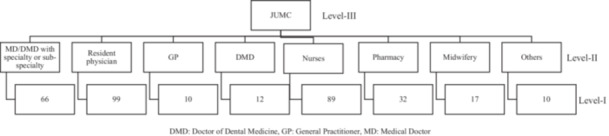
Methods: An institution-based cross-sectional study was conducted from August to November 2023 among 328 healthcare professionals at Jimma University Medical Center (JUMC). Data were collected using a structured tool.
Results: Overall, 72.3% [95% CI: 67.0%, 77.0%] of participants demonstrated good knowledge, 65.9% [95% CI: 61.0%, 71.0%] had a favorable attitude and 57.0% [95% CI: 52.0%, 62.0%] reported safe IPC practices. The predictors of good knowledge included having IPC training (AOR, 2.31; 95% CI, 1.23, 4.35), availability of IPC guidelines in the department (AOR, 5.87; 95% CI, 2.08, 16.44), and ≥ 10 years of service (AOR, 3.56; 95% CI, 1.28, 9.68). Similarly, having IPC training (AOR, 1.80; 95% CI, 1.08, 2.98), and availability of the IPC guidelines (AOR, 2.14; 95% CI, 1.34, 3.42) were the factors that associated with favorable attitude. Safe IPC practices were predicted by IPC training (AOR, 1.75; 95% CI, 1.06, 2.89), availability of IPC guidelines (AOR, 2.65; 95% CI, 1.62, 4.36), and availability of water and handwashing facilities (AOR, 1.99; 95% CI, 1.24, 3.21).
Conclusions: Despite relatively high level of knowledge and attitude, a considerable proportion of health professions reported unsafe IPC practices. Strengthening IPC training, ensuring guideline availability, and improving infrastructure such as handwashing facilities are crucial to enhance compliance with IPC measures in tertiary care hospitals thereby mitigating HCAIs and AMR.


 求助内容:
求助内容: 应助结果提醒方式:

 京公网安备 11010802042870号


