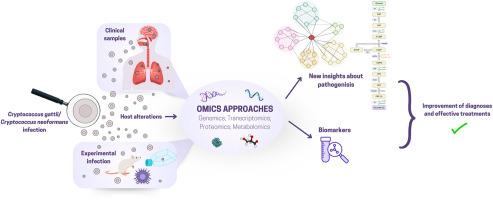
隐球菌病的组学方法:宿主改变的分子洞察

IF 4.6 2区 生物学 Q1 MYCOLOGY
Fungal Biology Reviews Pub Date : 2026-03-01 Epub Date: 2026-02-13 DOI:10.1016/j.fbr.2026.100473
Laura Rascovetzki Saciloto-de-Oliveira , Yohana Porto Calegari-Alves , Júlia de Fraga Sant’Ana , Camila Innocente-Alves , Anna Karoline Canelossi Valério , Marilene Henning Vainstein , Lucélia Santi , Walter Orlando Beys-da-Silva
{"title":"隐球菌病的组学方法:宿主改变的分子洞察","authors":"Laura Rascovetzki Saciloto-de-Oliveira ,&nbsp;Yohana Porto Calegari-Alves ,&nbsp;Júlia de Fraga Sant’Ana ,&nbsp;Camila Innocente-Alves ,&nbsp;Anna Karoline Canelossi Valério ,&nbsp;Marilene Henning Vainstein ,&nbsp;Lucélia Santi ,&nbsp;Walter Orlando Beys-da-Silva","doi":"10.1016/j.fbr.2026.100473","DOIUrl":null,"url":null,"abstract":"<div><div>Cryptococcosis is one of the most common invasive fungal diseases in immunocompromised subjects, and it is associated with a high mortality rate. This disease is caused by fungi of the <em>Cryptococcus</em> genus, particularly by members of the <em>Cryptococcus neoformans</em> and <em>Cryptococcus gattii</em> species complex. The infection typically originates in the lungs and can spread to the central nervous system and other organs, often resulting in cryptococcal meningitis, a serious and potentially fatal condition. Understanding molecular pathogenesis is essential for paving the way for more accurate diagnoses and effective treatments, ultimately improving clinical outcomes. In this regard, omics approaches are a valuable tool to help elucidate infection alterations. Indeed, several studies have employed these approaches, mostly focusing on fungal molecular changes, while fewer articles address host molecular changes. This review provides an overview of the molecular aspects of cryptococcosis, emphasizing the contributions of omics sciences to infection characterization toward host impact. Accordingly, this article offers new insights into this infectious disease, such as modulation of the host immune system and alterations in energy metabolism. Additionally, we highlight the versatility of omics science in addressing different infection characterization approaches using several experimental models, including cell cultures, from immune systems to epithelial cells and <em>in vivo</em> models.</div></div>","PeriodicalId":12563,"journal":{"name":"Fungal Biology Reviews","volume":"55 ","pages":"Article 100473"},"PeriodicalIF":4.6000,"publicationDate":"2026-03-01","publicationTypes":"Journal Article","fieldsOfStudy":null,"isOpenAccess":false,"openAccessPdf":"","citationCount":"0","resultStr":"{\"title\":\"Omics approaches in Cryptococcosis: Molecular insights into host alterations\",\"authors\":\"Laura Rascovetzki Saciloto-de-Oliveira ,&nbsp;Yohana Porto Calegari-Alves ,&nbsp;Júlia de Fraga Sant’Ana ,&nbsp;Camila Innocente-Alves ,&nbsp;Anna Karoline Canelossi Valério ,&nbsp;Marilene Henning Vainstein ,&nbsp;Lucélia Santi ,&nbsp;Walter Orlando Beys-da-Silva\",\"doi\":\"10.1016/j.fbr.2026.100473\",\"DOIUrl\":null,\"url\":null,\"abstract\":\"<div><div>Cryptococcosis is one of the most common invasive fungal diseases in immunocompromised subjects, and it is associated with a high mortality rate. This disease is caused by fungi of the <em>Cryptococcus</em> genus, particularly by members of the <em>Cryptococcus neoformans</em> and <em>Cryptococcus gattii</em> species complex. The infection typically originates in the lungs and can spread to the central nervous system and other organs, often resulting in cryptococcal meningitis, a serious and potentially fatal condition. Understanding molecular pathogenesis is essential for paving the way for more accurate diagnoses and effective treatments, ultimately improving clinical outcomes. In this regard, omics approaches are a valuable tool to help elucidate infection alterations. Indeed, several studies have employed these approaches, mostly focusing on fungal molecular changes, while fewer articles address host molecular changes. This review provides an overview of the molecular aspects of cryptococcosis, emphasizing the contributions of omics sciences to infection characterization toward host impact. Accordingly, this article offers new insights into this infectious disease, such as modulation of the host immune system and alterations in energy metabolism. Additionally, we highlight the versatility of omics science in addressing different infection characterization approaches using several experimental models, including cell cultures, from immune systems to epithelial cells and <em>in vivo</em> models.</div></div>\",\"PeriodicalId\":12563,\"journal\":{\"name\":\"Fungal Biology Reviews\",\"volume\":\"55 \",\"pages\":\"Article 100473\"},\"PeriodicalIF\":4.6000,\"publicationDate\":\"2026-03-01\",\"publicationTypes\":\"Journal Article\",\"fieldsOfStudy\":null,\"isOpenAccess\":false,\"openAccessPdf\":\"\",\"citationCount\":\"0\",\"resultStr\":null,\"platform\":\"Semanticscholar\",\"paperid\":null,\"PeriodicalName\":\"Fungal Biology Reviews\",\"FirstCategoryId\":\"99\",\"ListUrlMain\":\"https://www.sciencedirect.com/science/article/pii/S1749461326000035\",\"RegionNum\":2,\"RegionCategory\":\"生物学\",\"ArticlePicture\":[],\"TitleCN\":null,\"AbstractTextCN\":null,\"PMCID\":null,\"EPubDate\":\"2026/2/13 0:00:00\",\"PubModel\":\"Epub\",\"JCR\":\"Q1\",\"JCRName\":\"MYCOLOGY\",\"Score\":null,\"Total\":0}","platform":"Semanticscholar","paperid":null,"PeriodicalName":"Fungal Biology Reviews","FirstCategoryId":"99","ListUrlMain":"https://www.sciencedirect.com/science/article/pii/S1749461326000035","RegionNum":2,"RegionCategory":"生物学","ArticlePicture":[],"TitleCN":null,"AbstractTextCN":null,"PMCID":null,"EPubDate":"2026/2/13 0:00:00","PubModel":"Epub","JCR":"Q1","JCRName":"MYCOLOGY","Score":null,"Total":0}
引用次数: 0

摘要

隐球菌病是免疫功能低下人群中最常见的侵袭性真菌疾病之一,具有较高的死亡率。这种疾病是由隐球菌属真菌引起的,特别是由新型隐球菌和加蒂隐球菌复合体的成员引起的。这种感染通常起源于肺部,并可扩散到中枢神经系统和其他器官,通常导致隐球菌性脑膜炎,这是一种严重且可能致命的疾病。了解分子发病机制是为更准确的诊断和有效的治疗铺平道路,最终改善临床结果的必要条件。在这方面,组学方法是帮助阐明感染改变的有价值的工具。事实上,一些研究已经采用了这些方法,主要集中在真菌分子变化上,而很少有文章涉及宿主分子变化。本文综述了隐球菌病的分子方面,强调了组学科学对宿主影响的感染表征的贡献。因此,本文为这种传染病提供了新的见解,如宿主免疫系统的调节和能量代谢的改变。此外,我们强调了组学科学在解决不同感染表征方法方面的多功能性,使用了几种实验模型,包括细胞培养,从免疫系统到上皮细胞和体内模型。
本文章由计算机程序翻译,如有差异,请以英文原文为准。

Omics approaches in Cryptococcosis: Molecular insights into host alterations

Omics approaches in Cryptococcosis: Molecular insights into host alterations
Cryptococcosis is one of the most common invasive fungal diseases in immunocompromised subjects, and it is associated with a high mortality rate. This disease is caused by fungi of the Cryptococcus genus, particularly by members of the Cryptococcus neoformans and Cryptococcus gattii species complex. The infection typically originates in the lungs and can spread to the central nervous system and other organs, often resulting in cryptococcal meningitis, a serious and potentially fatal condition. Understanding molecular pathogenesis is essential for paving the way for more accurate diagnoses and effective treatments, ultimately improving clinical outcomes. In this regard, omics approaches are a valuable tool to help elucidate infection alterations. Indeed, several studies have employed these approaches, mostly focusing on fungal molecular changes, while fewer articles address host molecular changes. This review provides an overview of the molecular aspects of cryptococcosis, emphasizing the contributions of omics sciences to infection characterization toward host impact. Accordingly, this article offers new insights into this infectious disease, such as modulation of the host immune system and alterations in energy metabolism. Additionally, we highlight the versatility of omics science in addressing different infection characterization approaches using several experimental models, including cell cultures, from immune systems to epithelial cells and in vivo models.
求助全文
通过发布文献求助,成功后即可免费获取论文全文。 去求助
来源期刊
CiteScore
10.60
自引率
0.00%
发文量
36
期刊介绍: Fungal Biology Reviews is an international reviews journal, owned by the British Mycological Society. Its objective is to provide a forum for high quality review articles within fungal biology. It covers all fields of fungal biology, whether fundamental or applied, including fungal diversity, ecology, evolution, physiology and ecophysiology, biochemistry, genetics and molecular biology, cell biology, interactions (symbiosis, pathogenesis etc), environmental aspects, biotechnology and taxonomy. It considers aspects of all organisms historically or recently recognized as fungi, including lichen-fungi, microsporidia, oomycetes, slime moulds, stramenopiles, and yeasts.

×
引用
GB/T 7714-2015
复制
MLA
复制
APA
复制
导出至
BibTeX EndNote RefMan NoteFirst NoteExpress
×
提示
您的信息不完整,为了账户安全,请先补充。
现在去补充
×
提示
您因"违规操作"
具体请查看互助需知
我知道了
×
提示
确定
请完成安全验证×
copy
已复制链接
快去分享给好友吧!
我知道了
右上角分享
点击右上角分享
0
联系我们:info@booksci.cn Book学术提供免费学术资源搜索服务,方便国内外学者检索中英文文献。致力于提供最便捷和优质的服务体验。 Copyright © 2023 布克学术 All rights reserved.
京ICP备2023020795号-1
ghs 京公网安备 11010802042870号
Book学术文献互助
Book学术文献互助群
群 号:604180095
Book学术官方微信
小红书