{"title":"尼泊尔的非洲猪瘟:危险因素、影响和控制策略","authors":"Sameer Thakur , Kshitiz Shrestha , Ram Chandra Acharya , Parikshya Gurung , Surendra Karki","doi":"10.1016/j.soh.2026.100150","DOIUrl":null,"url":null,"abstract":"<div><div>African swine fever (ASF) has emerged as a major threat to Nepal’s pig farming sector since its first outbreak in March 2022. The disease has caused significant declines in both the pig population and pork production, severely affecting rural communities reliant on pig farming for their livelihoods. ASF’s spread is facilitated by key risk factors, including swill feeding, informal cross-border trade, and poor on-farm biosecurity measures. Additionally, seasonal trends, particularly during the monsoon, exacerbate the spread of the disease, especially in areas with high pig density. Control efforts face numerous challenges, including limited veterinary infrastructure, inadequate surveillance systems, gaps in legislation, and a lack of awareness among farmers about biosecurity practices. This study presents a comprehensive analysis of ASF’s epidemiology in Nepal, exploring the disease’s socio-economic impact and identifying key control challenges. The paper provides targeted recommendations to improve veterinary services, strengthen surveillance systems, enforce biosecurity measures, and enhance cross-border cooperation. It also emphasizes the importance of fostering community engagement and developing effective policy frameworks to ensure long-term ASF prevention and control, ensuring a more resilient pig farming sector in Nepal.</div></div>","PeriodicalId":101146,"journal":{"name":"Science in One Health","volume":"5 ","pages":"Article 100150"},"PeriodicalIF":0.0000,"publicationDate":"2026-01-01","publicationTypes":"Journal Article","fieldsOfStudy":null,"isOpenAccess":false,"openAccessPdf":"","citationCount":"0","resultStr":"{\"title\":\"African swine fever in Nepal: risk factors, impacts, and strategies for control\",\"authors\":\"Sameer Thakur , Kshitiz Shrestha , Ram Chandra Acharya , Parikshya Gurung , Surendra Karki\",\"doi\":\"10.1016/j.soh.2026.100150\",\"DOIUrl\":null,\"url\":null,\"abstract\":\"<div><div>African swine fever (ASF) has emerged as a major threat to Nepal’s pig farming sector since its first outbreak in March 2022. The disease has caused significant declines in both the pig population and pork production, severely affecting rural communities reliant on pig farming for their livelihoods. ASF’s spread is facilitated by key risk factors, including swill feeding, informal cross-border trade, and poor on-farm biosecurity measures. Additionally, seasonal trends, particularly during the monsoon, exacerbate the spread of the disease, especially in areas with high pig density. Control efforts face numerous challenges, including limited veterinary infrastructure, inadequate surveillance systems, gaps in legislation, and a lack of awareness among farmers about biosecurity practices. This study presents a comprehensive analysis of ASF’s epidemiology in Nepal, exploring the disease’s socio-economic impact and identifying key control challenges. The paper provides targeted recommendations to improve veterinary services, strengthen surveillance systems, enforce biosecurity measures, and enhance cross-border cooperation. It also emphasizes the importance of fostering community engagement and developing effective policy frameworks to ensure long-term ASF prevention and control, ensuring a more resilient pig farming sector in Nepal.</div></div>\",\"PeriodicalId\":101146,\"journal\":{\"name\":\"Science in One Health\",\"volume\":\"5 \",\"pages\":\"Article 100150\"},\"PeriodicalIF\":0.0000,\"publicationDate\":\"2026-01-01\",\"publicationTypes\":\"Journal Article\",\"fieldsOfStudy\":null,\"isOpenAccess\":false,\"openAccessPdf\":\"\",\"citationCount\":\"0\",\"resultStr\":null,\"platform\":\"Semanticscholar\",\"paperid\":null,\"PeriodicalName\":\"Science in One Health\",\"FirstCategoryId\":\"1085\",\"ListUrlMain\":\"https://www.sciencedirect.com/science/article/pii/S2949704326000053\",\"RegionNum\":0,\"RegionCategory\":null,\"ArticlePicture\":[],\"TitleCN\":null,\"AbstractTextCN\":null,\"PMCID\":null,\"EPubDate\":\"2026/2/12 0:00:00\",\"PubModel\":\"Epub\",\"JCR\":\"\",\"JCRName\":\"\",\"Score\":null,\"Total\":0}","platform":"Semanticscholar","paperid":null,"PeriodicalName":"Science in One Health","FirstCategoryId":"1085","ListUrlMain":"https://www.sciencedirect.com/science/article/pii/S2949704326000053","RegionNum":0,"RegionCategory":null,"ArticlePicture":[],"TitleCN":null,"AbstractTextCN":null,"PMCID":null,"EPubDate":"2026/2/12 0:00:00","PubModel":"Epub","JCR":"","JCRName":"","Score":null,"Total":0}
African swine fever in Nepal: risk factors, impacts, and strategies for control
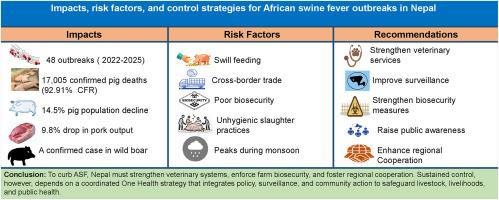
African swine fever (ASF) has emerged as a major threat to Nepal’s pig farming sector since its first outbreak in March 2022. The disease has caused significant declines in both the pig population and pork production, severely affecting rural communities reliant on pig farming for their livelihoods. ASF’s spread is facilitated by key risk factors, including swill feeding, informal cross-border trade, and poor on-farm biosecurity measures. Additionally, seasonal trends, particularly during the monsoon, exacerbate the spread of the disease, especially in areas with high pig density. Control efforts face numerous challenges, including limited veterinary infrastructure, inadequate surveillance systems, gaps in legislation, and a lack of awareness among farmers about biosecurity practices. This study presents a comprehensive analysis of ASF’s epidemiology in Nepal, exploring the disease’s socio-economic impact and identifying key control challenges. The paper provides targeted recommendations to improve veterinary services, strengthen surveillance systems, enforce biosecurity measures, and enhance cross-border cooperation. It also emphasizes the importance of fostering community engagement and developing effective policy frameworks to ensure long-term ASF prevention and control, ensuring a more resilient pig farming sector in Nepal.


 求助内容:
求助内容: 应助结果提醒方式:

 京公网安备 11010802042870号


