Parinaz Mofazali , Minoosh Lalinia , Jeffrey D. Gross , Ali Samadi
{"title":"分子印迹聚合物:应用、计算方法和人工智能的变革作用","authors":"Parinaz Mofazali , Minoosh Lalinia , Jeffrey D. Gross , Ali Samadi","doi":"10.1016/j.ccr.2026.217808","DOIUrl":null,"url":null,"abstract":"<div><div>The review examines molecularly imprinted polymers (MIPs) technology and its potential applications to present current scientific progress in the field. It highlights that MIPs production at an industrial scale faces difficulties because different types of intermolecular interactions and polymerization conditions and material performance create complex synthesis challenges. Emphasis is placed on the versatility of MIPs in environmental monitoring, the food industry, extraction, sensors, drug delivery, and biomedicine, with the discussion on the integration of MIPs pointing out the possibilities for enhancing accuracy and reliability. Furthermore, combining MIPs with analytical and computational methods creates new opportunities for qualitative and quantitative evaluation. In this light, the application of artificial intelligence (AI) to improve MIP performance, expedite polymerization procedures, and forecast ideal monomer-template interactions is expanding. This manuscript offers a fresh viewpoint using combined MIP applications in biosensing, drug delivery, environmental treatment, food safety, and catalysis with AI-driven strategies. It also aims to establish a framework for the future development of the next generation of smart and sustainable technologies.</div></div>","PeriodicalId":289,"journal":{"name":"Coordination Chemistry Reviews","volume":"559 ","pages":"Article 217808"},"PeriodicalIF":23.5000,"publicationDate":"2026-07-15","publicationTypes":"Journal Article","fieldsOfStudy":null,"isOpenAccess":false,"openAccessPdf":"","citationCount":"0","resultStr":"{\"title\":\"Molecularly imprinted polymers: applications, computational approaches, and the transformative role of artificial intelligence\",\"authors\":\"Parinaz Mofazali , Minoosh Lalinia , Jeffrey D. Gross , Ali Samadi\",\"doi\":\"10.1016/j.ccr.2026.217808\",\"DOIUrl\":null,\"url\":null,\"abstract\":\"<div><div>The review examines molecularly imprinted polymers (MIPs) technology and its potential applications to present current scientific progress in the field. It highlights that MIPs production at an industrial scale faces difficulties because different types of intermolecular interactions and polymerization conditions and material performance create complex synthesis challenges. Emphasis is placed on the versatility of MIPs in environmental monitoring, the food industry, extraction, sensors, drug delivery, and biomedicine, with the discussion on the integration of MIPs pointing out the possibilities for enhancing accuracy and reliability. Furthermore, combining MIPs with analytical and computational methods creates new opportunities for qualitative and quantitative evaluation. In this light, the application of artificial intelligence (AI) to improve MIP performance, expedite polymerization procedures, and forecast ideal monomer-template interactions is expanding. This manuscript offers a fresh viewpoint using combined MIP applications in biosensing, drug delivery, environmental treatment, food safety, and catalysis with AI-driven strategies. It also aims to establish a framework for the future development of the next generation of smart and sustainable technologies.</div></div>\",\"PeriodicalId\":289,\"journal\":{\"name\":\"Coordination Chemistry Reviews\",\"volume\":\"559 \",\"pages\":\"Article 217808\"},\"PeriodicalIF\":23.5000,\"publicationDate\":\"2026-07-15\",\"publicationTypes\":\"Journal Article\",\"fieldsOfStudy\":null,\"isOpenAccess\":false,\"openAccessPdf\":\"\",\"citationCount\":\"0\",\"resultStr\":null,\"platform\":\"Semanticscholar\",\"paperid\":null,\"PeriodicalName\":\"Coordination Chemistry Reviews\",\"FirstCategoryId\":\"92\",\"ListUrlMain\":\"https://www.sciencedirect.com/science/article/pii/S0010854526002444\",\"RegionNum\":1,\"RegionCategory\":\"化学\",\"ArticlePicture\":[],\"TitleCN\":null,\"AbstractTextCN\":null,\"PMCID\":null,\"EPubDate\":\"2026/3/11 0:00:00\",\"PubModel\":\"Epub\",\"JCR\":\"Q1\",\"JCRName\":\"CHEMISTRY, INORGANIC & NUCLEAR\",\"Score\":null,\"Total\":0}","platform":"Semanticscholar","paperid":null,"PeriodicalName":"Coordination Chemistry Reviews","FirstCategoryId":"92","ListUrlMain":"https://www.sciencedirect.com/science/article/pii/S0010854526002444","RegionNum":1,"RegionCategory":"化学","ArticlePicture":[],"TitleCN":null,"AbstractTextCN":null,"PMCID":null,"EPubDate":"2026/3/11 0:00:00","PubModel":"Epub","JCR":"Q1","JCRName":"CHEMISTRY, INORGANIC & NUCLEAR","Score":null,"Total":0}
Molecularly imprinted polymers: applications, computational approaches, and the transformative role of artificial intelligence
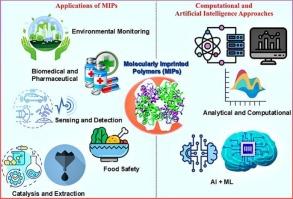
The review examines molecularly imprinted polymers (MIPs) technology and its potential applications to present current scientific progress in the field. It highlights that MIPs production at an industrial scale faces difficulties because different types of intermolecular interactions and polymerization conditions and material performance create complex synthesis challenges. Emphasis is placed on the versatility of MIPs in environmental monitoring, the food industry, extraction, sensors, drug delivery, and biomedicine, with the discussion on the integration of MIPs pointing out the possibilities for enhancing accuracy and reliability. Furthermore, combining MIPs with analytical and computational methods creates new opportunities for qualitative and quantitative evaluation. In this light, the application of artificial intelligence (AI) to improve MIP performance, expedite polymerization procedures, and forecast ideal monomer-template interactions is expanding. This manuscript offers a fresh viewpoint using combined MIP applications in biosensing, drug delivery, environmental treatment, food safety, and catalysis with AI-driven strategies. It also aims to establish a framework for the future development of the next generation of smart and sustainable technologies.
期刊介绍:
Coordination Chemistry Reviews offers rapid publication of review articles on current and significant topics in coordination chemistry, encompassing organometallic, supramolecular, theoretical, and bioinorganic chemistry. It also covers catalysis, materials chemistry, and metal-organic frameworks from a coordination chemistry perspective. Reviews summarize recent developments or discuss specific techniques, welcoming contributions from both established and emerging researchers.
The journal releases special issues on timely subjects, including those featuring contributions from specific regions or conferences. Occasional full-length book articles are also featured. Additionally, special volumes cover annual reviews of main group chemistry, transition metal group chemistry, and organometallic chemistry. These comprehensive reviews are vital resources for those engaged in coordination chemistry, further establishing Coordination Chemistry Reviews as a hub for insightful surveys in inorganic and physical inorganic chemistry.