{"title":"肽-金属螯合物在抗菌治疗、肿瘤治疗和综合诊断治疗系统中的设计机制和生物医学应用","authors":"Yusu Li , Xinyue Zhao , Jin-ao Duan, Ping Xiao","doi":"10.1016/j.ccr.2026.217819","DOIUrl":null,"url":null,"abstract":"<div><div>The growing global antimicrobial resistance crisis and limitations of conventional cancer therapies call for innovative biomedical strategies. Peptide-metal chelates are promising multifunctional biomaterials that leverage peptide-metal ion synergy to overcome traditional therapeutic bottlenecks, with core value in building integrated platforms for programmable targeted delivery, spatiotemporal smart responsiveness and intrinsic theranostic synergy. Research in this field has evolved from basic molecular discovery to systematic rational design and now clinical smart applications. This review presents a novel research and development roadmap for peptide-metal chelates, elaborating their design principles, structure-function mechanisms and latest biomedical advances. It highlights their unique “Trojan horse” strategy for antibacterial resistance and precise tumor targeting <em>via</em> the EPR effect and tumor microenvironmental triggers such as pH and enzymes. It details their applications in intelligent drug delivery, high-efficacy antimicrobial therapy, precision anticancer treatment, and theranostic platforms integrating imaging and therapy. Addressing gaps in existing fragmented summaries, including the lack of systematic design-synthesis-application integration and insufficient basic-clinical translation analysis, the review also notes unresolved challenges in long-term <em>in vivo</em> safety, bioavailability optimization and GMP-compliant large-scale production. Finally, it prospects core directions like AI-assisted rational molecular design, advanced multi-stimuli responsive materials and multimodal theranostic integration, which are expected to accelerate the clinical translation of peptide-metal chelates and offer innovative solutions for drug-resistant infections and refractory cancers.</div></div>","PeriodicalId":289,"journal":{"name":"Coordination Chemistry Reviews","volume":"559 ","pages":"Article 217819"},"PeriodicalIF":23.5000,"publicationDate":"2026-07-15","publicationTypes":"Journal Article","fieldsOfStudy":null,"isOpenAccess":false,"openAccessPdf":"","citationCount":"0","resultStr":"{\"title\":\"Design mechanisms and biomedical applications of peptide-metal chelates in antimicrobial therapy, tumor theranostics, and integrated diagnosis-treatment systems\",\"authors\":\"Yusu Li , Xinyue Zhao , Jin-ao Duan, Ping Xiao\",\"doi\":\"10.1016/j.ccr.2026.217819\",\"DOIUrl\":null,\"url\":null,\"abstract\":\"<div><div>The growing global antimicrobial resistance crisis and limitations of conventional cancer therapies call for innovative biomedical strategies. Peptide-metal chelates are promising multifunctional biomaterials that leverage peptide-metal ion synergy to overcome traditional therapeutic bottlenecks, with core value in building integrated platforms for programmable targeted delivery, spatiotemporal smart responsiveness and intrinsic theranostic synergy. Research in this field has evolved from basic molecular discovery to systematic rational design and now clinical smart applications. This review presents a novel research and development roadmap for peptide-metal chelates, elaborating their design principles, structure-function mechanisms and latest biomedical advances. It highlights their unique “Trojan horse” strategy for antibacterial resistance and precise tumor targeting <em>via</em> the EPR effect and tumor microenvironmental triggers such as pH and enzymes. It details their applications in intelligent drug delivery, high-efficacy antimicrobial therapy, precision anticancer treatment, and theranostic platforms integrating imaging and therapy. Addressing gaps in existing fragmented summaries, including the lack of systematic design-synthesis-application integration and insufficient basic-clinical translation analysis, the review also notes unresolved challenges in long-term <em>in vivo</em> safety, bioavailability optimization and GMP-compliant large-scale production. Finally, it prospects core directions like AI-assisted rational molecular design, advanced multi-stimuli responsive materials and multimodal theranostic integration, which are expected to accelerate the clinical translation of peptide-metal chelates and offer innovative solutions for drug-resistant infections and refractory cancers.</div></div>\",\"PeriodicalId\":289,\"journal\":{\"name\":\"Coordination Chemistry Reviews\",\"volume\":\"559 \",\"pages\":\"Article 217819\"},\"PeriodicalIF\":23.5000,\"publicationDate\":\"2026-07-15\",\"publicationTypes\":\"Journal Article\",\"fieldsOfStudy\":null,\"isOpenAccess\":false,\"openAccessPdf\":\"\",\"citationCount\":\"0\",\"resultStr\":null,\"platform\":\"Semanticscholar\",\"paperid\":null,\"PeriodicalName\":\"Coordination Chemistry Reviews\",\"FirstCategoryId\":\"92\",\"ListUrlMain\":\"https://www.sciencedirect.com/science/article/pii/S0010854526002559\",\"RegionNum\":1,\"RegionCategory\":\"化学\",\"ArticlePicture\":[],\"TitleCN\":null,\"AbstractTextCN\":null,\"PMCID\":null,\"EPubDate\":\"2026/3/11 0:00:00\",\"PubModel\":\"Epub\",\"JCR\":\"Q1\",\"JCRName\":\"CHEMISTRY, INORGANIC & NUCLEAR\",\"Score\":null,\"Total\":0}","platform":"Semanticscholar","paperid":null,"PeriodicalName":"Coordination Chemistry Reviews","FirstCategoryId":"92","ListUrlMain":"https://www.sciencedirect.com/science/article/pii/S0010854526002559","RegionNum":1,"RegionCategory":"化学","ArticlePicture":[],"TitleCN":null,"AbstractTextCN":null,"PMCID":null,"EPubDate":"2026/3/11 0:00:00","PubModel":"Epub","JCR":"Q1","JCRName":"CHEMISTRY, INORGANIC & NUCLEAR","Score":null,"Total":0}
Design mechanisms and biomedical applications of peptide-metal chelates in antimicrobial therapy, tumor theranostics, and integrated diagnosis-treatment systems
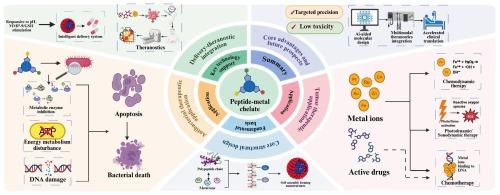
The growing global antimicrobial resistance crisis and limitations of conventional cancer therapies call for innovative biomedical strategies. Peptide-metal chelates are promising multifunctional biomaterials that leverage peptide-metal ion synergy to overcome traditional therapeutic bottlenecks, with core value in building integrated platforms for programmable targeted delivery, spatiotemporal smart responsiveness and intrinsic theranostic synergy. Research in this field has evolved from basic molecular discovery to systematic rational design and now clinical smart applications. This review presents a novel research and development roadmap for peptide-metal chelates, elaborating their design principles, structure-function mechanisms and latest biomedical advances. It highlights their unique “Trojan horse” strategy for antibacterial resistance and precise tumor targeting via the EPR effect and tumor microenvironmental triggers such as pH and enzymes. It details their applications in intelligent drug delivery, high-efficacy antimicrobial therapy, precision anticancer treatment, and theranostic platforms integrating imaging and therapy. Addressing gaps in existing fragmented summaries, including the lack of systematic design-synthesis-application integration and insufficient basic-clinical translation analysis, the review also notes unresolved challenges in long-term in vivo safety, bioavailability optimization and GMP-compliant large-scale production. Finally, it prospects core directions like AI-assisted rational molecular design, advanced multi-stimuli responsive materials and multimodal theranostic integration, which are expected to accelerate the clinical translation of peptide-metal chelates and offer innovative solutions for drug-resistant infections and refractory cancers.
期刊介绍:
Coordination Chemistry Reviews offers rapid publication of review articles on current and significant topics in coordination chemistry, encompassing organometallic, supramolecular, theoretical, and bioinorganic chemistry. It also covers catalysis, materials chemistry, and metal-organic frameworks from a coordination chemistry perspective. Reviews summarize recent developments or discuss specific techniques, welcoming contributions from both established and emerging researchers.
The journal releases special issues on timely subjects, including those featuring contributions from specific regions or conferences. Occasional full-length book articles are also featured. Additionally, special volumes cover annual reviews of main group chemistry, transition metal group chemistry, and organometallic chemistry. These comprehensive reviews are vital resources for those engaged in coordination chemistry, further establishing Coordination Chemistry Reviews as a hub for insightful surveys in inorganic and physical inorganic chemistry.