{"title":"使用混合多标准决策选择高性能相变材料以增强建筑热管理","authors":"Anas Azhar , Oumaima Imghoure , Zohir Younsi , Naoual Belouaggadia , Nassim Sebaibi","doi":"10.1016/j.applthermaleng.2026.130393","DOIUrl":null,"url":null,"abstract":"<div><div>Phase change materials have attracted significant attention as highly effective and innovative solutions for thermal energy storage and temperature regulation. Due to their high latent heat capacity, PCMs can be incorporated into various applications to enhance thermal management, including walls, floors, bricks, gypsum, and insulation. However, selecting the most appropriate PCM remains a complex decision-making process due to the diversity of choices and multiple evaluation criteria.</div><div>The present research proposes a hybrid multi-criteria decision-making framework for the ranking and selection of optimal phase change materials for building applications. The evaluation criteria were weighted using a combination of objective and subjective methods. The final ranking of the alternatives was then determined using four multi-criteria decision-making techniques.</div><div>Sixteen PCMs with melting temperatures in the human comfort range (18–28 °C) were evaluated based on 16 criteria covering thermophysical, kinetic, economic, and environmental aspects. The results showed that A28 ranked first (260 kJ.kg<sup>−1</sup>), followed by A26 (230 kJ.kg<sup>−1</sup>) and PureTemp27 (202 kJ.kg<sup>−1</sup>). The superior thermal behavior of these PCMs was further validated through building energy simulations in three different climate zones, highlighting their effectiveness in regulating temperature and enhancing thermal management.</div></div>","PeriodicalId":8201,"journal":{"name":"Applied Thermal Engineering","volume":"292 ","pages":"Article 130393"},"PeriodicalIF":6.9000,"publicationDate":"2026-04-01","publicationTypes":"Journal Article","fieldsOfStudy":null,"isOpenAccess":false,"openAccessPdf":"","citationCount":"0","resultStr":"{\"title\":\"Selection of high-performance phase change materials for enhanced building thermal management using hybrid multi-criteria decision-making\",\"authors\":\"Anas Azhar , Oumaima Imghoure , Zohir Younsi , Naoual Belouaggadia , Nassim Sebaibi\",\"doi\":\"10.1016/j.applthermaleng.2026.130393\",\"DOIUrl\":null,\"url\":null,\"abstract\":\"<div><div>Phase change materials have attracted significant attention as highly effective and innovative solutions for thermal energy storage and temperature regulation. Due to their high latent heat capacity, PCMs can be incorporated into various applications to enhance thermal management, including walls, floors, bricks, gypsum, and insulation. However, selecting the most appropriate PCM remains a complex decision-making process due to the diversity of choices and multiple evaluation criteria.</div><div>The present research proposes a hybrid multi-criteria decision-making framework for the ranking and selection of optimal phase change materials for building applications. The evaluation criteria were weighted using a combination of objective and subjective methods. The final ranking of the alternatives was then determined using four multi-criteria decision-making techniques.</div><div>Sixteen PCMs with melting temperatures in the human comfort range (18–28 °C) were evaluated based on 16 criteria covering thermophysical, kinetic, economic, and environmental aspects. The results showed that A28 ranked first (260 kJ.kg<sup>−1</sup>), followed by A26 (230 kJ.kg<sup>−1</sup>) and PureTemp27 (202 kJ.kg<sup>−1</sup>). The superior thermal behavior of these PCMs was further validated through building energy simulations in three different climate zones, highlighting their effectiveness in regulating temperature and enhancing thermal management.</div></div>\",\"PeriodicalId\":8201,\"journal\":{\"name\":\"Applied Thermal Engineering\",\"volume\":\"292 \",\"pages\":\"Article 130393\"},\"PeriodicalIF\":6.9000,\"publicationDate\":\"2026-04-01\",\"publicationTypes\":\"Journal Article\",\"fieldsOfStudy\":null,\"isOpenAccess\":false,\"openAccessPdf\":\"\",\"citationCount\":\"0\",\"resultStr\":null,\"platform\":\"Semanticscholar\",\"paperid\":null,\"PeriodicalName\":\"Applied Thermal Engineering\",\"FirstCategoryId\":\"5\",\"ListUrlMain\":\"https://www.sciencedirect.com/science/article/pii/S1359431126007015\",\"RegionNum\":2,\"RegionCategory\":\"工程技术\",\"ArticlePicture\":[],\"TitleCN\":null,\"AbstractTextCN\":null,\"PMCID\":null,\"EPubDate\":\"2026/2/25 0:00:00\",\"PubModel\":\"Epub\",\"JCR\":\"Q2\",\"JCRName\":\"ENERGY & FUELS\",\"Score\":null,\"Total\":0}","platform":"Semanticscholar","paperid":null,"PeriodicalName":"Applied Thermal Engineering","FirstCategoryId":"5","ListUrlMain":"https://www.sciencedirect.com/science/article/pii/S1359431126007015","RegionNum":2,"RegionCategory":"工程技术","ArticlePicture":[],"TitleCN":null,"AbstractTextCN":null,"PMCID":null,"EPubDate":"2026/2/25 0:00:00","PubModel":"Epub","JCR":"Q2","JCRName":"ENERGY & FUELS","Score":null,"Total":0}
引用次数: 0
摘要
相变材料作为一种高效、创新的热能储存和温度调节解决方案受到了广泛关注。由于其高潜热容量,pcm可以纳入各种应用,以加强热管理,包括墙壁,地板,砖,石膏和绝缘。然而,由于选择的多样性和多种评价标准,选择最合适的PCM仍然是一个复杂的决策过程。本研究提出了一种混合多标准决策框架,用于建筑应用中最优相变材料的排序和选择。采用客观和主观相结合的方法对评价标准进行加权。然后使用四种多标准决策技术确定备选方案的最终排名。根据热物理、动力学、经济和环境方面的16项标准,对熔融温度在人体舒适范围内(18-28°C)的16种pcm进行了评估。结果表明,A28以260 kJ的最高效率位居首位。kg−1),其次是A26 (230 kJ)。PureTemp27 (202 kg .kg−1)。通过三种不同气候带的建筑能源模拟,进一步验证了这些相变材料优越的热性能,突出了它们在调节温度和加强热管理方面的有效性。
Selection of high-performance phase change materials for enhanced building thermal management using hybrid multi-criteria decision-making
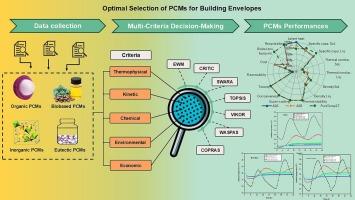
Phase change materials have attracted significant attention as highly effective and innovative solutions for thermal energy storage and temperature regulation. Due to their high latent heat capacity, PCMs can be incorporated into various applications to enhance thermal management, including walls, floors, bricks, gypsum, and insulation. However, selecting the most appropriate PCM remains a complex decision-making process due to the diversity of choices and multiple evaluation criteria.
The present research proposes a hybrid multi-criteria decision-making framework for the ranking and selection of optimal phase change materials for building applications. The evaluation criteria were weighted using a combination of objective and subjective methods. The final ranking of the alternatives was then determined using four multi-criteria decision-making techniques.
Sixteen PCMs with melting temperatures in the human comfort range (18–28 °C) were evaluated based on 16 criteria covering thermophysical, kinetic, economic, and environmental aspects. The results showed that A28 ranked first (260 kJ.kg−1), followed by A26 (230 kJ.kg−1) and PureTemp27 (202 kJ.kg−1). The superior thermal behavior of these PCMs was further validated through building energy simulations in three different climate zones, highlighting their effectiveness in regulating temperature and enhancing thermal management.
期刊介绍:
Applied Thermal Engineering disseminates novel research related to the design, development and demonstration of components, devices, equipment, technologies and systems involving thermal processes for the production, storage, utilization and conservation of energy, with a focus on engineering application.
The journal publishes high-quality and high-impact Original Research Articles, Review Articles, Short Communications and Letters to the Editor on cutting-edge innovations in research, and recent advances or issues of interest to the thermal engineering community.