Mohammed Ali Dheyab, Wesam Abdullah, Sara Abdulwahab, Sadeen Metib Alsarayreh, Mothana Hussein Tarawneh, Mutaz Mohammad Alsardi, Mansour A. Alanazi and Azlan Abdul Aziz
{"title":"无机纳米材料的力驱动架构:通往智能和功能界面的途径","authors":"Mohammed Ali Dheyab, Wesam Abdullah, Sara Abdulwahab, Sadeen Metib Alsarayreh, Mothana Hussein Tarawneh, Mutaz Mohammad Alsardi, Mansour A. Alanazi and Azlan Abdul Aziz","doi":"10.1039/D5MR00116A","DOIUrl":null,"url":null,"abstract":"<p >The deliberate structuring of inorganic nanomaterials through mechanical forces offers a powerful alternative to conventional synthesis, enabling solvent-free, energy-efficient, and scalable design strategies. Rather than serving only as a synthetic shortcut, force-driven processing is increasingly recognized as an architectonic tool as a means of directing matter into well-defined architectures that integrate top-down shaping with bottom-up assembly. This review develops a conceptual framework of architectonics under mechanical activation, treating external force as a design parameter that dictates structure formation across multiple length scales. Methodological platforms such as ball milling, extrusion, and hybrid force–stimuli systems are systematically assessed, alongside mechanistic insights spanning multiscale reaction pathways, computational modeling, and AI-enabled predictions. The potential of this approach to generate smart and functional interfaces is highlighted through applications in catalytic and energy conversion processes, biomedical nanomedicine, and electronic or sensing devices. Finally, we discuss current limitations particularly gaps in mechanistic understanding, predictive control, and scalability and outline future opportunities to advance force-driven architectonics as a foundation for next-generation functional inorganic nanomaterials.</p>","PeriodicalId":101140,"journal":{"name":"RSC Mechanochemistry","volume":" 2","pages":" 161-190"},"PeriodicalIF":0.0000,"publicationDate":"2026-01-07","publicationTypes":"Journal Article","fieldsOfStudy":null,"isOpenAccess":false,"openAccessPdf":"https://pubs.rsc.org/en/content/articlepdf/2026/mr/d5mr00116a?page=search","citationCount":"0","resultStr":"{\"title\":\"Force-driven architectonics of inorganic nanomaterials: pathways to smart and functional interfaces\",\"authors\":\"Mohammed Ali Dheyab, Wesam Abdullah, Sara Abdulwahab, Sadeen Metib Alsarayreh, Mothana Hussein Tarawneh, Mutaz Mohammad Alsardi, Mansour A. Alanazi and Azlan Abdul Aziz\",\"doi\":\"10.1039/D5MR00116A\",\"DOIUrl\":null,\"url\":null,\"abstract\":\"<p >The deliberate structuring of inorganic nanomaterials through mechanical forces offers a powerful alternative to conventional synthesis, enabling solvent-free, energy-efficient, and scalable design strategies. Rather than serving only as a synthetic shortcut, force-driven processing is increasingly recognized as an architectonic tool as a means of directing matter into well-defined architectures that integrate top-down shaping with bottom-up assembly. This review develops a conceptual framework of architectonics under mechanical activation, treating external force as a design parameter that dictates structure formation across multiple length scales. Methodological platforms such as ball milling, extrusion, and hybrid force–stimuli systems are systematically assessed, alongside mechanistic insights spanning multiscale reaction pathways, computational modeling, and AI-enabled predictions. The potential of this approach to generate smart and functional interfaces is highlighted through applications in catalytic and energy conversion processes, biomedical nanomedicine, and electronic or sensing devices. Finally, we discuss current limitations particularly gaps in mechanistic understanding, predictive control, and scalability and outline future opportunities to advance force-driven architectonics as a foundation for next-generation functional inorganic nanomaterials.</p>\",\"PeriodicalId\":101140,\"journal\":{\"name\":\"RSC Mechanochemistry\",\"volume\":\" 2\",\"pages\":\" 161-190\"},\"PeriodicalIF\":0.0000,\"publicationDate\":\"2026-01-07\",\"publicationTypes\":\"Journal Article\",\"fieldsOfStudy\":null,\"isOpenAccess\":false,\"openAccessPdf\":\"https://pubs.rsc.org/en/content/articlepdf/2026/mr/d5mr00116a?page=search\",\"citationCount\":\"0\",\"resultStr\":null,\"platform\":\"Semanticscholar\",\"paperid\":null,\"PeriodicalName\":\"RSC Mechanochemistry\",\"FirstCategoryId\":\"1085\",\"ListUrlMain\":\"https://pubs.rsc.org/en/content/articlelanding/2026/mr/d5mr00116a\",\"RegionNum\":0,\"RegionCategory\":null,\"ArticlePicture\":[],\"TitleCN\":null,\"AbstractTextCN\":null,\"PMCID\":null,\"EPubDate\":\"\",\"PubModel\":\"\",\"JCR\":\"\",\"JCRName\":\"\",\"Score\":null,\"Total\":0}","platform":"Semanticscholar","paperid":null,"PeriodicalName":"RSC Mechanochemistry","FirstCategoryId":"1085","ListUrlMain":"https://pubs.rsc.org/en/content/articlelanding/2026/mr/d5mr00116a","RegionNum":0,"RegionCategory":null,"ArticlePicture":[],"TitleCN":null,"AbstractTextCN":null,"PMCID":null,"EPubDate":"","PubModel":"","JCR":"","JCRName":"","Score":null,"Total":0}
Force-driven architectonics of inorganic nanomaterials: pathways to smart and functional interfaces
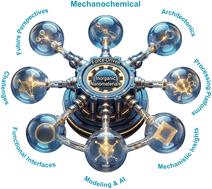
The deliberate structuring of inorganic nanomaterials through mechanical forces offers a powerful alternative to conventional synthesis, enabling solvent-free, energy-efficient, and scalable design strategies. Rather than serving only as a synthetic shortcut, force-driven processing is increasingly recognized as an architectonic tool as a means of directing matter into well-defined architectures that integrate top-down shaping with bottom-up assembly. This review develops a conceptual framework of architectonics under mechanical activation, treating external force as a design parameter that dictates structure formation across multiple length scales. Methodological platforms such as ball milling, extrusion, and hybrid force–stimuli systems are systematically assessed, alongside mechanistic insights spanning multiscale reaction pathways, computational modeling, and AI-enabled predictions. The potential of this approach to generate smart and functional interfaces is highlighted through applications in catalytic and energy conversion processes, biomedical nanomedicine, and electronic or sensing devices. Finally, we discuss current limitations particularly gaps in mechanistic understanding, predictive control, and scalability and outline future opportunities to advance force-driven architectonics as a foundation for next-generation functional inorganic nanomaterials.


 求助内容:
求助内容: 应助结果提醒方式:

 京公网安备 11010802042870号


