Zs. Bohák , H. Kiszlinger Nagyné , F. Hoffmann , L. Kern , L. Kovács
{"title":"局部麻醉和非局部麻醉奶牛的心率和心率变异性。","authors":"Zs. Bohák , H. Kiszlinger Nagyné , F. Hoffmann , L. Kern , L. Kovács","doi":"10.3168/jdsc.2025-0803","DOIUrl":null,"url":null,"abstract":"<div><div>Heart rate variability analysis provides valuable insights into autonomic nervous system function but remains minimally explored in veterinary anesthesiology, particularly regarding its relationship with low-dose caudal epidural anesthesia in cattle. This study employed a crossover design to determine whether epidural lidocaine administration (4 mL of 2% solution) affects cardiac autonomic regulation compared with physiological saline in 8 healthy Holstein-Friesian dairy cows. Interbeat intervals were measured at baseline and for 240 min following epidural injection and cardiac autonomic activity-related parameters of heart rate variability (heart rate, root mean square of successive differences, high-frequency component, and ratio of low-frequency and high-frequency components) were calculated. Area under the curve for the first 240 min after the treatment and time to return to baseline were used to evaluate overall treatment effects on cardiac autonomic activity. Results revealed no differences in the area under the curve values for any parameters of heart rate variability between lidocaine and saline epidural interventions throughout the observation period, with comparable recovery times to baseline values between treatments. These findings suggest that sacrococcygeal epidural anesthesia did not detectably affect cardiac autonomic regulation in dairy cows under the conditions of this study.</div></div>","PeriodicalId":94061,"journal":{"name":"JDS communications","volume":"7 2","pages":"Pages 262-267"},"PeriodicalIF":2.2000,"publicationDate":"2026-03-01","publicationTypes":"Journal Article","fieldsOfStudy":null,"isOpenAccess":false,"openAccessPdf":"","citationCount":"0","resultStr":"{\"title\":\"Heart rate and heart rate variability of dairy cows with or without local anesthesia\",\"authors\":\"Zs. Bohák , H. Kiszlinger Nagyné , F. Hoffmann , L. Kern , L. Kovács\",\"doi\":\"10.3168/jdsc.2025-0803\",\"DOIUrl\":null,\"url\":null,\"abstract\":\"<div><div>Heart rate variability analysis provides valuable insights into autonomic nervous system function but remains minimally explored in veterinary anesthesiology, particularly regarding its relationship with low-dose caudal epidural anesthesia in cattle. This study employed a crossover design to determine whether epidural lidocaine administration (4 mL of 2% solution) affects cardiac autonomic regulation compared with physiological saline in 8 healthy Holstein-Friesian dairy cows. Interbeat intervals were measured at baseline and for 240 min following epidural injection and cardiac autonomic activity-related parameters of heart rate variability (heart rate, root mean square of successive differences, high-frequency component, and ratio of low-frequency and high-frequency components) were calculated. Area under the curve for the first 240 min after the treatment and time to return to baseline were used to evaluate overall treatment effects on cardiac autonomic activity. Results revealed no differences in the area under the curve values for any parameters of heart rate variability between lidocaine and saline epidural interventions throughout the observation period, with comparable recovery times to baseline values between treatments. These findings suggest that sacrococcygeal epidural anesthesia did not detectably affect cardiac autonomic regulation in dairy cows under the conditions of this study.</div></div>\",\"PeriodicalId\":94061,\"journal\":{\"name\":\"JDS communications\",\"volume\":\"7 2\",\"pages\":\"Pages 262-267\"},\"PeriodicalIF\":2.2000,\"publicationDate\":\"2026-03-01\",\"publicationTypes\":\"Journal Article\",\"fieldsOfStudy\":null,\"isOpenAccess\":false,\"openAccessPdf\":\"\",\"citationCount\":\"0\",\"resultStr\":null,\"platform\":\"Semanticscholar\",\"paperid\":null,\"PeriodicalName\":\"JDS communications\",\"FirstCategoryId\":\"1085\",\"ListUrlMain\":\"https://www.sciencedirect.com/science/article/pii/S2666910225002261\",\"RegionNum\":0,\"RegionCategory\":null,\"ArticlePicture\":[],\"TitleCN\":null,\"AbstractTextCN\":null,\"PMCID\":null,\"EPubDate\":\"2025/12/4 0:00:00\",\"PubModel\":\"Epub\",\"JCR\":\"\",\"JCRName\":\"\",\"Score\":null,\"Total\":0}","platform":"Semanticscholar","paperid":null,"PeriodicalName":"JDS communications","FirstCategoryId":"1085","ListUrlMain":"https://www.sciencedirect.com/science/article/pii/S2666910225002261","RegionNum":0,"RegionCategory":null,"ArticlePicture":[],"TitleCN":null,"AbstractTextCN":null,"PMCID":null,"EPubDate":"2025/12/4 0:00:00","PubModel":"Epub","JCR":"","JCRName":"","Score":null,"Total":0}
引用次数: 0
摘要
心率变异性分析为自主神经系统功能提供了有价值的见解,但在兽医麻醉学中仍然很少被探索,特别是关于它与牛低剂量尾侧硬膜外麻醉的关系。本研究采用交叉设计,确定与生理盐水相比,硬膜外给药利多卡因(4 mL 2%溶液)是否会影响8头健康荷斯坦-弗里斯奶牛的心脏自主调节。在基线和硬膜外注射后240分钟测量心跳间隔,并计算心率变异性的心脏自主活动相关参数(心率、连续差的均方根、高频分量和低频与高频分量的比值)。采用治疗后240 min的曲线下面积和恢复到基线的时间来评估治疗对心脏自主活动的总体影响。结果显示,在整个观察期间,利多卡因和生理盐水硬膜外干预之间的任何心率变异性参数的曲线下面积值没有差异,治疗之间的恢复时间与基线值相当。这些结果表明,在本研究条件下,骶尾骨硬膜外麻醉对奶牛心脏自主调节没有明显影响。
Heart rate and heart rate variability of dairy cows with or without local anesthesia
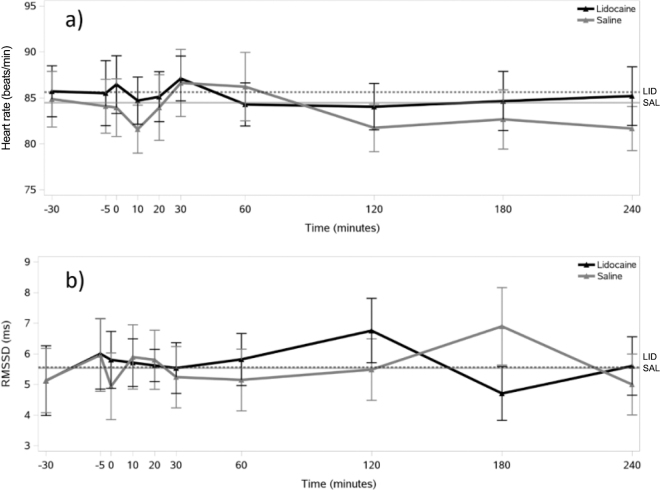
Heart rate variability analysis provides valuable insights into autonomic nervous system function but remains minimally explored in veterinary anesthesiology, particularly regarding its relationship with low-dose caudal epidural anesthesia in cattle. This study employed a crossover design to determine whether epidural lidocaine administration (4 mL of 2% solution) affects cardiac autonomic regulation compared with physiological saline in 8 healthy Holstein-Friesian dairy cows. Interbeat intervals were measured at baseline and for 240 min following epidural injection and cardiac autonomic activity-related parameters of heart rate variability (heart rate, root mean square of successive differences, high-frequency component, and ratio of low-frequency and high-frequency components) were calculated. Area under the curve for the first 240 min after the treatment and time to return to baseline were used to evaluate overall treatment effects on cardiac autonomic activity. Results revealed no differences in the area under the curve values for any parameters of heart rate variability between lidocaine and saline epidural interventions throughout the observation period, with comparable recovery times to baseline values between treatments. These findings suggest that sacrococcygeal epidural anesthesia did not detectably affect cardiac autonomic regulation in dairy cows under the conditions of this study.



 求助内容:
求助内容: 应助结果提醒方式:

 京公网安备 11010802042870号


