Jordan Casby, Rachel K Allen, Ezequiel Marron Fernandez de Velasco, Stanley A Thayer
{"title":"NMDA受体/TRPM4界面抑制剂Brophenexin对海马神经元NMDA受体和TRPM4活性的调节","authors":"Jordan Casby, Rachel K Allen, Ezequiel Marron Fernandez de Velasco, Stanley A Thayer","doi":"10.1007/s12640-026-00788-0","DOIUrl":null,"url":null,"abstract":"<p><p>Excitotoxic signaling mediated by N-methyl-D-aspartate receptors (NMDARs) is inhibited by NMDAR/TRPM4 complex inhibitors such as brophenexin (BPN). We used rat hippocampal neurons grown in culture to determine the effects of BPN on NMDAR and TRPM4 function. NMDA evoked concentration-dependent increases in intracellular Ca2+ that were inhibited by 10 µM BPN in a non-competitive manner. In contrast, the TRPM4 inhibitor 4-chloro-2-(2-(naphthalene-1-yloxy) acetamido) benzoic acid (NBA) increased the potency of NMDA at 22 °C. BPN inhibition of NMDAR-mediated increases in Ca2+ was fully reversible and recovered by rapid (30 s) and slow (90 min) processes. The rapid phase of recovery from BPN inhibition was mediated by trafficking through recycling endosomes as indicated by blockade of this phase with bafilomycin A1 an agent that prevents endosomal acidification. The full recovery of NMDAR function observed 90 min after washout of BPN was not affected by this treatment. Immunocytochemistry experiments suggested that BPN did not directly alter NMDAR trafficking but instead changes in surface and internal GluN2B immunoreactivity were likely homeostatic responses to inhibition of NMDAR function by BPN. In the presence of MK-801 to block NMDARs, 10 µM NBA inhibited spontaneous network-driven Ca2+ spiking by 74 ± 11% whereas 10 µM BPN reduced activity by 49 ± 6%. Thus, BPN inhibits TRPM4-dependent activity. In summary, BPN is a non-competitive, fully reversible inhibitor of NMDAR-mediated Ca2+ influx and produces a modest inhibition of TRPM4 function. Functional inhibition of these ion channels likely contributes to the neuroprotective properties of NMDAR/TRPM4 interface inhibitors.</p>","PeriodicalId":19193,"journal":{"name":"Neurotoxicity Research","volume":"44 2","pages":""},"PeriodicalIF":3.9000,"publicationDate":"2026-03-06","publicationTypes":"Journal Article","fieldsOfStudy":null,"isOpenAccess":false,"openAccessPdf":"https://www.ncbi.nlm.nih.gov/pmc/articles/PMC12965916/pdf/","citationCount":"0","resultStr":"{\"title\":\"Modulation of NMDA Receptor and TRPM4 Activity in Hippocampal Neurons with the NMDA Receptor/TRPM4 Interface Inhibitor Brophenexin.\",\"authors\":\"Jordan Casby, Rachel K Allen, Ezequiel Marron Fernandez de Velasco, Stanley A Thayer\",\"doi\":\"10.1007/s12640-026-00788-0\",\"DOIUrl\":null,\"url\":null,\"abstract\":\"<p><p>Excitotoxic signaling mediated by N-methyl-D-aspartate receptors (NMDARs) is inhibited by NMDAR/TRPM4 complex inhibitors such as brophenexin (BPN). We used rat hippocampal neurons grown in culture to determine the effects of BPN on NMDAR and TRPM4 function. NMDA evoked concentration-dependent increases in intracellular Ca2+ that were inhibited by 10 µM BPN in a non-competitive manner. In contrast, the TRPM4 inhibitor 4-chloro-2-(2-(naphthalene-1-yloxy) acetamido) benzoic acid (NBA) increased the potency of NMDA at 22 °C. BPN inhibition of NMDAR-mediated increases in Ca2+ was fully reversible and recovered by rapid (30 s) and slow (90 min) processes. The rapid phase of recovery from BPN inhibition was mediated by trafficking through recycling endosomes as indicated by blockade of this phase with bafilomycin A1 an agent that prevents endosomal acidification. The full recovery of NMDAR function observed 90 min after washout of BPN was not affected by this treatment. Immunocytochemistry experiments suggested that BPN did not directly alter NMDAR trafficking but instead changes in surface and internal GluN2B immunoreactivity were likely homeostatic responses to inhibition of NMDAR function by BPN. In the presence of MK-801 to block NMDARs, 10 µM NBA inhibited spontaneous network-driven Ca2+ spiking by 74 ± 11% whereas 10 µM BPN reduced activity by 49 ± 6%. Thus, BPN inhibits TRPM4-dependent activity. In summary, BPN is a non-competitive, fully reversible inhibitor of NMDAR-mediated Ca2+ influx and produces a modest inhibition of TRPM4 function. Functional inhibition of these ion channels likely contributes to the neuroprotective properties of NMDAR/TRPM4 interface inhibitors.</p>\",\"PeriodicalId\":19193,\"journal\":{\"name\":\"Neurotoxicity Research\",\"volume\":\"44 2\",\"pages\":\"\"},\"PeriodicalIF\":3.9000,\"publicationDate\":\"2026-03-06\",\"publicationTypes\":\"Journal Article\",\"fieldsOfStudy\":null,\"isOpenAccess\":false,\"openAccessPdf\":\"https://www.ncbi.nlm.nih.gov/pmc/articles/PMC12965916/pdf/\",\"citationCount\":\"0\",\"resultStr\":null,\"platform\":\"Semanticscholar\",\"paperid\":null,\"PeriodicalName\":\"Neurotoxicity Research\",\"FirstCategoryId\":\"3\",\"ListUrlMain\":\"https://doi.org/10.1007/s12640-026-00788-0\",\"RegionNum\":3,\"RegionCategory\":\"医学\",\"ArticlePicture\":[],\"TitleCN\":null,\"AbstractTextCN\":null,\"PMCID\":null,\"EPubDate\":\"\",\"PubModel\":\"\",\"JCR\":\"Q2\",\"JCRName\":\"NEUROSCIENCES\",\"Score\":null,\"Total\":0}","platform":"Semanticscholar","paperid":null,"PeriodicalName":"Neurotoxicity Research","FirstCategoryId":"3","ListUrlMain":"https://doi.org/10.1007/s12640-026-00788-0","RegionNum":3,"RegionCategory":"医学","ArticlePicture":[],"TitleCN":null,"AbstractTextCN":null,"PMCID":null,"EPubDate":"","PubModel":"","JCR":"Q2","JCRName":"NEUROSCIENCES","Score":null,"Total":0}
引用次数: 0
摘要
n -甲基- d -天冬氨酸受体(NMDARs)介导的兴奋毒性信号被NMDAR/TRPM4复合物抑制剂如溴苯耐辛(BPN)抑制。我们用培养的大鼠海马神经元来测定BPN对NMDAR和TRPM4功能的影响。NMDA引起细胞内Ca2+的浓度依赖性增加,这种增加被10µM BPN以非竞争性方式抑制。相比之下,TRPM4抑制剂4-氯-2-(2-(萘-1-氧基)乙酰氨基)苯甲酸(NBA)在22℃时提高了NMDA的效价。BPN抑制nmdar介导的Ca2+增加是完全可逆的,并通过快速(30秒)和缓慢(90分钟)的过程恢复。BPN抑制的快速恢复阶段是通过循环内体的运输介导的,这一阶段用巴菲霉素A1(一种防止内体酸化的药物)阻断。在BPN冲洗后90分钟观察到NMDAR功能的完全恢复不受此治疗的影响。免疫细胞化学实验表明,BPN并没有直接改变NMDAR的转运,而表面和内部GluN2B免疫反应性的变化可能是BPN抑制NMDAR功能的稳态反应。在MK-801阻断NMDARs的情况下,10µM NBA抑制自发网络驱动的Ca2+峰值74±11%,而10µM BPN抑制活性49±6%。因此,BPN抑制trpm4依赖性活性。总之,BPN是非竞争性的,完全可逆的nmdar介导的Ca2+内流抑制剂,并对TRPM4功能产生适度抑制。这些离子通道的功能抑制可能有助于NMDAR/TRPM4界面抑制剂的神经保护特性。
Modulation of NMDA Receptor and TRPM4 Activity in Hippocampal Neurons with the NMDA Receptor/TRPM4 Interface Inhibitor Brophenexin.
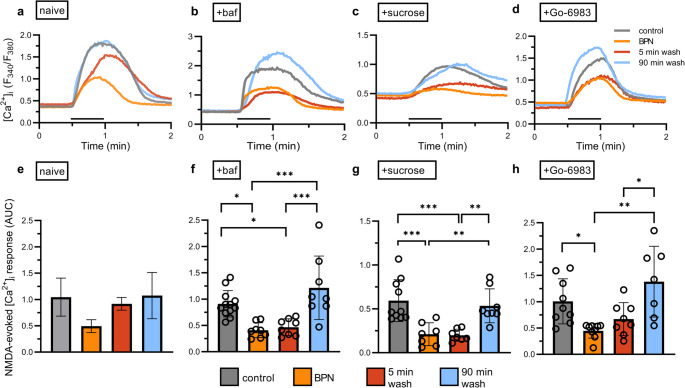
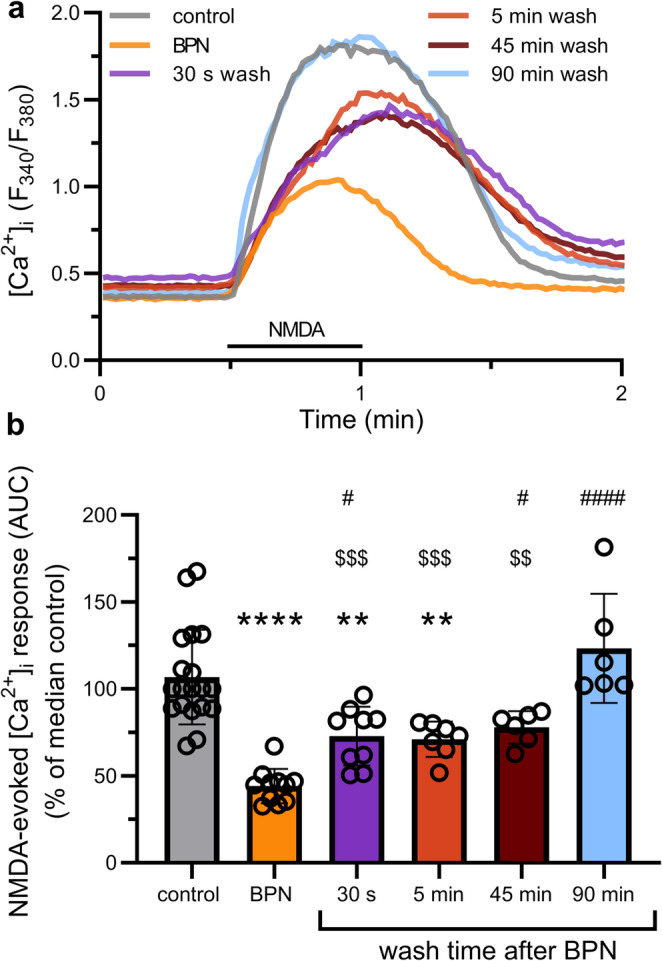
Excitotoxic signaling mediated by N-methyl-D-aspartate receptors (NMDARs) is inhibited by NMDAR/TRPM4 complex inhibitors such as brophenexin (BPN). We used rat hippocampal neurons grown in culture to determine the effects of BPN on NMDAR and TRPM4 function. NMDA evoked concentration-dependent increases in intracellular Ca2+ that were inhibited by 10 µM BPN in a non-competitive manner. In contrast, the TRPM4 inhibitor 4-chloro-2-(2-(naphthalene-1-yloxy) acetamido) benzoic acid (NBA) increased the potency of NMDA at 22 °C. BPN inhibition of NMDAR-mediated increases in Ca2+ was fully reversible and recovered by rapid (30 s) and slow (90 min) processes. The rapid phase of recovery from BPN inhibition was mediated by trafficking through recycling endosomes as indicated by blockade of this phase with bafilomycin A1 an agent that prevents endosomal acidification. The full recovery of NMDAR function observed 90 min after washout of BPN was not affected by this treatment. Immunocytochemistry experiments suggested that BPN did not directly alter NMDAR trafficking but instead changes in surface and internal GluN2B immunoreactivity were likely homeostatic responses to inhibition of NMDAR function by BPN. In the presence of MK-801 to block NMDARs, 10 µM NBA inhibited spontaneous network-driven Ca2+ spiking by 74 ± 11% whereas 10 µM BPN reduced activity by 49 ± 6%. Thus, BPN inhibits TRPM4-dependent activity. In summary, BPN is a non-competitive, fully reversible inhibitor of NMDAR-mediated Ca2+ influx and produces a modest inhibition of TRPM4 function. Functional inhibition of these ion channels likely contributes to the neuroprotective properties of NMDAR/TRPM4 interface inhibitors.
期刊介绍:
Neurotoxicity Research is an international, interdisciplinary broad-based journal for reporting both basic and clinical research on classical neurotoxicity effects and mechanisms associated with neurodegeneration, necrosis, neuronal apoptosis, nerve regeneration, neurotrophin mechanisms, and topics related to these themes.
Published papers have focused on:
NEURODEGENERATION and INJURY
Neuropathologies
Neuronal apoptosis
Neuronal necrosis
Neural death processes (anatomical, histochemical, neurochemical)
Neurodegenerative Disorders
Neural Effects of Substances of Abuse
NERVE REGENERATION and RESPONSES TO INJURY
Neural Adaptations
Neurotrophin mechanisms and actions
NEURO(CYTO)TOXICITY PROCESSES and NEUROPROTECTION
Excitatory amino acids
Neurotoxins, endogenous and synthetic
Reactive oxygen (nitrogen) species
Neuroprotection by endogenous and exogenous agents
Papers on related themes are welcome.


 求助内容:
 应助结果提醒方式:


 京公网安备 11010802042870号


