Thiago Rodrigues Gonçalves, Selena Cristina Henriques Fontes, Michele Vaz Canena, Deysiane Peres da Silva Clemente de Oliveira, Pedro Paulo da Silva Soares, Gabriel Dias Rodrigues
{"title":"吸气肌训练对心肺网络生理的影响:来自心脏自主神经调节、呼吸窦性心律失常和压力反射敏感性分析的证据。","authors":"Thiago Rodrigues Gonçalves, Selena Cristina Henriques Fontes, Michele Vaz Canena, Deysiane Peres da Silva Clemente de Oliveira, Pedro Paulo da Silva Soares, Gabriel Dias Rodrigues","doi":"10.3389/fnetp.2026.1761610","DOIUrl":null,"url":null,"abstract":"<p><strong>Introduction: </strong>Inspiratory muscle training (IMT) has been proposed as a non-pharmacological strategy capable of improving respiratory performance and modulating cardiovascular autonomic function. However, its effects on baroreflex sensitivity, heart rate variability, and cardiorespiratory interactions in healthy young adults remain insufficiently understood. Therefore, this study aimed to determine whether a 4-week IMT program, performed at moderate load, improves inspiratory muscle strength, cardiac autonomic modulation, spontaneous baroreflex sensitivity (BRS), and respiratory pattern in healthy individuals.</p><p><strong>Methods: </strong>Twenty-two healthy young men were randomly assigned to an experimental group (60% of maximal inspiratory pressure, MIP) or a placebo group (10% of MIP). Before and after the intervention, participants underwent pulmonary function testing and assessments of inspiratory muscle performance, as well as hemodynamic, autonomic, and respiratory recordings during spontaneous and controlled breathing. Heart rate variability (HRV), blood pressure variability, and BRS (α-LF) were assessed during respiratory sinus arrhythmia (RSA), and responses to the Valsalva maneuver were also evaluated.</p><p><strong>Results: </strong>IMT significantly increased MIP by approximately 26% and enhanced peak inspiratory flow, without changes in pulmonary volumes. Vagal indices of HRV increased after training (rMSSD and HF; p ≤ 0.05), indicating enhanced parasympathetic modulation. IMT also modified the respiratory pattern, reducing the Ti/Ttot ratio and increasing expiratory time (p = 0.04). No significant changes were observed in blood pressure variability or BRS. RSA analysis demonstrated a reduction in inspiratory heart rate, and the Valsalva maneuver revealed attenuation of heart rate overshoot in phase IV.</p><p><strong>Discussion: </strong>In conclusion, a 4-week IMT program in healthy young adults improves inspiratory muscle performance, enhances vagally mediated HRV, and promotes adjustments in respiratory pattern, without altering spontaneous baroreflex sensitivity. These findings suggest that the autonomic benefits of IMT on cardiac vagal modulation are predominantly mediated by respiratory mechanisms.</p>","PeriodicalId":73092,"journal":{"name":"Frontiers in network physiology","volume":"6 ","pages":"1761610"},"PeriodicalIF":3.0000,"publicationDate":"2026-02-17","publicationTypes":"Journal Article","fieldsOfStudy":null,"isOpenAccess":false,"openAccessPdf":"https://www.ncbi.nlm.nih.gov/pmc/articles/PMC12953523/pdf/","citationCount":"0","resultStr":"{\"title\":\"Effects of inspiratory muscle training on cardiorespiratory network physiology: evidence from cardiac autonomic modulation, respiratory sinus arrhythmia, and baroreflex sensitivity analysis.\",\"authors\":\"Thiago Rodrigues Gonçalves, Selena Cristina Henriques Fontes, Michele Vaz Canena, Deysiane Peres da Silva Clemente de Oliveira, Pedro Paulo da Silva Soares, Gabriel Dias Rodrigues\",\"doi\":\"10.3389/fnetp.2026.1761610\",\"DOIUrl\":null,\"url\":null,\"abstract\":\"<p><strong>Introduction: </strong>Inspiratory muscle training (IMT) has been proposed as a non-pharmacological strategy capable of improving respiratory performance and modulating cardiovascular autonomic function. However, its effects on baroreflex sensitivity, heart rate variability, and cardiorespiratory interactions in healthy young adults remain insufficiently understood. Therefore, this study aimed to determine whether a 4-week IMT program, performed at moderate load, improves inspiratory muscle strength, cardiac autonomic modulation, spontaneous baroreflex sensitivity (BRS), and respiratory pattern in healthy individuals.</p><p><strong>Methods: </strong>Twenty-two healthy young men were randomly assigned to an experimental group (60% of maximal inspiratory pressure, MIP) or a placebo group (10% of MIP). Before and after the intervention, participants underwent pulmonary function testing and assessments of inspiratory muscle performance, as well as hemodynamic, autonomic, and respiratory recordings during spontaneous and controlled breathing. Heart rate variability (HRV), blood pressure variability, and BRS (α-LF) were assessed during respiratory sinus arrhythmia (RSA), and responses to the Valsalva maneuver were also evaluated.</p><p><strong>Results: </strong>IMT significantly increased MIP by approximately 26% and enhanced peak inspiratory flow, without changes in pulmonary volumes. Vagal indices of HRV increased after training (rMSSD and HF; p ≤ 0.05), indicating enhanced parasympathetic modulation. IMT also modified the respiratory pattern, reducing the Ti/Ttot ratio and increasing expiratory time (p = 0.04). No significant changes were observed in blood pressure variability or BRS. RSA analysis demonstrated a reduction in inspiratory heart rate, and the Valsalva maneuver revealed attenuation of heart rate overshoot in phase IV.</p><p><strong>Discussion: </strong>In conclusion, a 4-week IMT program in healthy young adults improves inspiratory muscle performance, enhances vagally mediated HRV, and promotes adjustments in respiratory pattern, without altering spontaneous baroreflex sensitivity. These findings suggest that the autonomic benefits of IMT on cardiac vagal modulation are predominantly mediated by respiratory mechanisms.</p>\",\"PeriodicalId\":73092,\"journal\":{\"name\":\"Frontiers in network physiology\",\"volume\":\"6 \",\"pages\":\"1761610\"},\"PeriodicalIF\":3.0000,\"publicationDate\":\"2026-02-17\",\"publicationTypes\":\"Journal Article\",\"fieldsOfStudy\":null,\"isOpenAccess\":false,\"openAccessPdf\":\"https://www.ncbi.nlm.nih.gov/pmc/articles/PMC12953523/pdf/\",\"citationCount\":\"0\",\"resultStr\":null,\"platform\":\"Semanticscholar\",\"paperid\":null,\"PeriodicalName\":\"Frontiers in network physiology\",\"FirstCategoryId\":\"1085\",\"ListUrlMain\":\"https://doi.org/10.3389/fnetp.2026.1761610\",\"RegionNum\":0,\"RegionCategory\":null,\"ArticlePicture\":[],\"TitleCN\":null,\"AbstractTextCN\":null,\"PMCID\":null,\"EPubDate\":\"2026/1/1 0:00:00\",\"PubModel\":\"eCollection\",\"JCR\":\"\",\"JCRName\":\"\",\"Score\":null,\"Total\":0}","platform":"Semanticscholar","paperid":null,"PeriodicalName":"Frontiers in network physiology","FirstCategoryId":"1085","ListUrlMain":"https://doi.org/10.3389/fnetp.2026.1761610","RegionNum":0,"RegionCategory":null,"ArticlePicture":[],"TitleCN":null,"AbstractTextCN":null,"PMCID":null,"EPubDate":"2026/1/1 0:00:00","PubModel":"eCollection","JCR":"","JCRName":"","Score":null,"Total":0}
Effects of inspiratory muscle training on cardiorespiratory network physiology: evidence from cardiac autonomic modulation, respiratory sinus arrhythmia, and baroreflex sensitivity analysis.
Introduction: Inspiratory muscle training (IMT) has been proposed as a non-pharmacological strategy capable of improving respiratory performance and modulating cardiovascular autonomic function. However, its effects on baroreflex sensitivity, heart rate variability, and cardiorespiratory interactions in healthy young adults remain insufficiently understood. Therefore, this study aimed to determine whether a 4-week IMT program, performed at moderate load, improves inspiratory muscle strength, cardiac autonomic modulation, spontaneous baroreflex sensitivity (BRS), and respiratory pattern in healthy individuals.
Methods: Twenty-two healthy young men were randomly assigned to an experimental group (60% of maximal inspiratory pressure, MIP) or a placebo group (10% of MIP). Before and after the intervention, participants underwent pulmonary function testing and assessments of inspiratory muscle performance, as well as hemodynamic, autonomic, and respiratory recordings during spontaneous and controlled breathing. Heart rate variability (HRV), blood pressure variability, and BRS (α-LF) were assessed during respiratory sinus arrhythmia (RSA), and responses to the Valsalva maneuver were also evaluated.
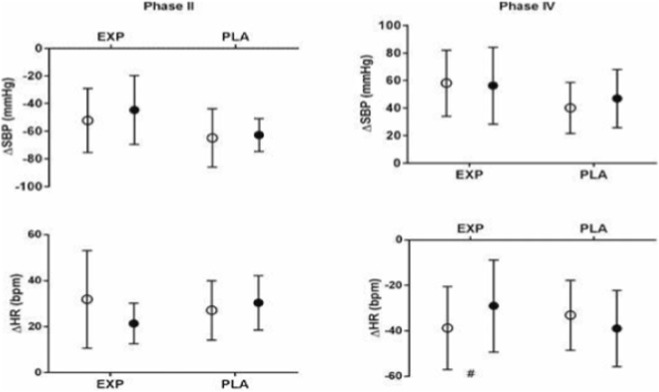
Results: IMT significantly increased MIP by approximately 26% and enhanced peak inspiratory flow, without changes in pulmonary volumes. Vagal indices of HRV increased after training (rMSSD and HF; p ≤ 0.05), indicating enhanced parasympathetic modulation. IMT also modified the respiratory pattern, reducing the Ti/Ttot ratio and increasing expiratory time (p = 0.04). No significant changes were observed in blood pressure variability or BRS. RSA analysis demonstrated a reduction in inspiratory heart rate, and the Valsalva maneuver revealed attenuation of heart rate overshoot in phase IV.
Discussion: In conclusion, a 4-week IMT program in healthy young adults improves inspiratory muscle performance, enhances vagally mediated HRV, and promotes adjustments in respiratory pattern, without altering spontaneous baroreflex sensitivity. These findings suggest that the autonomic benefits of IMT on cardiac vagal modulation are predominantly mediated by respiratory mechanisms.



 求助内容:
求助内容: 应助结果提醒方式:

 京公网安备 11010802042870号


