{"title":"糖尿病和高血压对危重病人急性肾损伤和生存的综合影响:约旦一家三级医院的十年经验","authors":"Nosayba Al-Azzam, Sayer Al-Azzam, Reema Karasneh","doi":"10.1080/20565623.2026.2638366","DOIUrl":null,"url":null,"abstract":"<p><strong>Aims: </strong>To examine the independent and combined effects of diabetes mellitus (DM) and hypertension (HTN) on acute kidney injury (AKI) and 90-day mortality in critically ill patients.</p><p><strong>Patients and methods: </strong>We retrospectively analyzed 3,282 adult intensive care unit (ICU) admissions to King Abdullah University Hospital, Jordan (2012-2022). Patients were stratified by DM and HTN status. Logistic regression identified predictors of AKI, and Cox proportional hazards models assessed 90-day mortality.</p><p><strong>Results: </strong>AKI occurred in 44.7% of DM patients versus 40.8% without DM (<i>p =</i> 0.0423). Patients with both DM and HTN had the highest AKI incidence (48.6%) and the highest 90-day mortality (37.8%). In addition, the HTN × DM interaction was a significant predictor of AKI in multivariable analysis (OR = 1.18, 95% CI: 1.07-1.36, <i>p =</i> 0.0059) and increased the mortality hazard independently (HR = 1.43, 95% CI: 1.04-1.97, <i>p =</i> 0.0286).</p><p><strong>Conclusions: </strong>DM is associated with increased AKI and mortality in critically ill patients, and concurrent HTN further amplifies these risks. These findings support integrated cardiometabolic risk assessment in ICU settings.</p>","PeriodicalId":12568,"journal":{"name":"Future Science OA","volume":"12 1","pages":"2638366"},"PeriodicalIF":2.5000,"publicationDate":"2026-12-01","publicationTypes":"Journal Article","fieldsOfStudy":null,"isOpenAccess":false,"openAccessPdf":"https://www.ncbi.nlm.nih.gov/pmc/articles/PMC12969735/pdf/","citationCount":"0","resultStr":"{\"title\":\"Combined impact of diabetes mellitus and hypertension on acute kidney injury and survival in critically ill patients: a decade of experience from a Jordanian Tertiary Hospital.\",\"authors\":\"Nosayba Al-Azzam, Sayer Al-Azzam, Reema Karasneh\",\"doi\":\"10.1080/20565623.2026.2638366\",\"DOIUrl\":null,\"url\":null,\"abstract\":\"<p><strong>Aims: </strong>To examine the independent and combined effects of diabetes mellitus (DM) and hypertension (HTN) on acute kidney injury (AKI) and 90-day mortality in critically ill patients.</p><p><strong>Patients and methods: </strong>We retrospectively analyzed 3,282 adult intensive care unit (ICU) admissions to King Abdullah University Hospital, Jordan (2012-2022). Patients were stratified by DM and HTN status. Logistic regression identified predictors of AKI, and Cox proportional hazards models assessed 90-day mortality.</p><p><strong>Results: </strong>AKI occurred in 44.7% of DM patients versus 40.8% without DM (<i>p =</i> 0.0423). Patients with both DM and HTN had the highest AKI incidence (48.6%) and the highest 90-day mortality (37.8%). In addition, the HTN × DM interaction was a significant predictor of AKI in multivariable analysis (OR = 1.18, 95% CI: 1.07-1.36, <i>p =</i> 0.0059) and increased the mortality hazard independently (HR = 1.43, 95% CI: 1.04-1.97, <i>p =</i> 0.0286).</p><p><strong>Conclusions: </strong>DM is associated with increased AKI and mortality in critically ill patients, and concurrent HTN further amplifies these risks. These findings support integrated cardiometabolic risk assessment in ICU settings.</p>\",\"PeriodicalId\":12568,\"journal\":{\"name\":\"Future Science OA\",\"volume\":\"12 1\",\"pages\":\"2638366\"},\"PeriodicalIF\":2.5000,\"publicationDate\":\"2026-12-01\",\"publicationTypes\":\"Journal Article\",\"fieldsOfStudy\":null,\"isOpenAccess\":false,\"openAccessPdf\":\"https://www.ncbi.nlm.nih.gov/pmc/articles/PMC12969735/pdf/\",\"citationCount\":\"0\",\"resultStr\":null,\"platform\":\"Semanticscholar\",\"paperid\":null,\"PeriodicalName\":\"Future Science OA\",\"FirstCategoryId\":\"1085\",\"ListUrlMain\":\"https://doi.org/10.1080/20565623.2026.2638366\",\"RegionNum\":0,\"RegionCategory\":null,\"ArticlePicture\":[],\"TitleCN\":null,\"AbstractTextCN\":null,\"PMCID\":null,\"EPubDate\":\"2026/3/5 0:00:00\",\"PubModel\":\"Epub\",\"JCR\":\"Q3\",\"JCRName\":\"MEDICINE, RESEARCH & EXPERIMENTAL\",\"Score\":null,\"Total\":0}","platform":"Semanticscholar","paperid":null,"PeriodicalName":"Future Science OA","FirstCategoryId":"1085","ListUrlMain":"https://doi.org/10.1080/20565623.2026.2638366","RegionNum":0,"RegionCategory":null,"ArticlePicture":[],"TitleCN":null,"AbstractTextCN":null,"PMCID":null,"EPubDate":"2026/3/5 0:00:00","PubModel":"Epub","JCR":"Q3","JCRName":"MEDICINE, RESEARCH & EXPERIMENTAL","Score":null,"Total":0}
Combined impact of diabetes mellitus and hypertension on acute kidney injury and survival in critically ill patients: a decade of experience from a Jordanian Tertiary Hospital.
Aims: To examine the independent and combined effects of diabetes mellitus (DM) and hypertension (HTN) on acute kidney injury (AKI) and 90-day mortality in critically ill patients.
Patients and methods: We retrospectively analyzed 3,282 adult intensive care unit (ICU) admissions to King Abdullah University Hospital, Jordan (2012-2022). Patients were stratified by DM and HTN status. Logistic regression identified predictors of AKI, and Cox proportional hazards models assessed 90-day mortality.
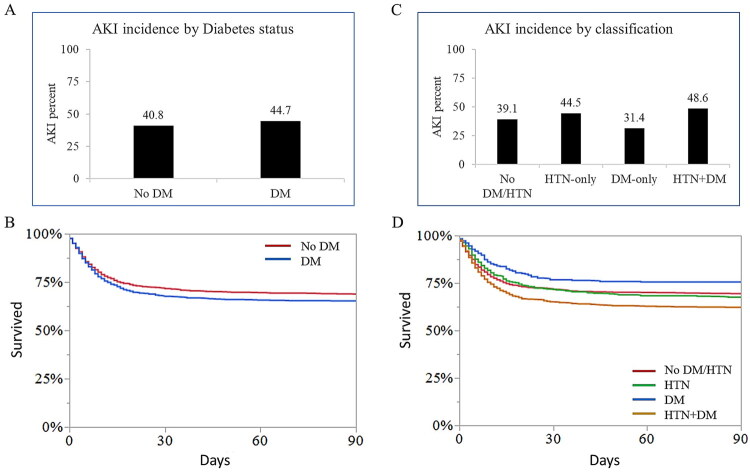
Results: AKI occurred in 44.7% of DM patients versus 40.8% without DM (p = 0.0423). Patients with both DM and HTN had the highest AKI incidence (48.6%) and the highest 90-day mortality (37.8%). In addition, the HTN × DM interaction was a significant predictor of AKI in multivariable analysis (OR = 1.18, 95% CI: 1.07-1.36, p = 0.0059) and increased the mortality hazard independently (HR = 1.43, 95% CI: 1.04-1.97, p = 0.0286).
Conclusions: DM is associated with increased AKI and mortality in critically ill patients, and concurrent HTN further amplifies these risks. These findings support integrated cardiometabolic risk assessment in ICU settings.
期刊介绍:
Future Science OA is an online, open access, peer-reviewed title from the Future Science Group. The journal covers research and discussion related to advances in biotechnology, medicine and health. The journal embraces the importance of publishing all good-quality research with the potential to further the progress of research in these fields. All original research articles will be considered that are within the journal''s scope, and have been conducted with scientific rigour and research integrity. The journal also features review articles, editorials and perspectives, providing readers with a leading source of commentary and analysis. Submissions of the following article types will be considered: -Research articles -Preliminary communications -Short communications -Methodologies -Trial design articles -Trial results (including early-phase and negative studies) -Reviews -Perspectives -Commentaries


 求助内容:
求助内容: 应助结果提醒方式:

 京公网安备 11010802042870号


